Reach Out Today
Please provide your email address so that we can stay in touch and answer any questions you have! We will be reaching back out shortly.

Hear from Our Customers
If you’ve moved into one of South Clermont’s newer communities whether that’s near Hartwood Marsh Road, along the Wellness Way corridor, or anywhere south of SR-50 there’s a good chance you’ve already noticed something off. The water leaves white film on your shower doors. Your glasses come out of the dishwasher looking cloudy. The water from the tap has a smell, or a taste, that makes you reach for a bottle instead.
That’s not just a nuisance. Lake Utility Services Inc. South, the municipal provider serving South Clermont, has documented detections of arsenic, chromium-6, and total trihalomethanes disinfection byproducts that form when chlorine reacts with organic matter in the source water. The utility meets federal legal minimums, but meeting legal minimums and delivering clean water aren’t the same thing.
A reverse osmosis system works at the molecular level, removing up to 99% of dissolved contaminants before the water reaches your glass. The Floridan Aquifer the limestone formation that feeds Lake County’s water supply naturally loads every gallon with 200 to 300 milligrams of dissolved rock minerals. That mineral load builds up inside your water heater, coats your dishwasher’s interior, and shortens the lifespan of every appliance connected to your plumbing. You just bought a home in South Clermont. Protecting it from the water running through it is one of the most practical investments you can make.
We’re headquartered in Leesburg Lake County, the same county that governs South Clermont. That’s not a coincidence. We work in this water every day. We know what Lake Utility Services delivers to South Clermont taps, we know the mineral load coming off the Floridan Aquifer’s karst limestone terrain, and we know the specific contaminant profile that shows up in homes throughout South Clermont and the surrounding area.
We hold an A-rating with the Better Business Bureau, a 5-star customer rating, and zero complaints on record. You can verify that at bbb.org right now. We’re also members of the National Water Quality Association, which means our recommendations are grounded in certified training not a sales script. Water treatment is all we do. We don’t install water heaters, fix plumbing, or service HVAC systems. That focus is exactly why our diagnostics are better and our system recommendations are more accurate.
We service what we sell, which apparently isn’t standard practice anymore. When you need filter replacements or maintenance years from now, you call the same company that installed your system. We’re still here.
It starts with a real water analysis not a quick hardness test designed to push you toward the most expensive system on the truck. We run a lab-grade test on your specific water supply. For homeowners in South Clermont on Lake Utility Services Inc. South, that means testing for the contaminants we already know are present in this area: arsenic, chromium-6, TTHMs, and dissolved minerals. But we test your water, not a regional average, because two homes in the same neighborhood can have different results depending on plumbing age, pipe materials, and other factors.
Once we have your results, we walk you through exactly what we found and what it means. From there, we recommend the right system for your household whether that’s an under-sink RO drinking water system for your kitchen, a whole-house reverse osmosis setup that protects every fixture and appliance, or a combination approach that includes UV purification or water softening.
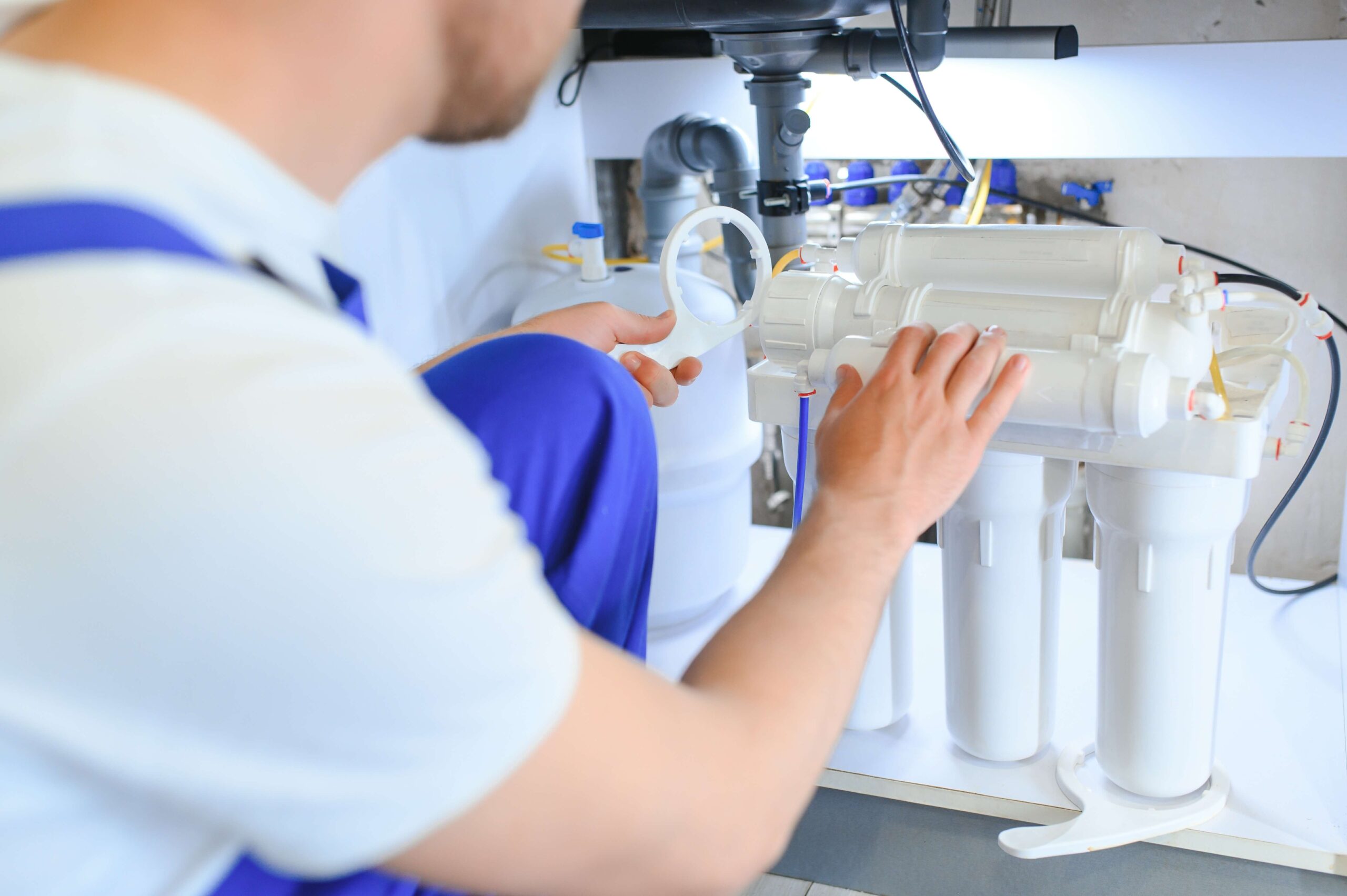
We size the system to your actual water usage, not a one-size-fits-all package. Installation is handled by our own technicians not subcontractors. For whole-house systems that involve modifications to your main supply line, we manage any applicable permitting through the City of Clermont or Lake County Building Services depending on your property’s jurisdiction. Under-sink RO installations typically don’t require a permit, but we handle the details either way.
After installation, we walk you through filter replacement schedules and maintenance so you’re never caught off guard. When you need service down the road, you call the same company that installed the system.
Ready to get started?
A reverse osmosis system forces water through a semi-permeable membrane with pores of 0.0001 microns smaller than any bacteria, virus, heavy metal ion, or synthetic chemical. What comes out the other side is water with up to 99% of dissolved contaminants removed. For South Clermont homeowners dealing with documented arsenic and chromium-6 in the municipal supply, that’s not a marketing claim. It’s the chemistry of how the system works.
We install both under-sink and whole-house reverse osmosis systems. An under-sink RO system connects directly to your kitchen’s cold water line and delivers filtered drinking water through a dedicated tap most families see this as the immediate upgrade from buying cases of water at the grocery store every week. A whole-house RO system treats every gallon entering your home, which means your showers, laundry, and appliances all run on filtered water.
For newer construction homes in the Wellness Way corridor and the Hartwood Marsh communities, a whole-house system is particularly valuable. Your water heater and appliances are brand new, and keeping hard mineral scale out of them from day one extends their lifespan significantly.
If you’re active military, a veteran, or a first responder, we offer a $500 discount on water treatment systems. South Clermont and the broader Lake County area have a strong military and first responder community, and this discount reflects that. It’s straightforward no complicated qualifications. All systems we install are backed by our service commitment, meaning we’re still available when you need filter replacements or maintenance years from now.
South Clermont’s municipal water is supplied by Lake Utility Services Inc. South, and the documented water quality record for this utility is worth knowing before you decide whether to filter. Independent testing has identified arsenic, chromium-6, and total trihalomethanes (TTHMs) at levels that exceed health guidelines not just trace detections, but concentrations above what independent health organizations consider safe for long-term consumption.
Beyond those specific contaminants, the Floridan Aquifer the limestone formation feeding Lake County’s water supply naturally contributes 200 to 300 milligrams of dissolved calcium and magnesium minerals per gallon. That’s what creates the white scale on your fixtures and the film in your glassware. Municipal treatment doesn’t remove dissolved minerals, and it doesn’t eliminate the disinfection byproducts it creates in the process of making the water biologically safe. A reverse osmosis system addresses all of it.
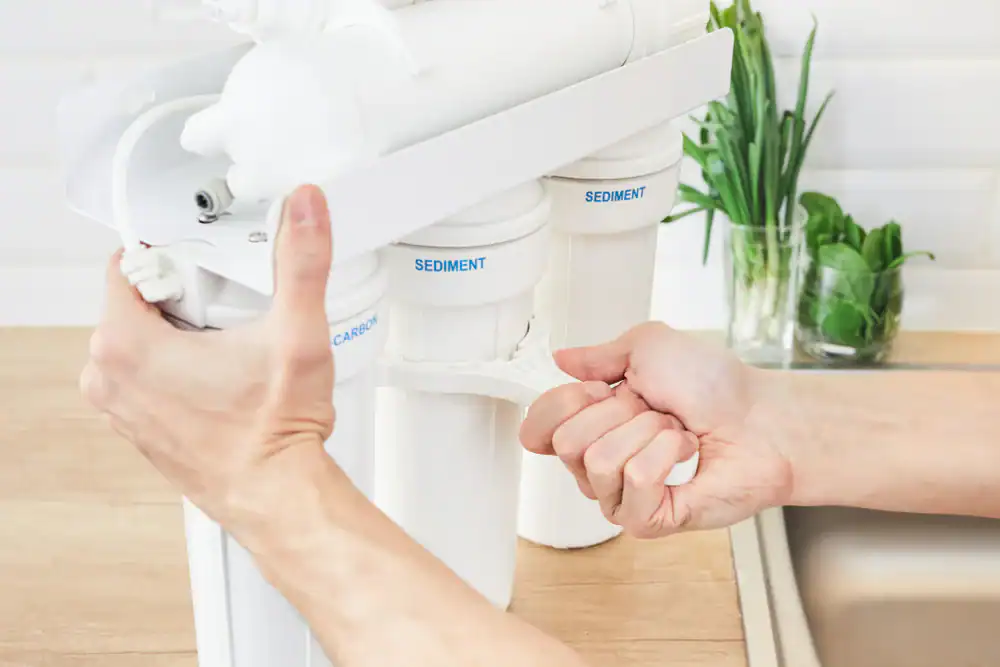
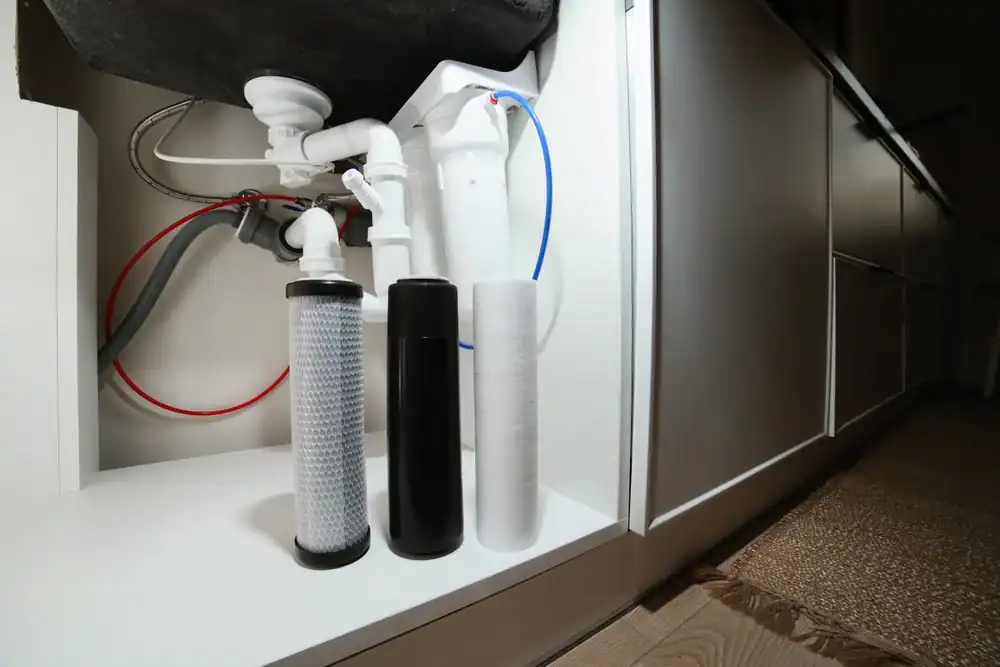
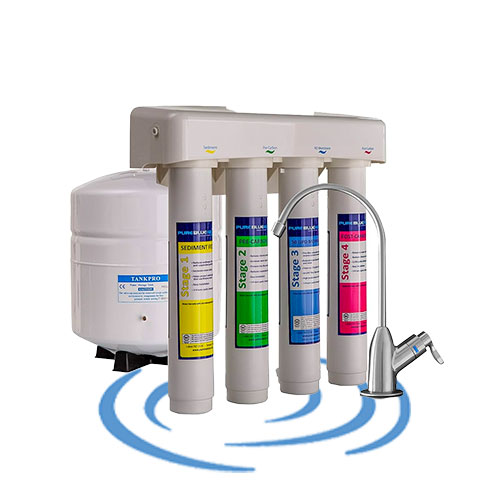
An under-sink reverse osmosis system connects to your kitchen’s cold water line and delivers filtered water through a dedicated faucet at your sink. It’s the most common entry point for homeowners who want clean drinking and cooking water without a major installation. Most under-sink systems include a small storage tank, a multi-stage filtration setup with pre-filters and the RO membrane, and a post-filter to polish the taste before it reaches your glass.
A whole-house reverse osmosis system treats all the water entering your home at the point of entry before it reaches any tap, shower, appliance, or fixture. For South Clermont homeowners in newer construction communities, this is often the better long-term investment. Your water heater, dishwasher, and washing machine all run on filtered water, which significantly reduces mineral scale buildup and extends appliance life. Given that homes in this area represent significant investments, protecting every water-using appliance from day one is a practical decision, not just a comfort upgrade.
For most under-sink reverse osmosis installations, no permit is required. The work involves connecting to an existing cold water supply line and running a drain line under the sink it doesn’t modify your home’s main plumbing in a way that triggers a permit requirement in most jurisdictions.
Whole-house reverse osmosis systems are a different situation. Because they involve modifying the main water supply line at the point of entry, they may require a plumbing permit through the City of Clermont’s Building Department or Lake County Building Services, depending on whether your property is within city limits or in unincorporated Lake County and South Clermont spans both. We handle the permit research and any required filings as part of the installation process. You don’t need to figure out which jurisdiction applies or navigate the building department on your own. We’ve done this throughout Lake County and know how to move the process forward without delays.
Filter replacement schedules for a reverse osmosis system depend on two things: the volume of water your household uses and the quality of the source water going into the system. In South Clermont, where the municipal supply carries a higher-than-average mineral load from the Floridan Aquifer along with documented contaminants like arsenic and TTHMs, your pre-filters tend to work harder than they would in areas with cleaner source water.
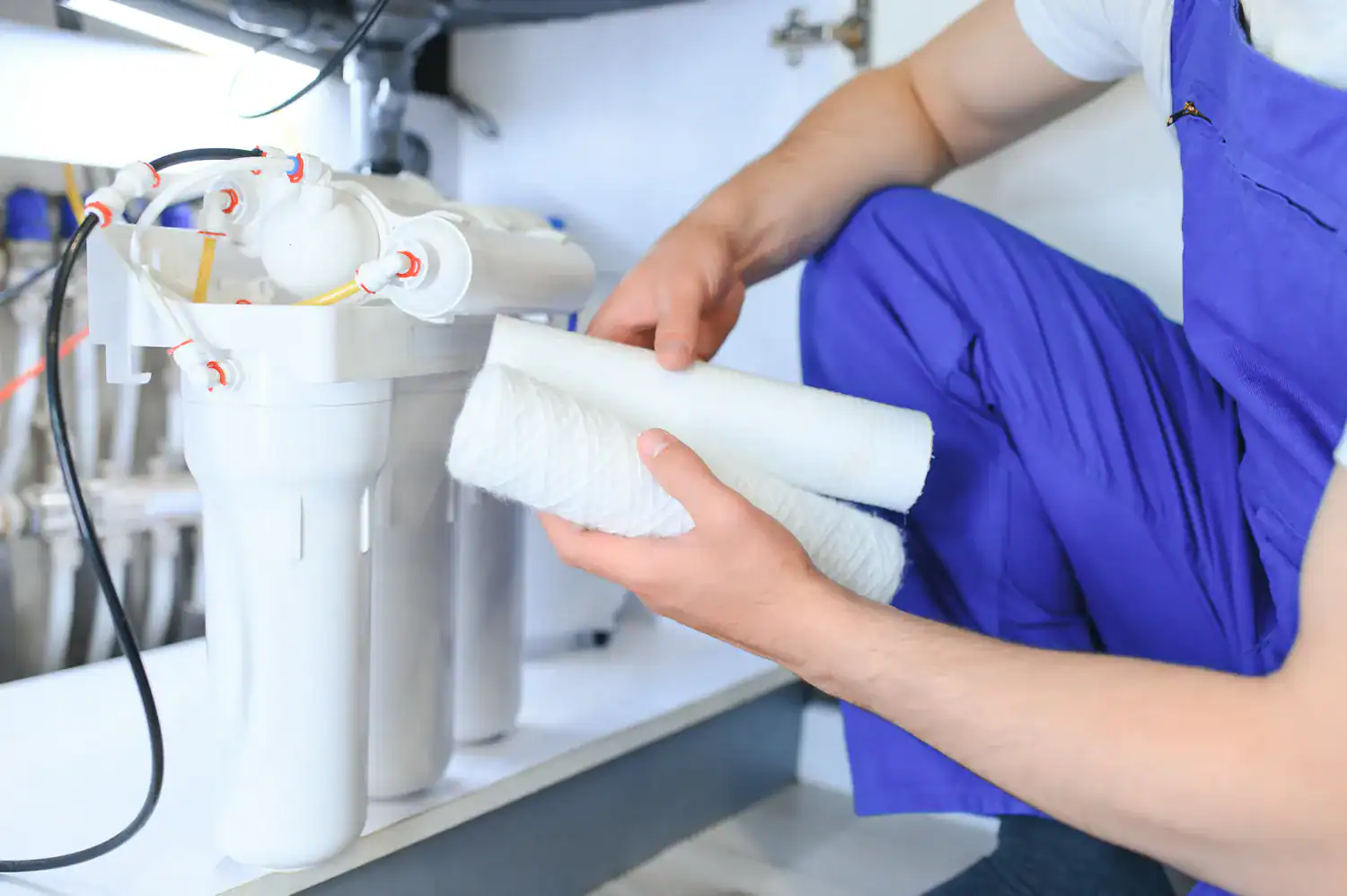
As a general guideline, pre-filters the sediment and carbon stages that protect the RO membrane should be replaced every six to twelve months. The RO membrane itself typically lasts two to five years depending on usage and incoming water quality. The post-filter, which polishes the water before it reaches your tap, usually needs replacement once a year. We set you up with a maintenance schedule specific to your system and your household at the time of installation. We also carry replacement filters and can schedule service visits so you’re never running on a degraded membrane without realizing it.
A water softener and a reverse osmosis system do different jobs, and in South Clermont’s water conditions, many homeowners end up needing both but for different reasons. A water softener addresses hardness by exchanging calcium and magnesium ions for sodium through a process called ion exchange. It protects your pipes and appliances from scale buildup, and it makes a noticeable difference in how your water feels on your skin and how your laundry comes out.
What a water softener doesn’t do is remove arsenic, chromium-6, trihalomethanes, or other dissolved chemical contaminants from your drinking water. Reverse osmosis addresses the drinking water side of the equation. It removes dissolved heavy metals, chemical contaminants, and the mineral content that a softener leaves behind in a different ionic form. The two systems are complementary, not redundant. A common setup for South Clermont homes is a whole-house softener at the point of entry paired with an under-sink RO system at the kitchen tap for drinking and cooking water.
During our water analysis, we’ll tell you exactly what’s in your water and which combination of treatment makes sense for your specific situation without pushing you toward equipment you don’t actually need.
Please provide your email address so that we can stay in touch and answer any questions you have! We will be reaching back out shortly.
"*" indicates required fields