Reach Out Today
Please provide your email address so that we can stay in touch and answer any questions you have! We will be reaching back out shortly.

Hear from Our Customers
The rotten-egg smell coming from your Pine Ridge tap is hydrogen sulfide a byproduct of sulfur bacteria that thrive in the Floridan Aquifer and get worse every Florida summer. It does not go away on its own. A properly designed reverse osmosis and whole-house filtration system removes it at the source, not just at one faucet. You stop masking the problem and start solving it.
Iron staining is the other thing Pine Ridge homeowners deal with constantly. That orange rust coating your toilet bowl, your sink basin, your shower floor that same dissolved iron is running through your water heater, your washing machine, and every appliance connected to your plumbing. On a property worth $700,000-plus, that is not a cosmetic issue. It is slow, invisible damage that compounds over years. Removing iron from your water supply stops the damage before it becomes a repair bill.
If you have horses on your property and a lot of Pine Ridge residents do your water quality affects them directly. Horses can drink up to 10 gallons a day in Florida’s heat, and sulfur odors alone can make them reluctant to drink, which leads to dehydration fast. Clean water throughout your property is not just a comfort upgrade. For equestrian households, it is a health necessity.
Quality Safe Water of Florida LLC is a water treatment company that is it, that is all. No plumbing side jobs, no water heater upsells, no generalist approach. Water treatment is the whole business, which means every technician, every recommendation, and every system we install comes from a team that has done this work exclusively, not occasionally.
Before any system is recommended for your Pine Ridge home, your water gets tested. Real lab-grade analysis, not a sales pitch dressed up as a water check. Citrus County well water varies from property to property what your neighbor on the next acre needs may be completely different from what your system requires. The test tells us what is actually in your water. The recommendation follows the results, not the other way around.
We hold an A-rating with the Better Business Bureau, a 5-star rating, and zero complaints on file something you can verify right now at bbb.org. We are also a member of the National Water Quality Association and a proud supporter of the Tunnels to Towers Foundation. If you are active military, a veteran, or a first responder, there is a $500 discount waiting for you.

It starts with your water. Before anything is quoted, ordered, or installed, a water analysis is done on your specific Pine Ridge well. Properties in Pine Ridge sit on minimum one-acre lots drawing from the same Floridan Aquifer limestone geology, but the water chemistry can still differ significantly from one address to the next. Tannin levels, iron concentration, sulfur bacteria presence, hardness these all get measured. That data drives every decision that follows.
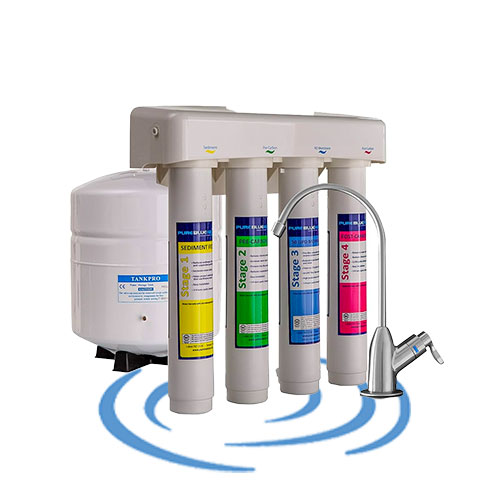
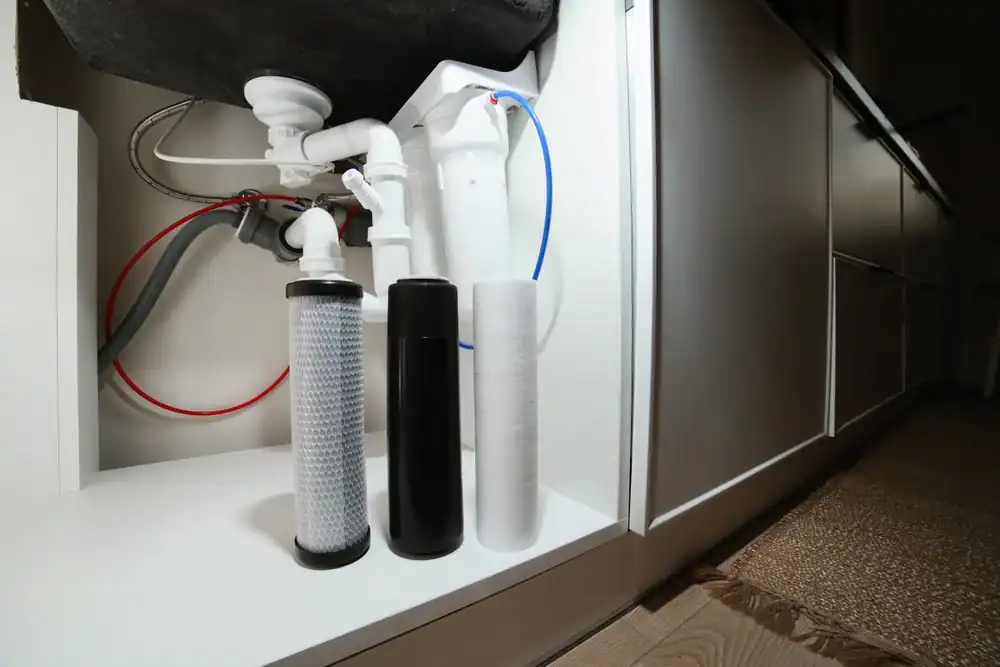
Once the analysis is complete, you get a clear recommendation what type of system addresses your specific results, where it gets installed, and what it does. For most Pine Ridge homes, a reverse osmosis drinking water system is installed at the point of use, typically under the kitchen sink, with pre-filtration staged upstream to handle the iron and hardness before the RO membrane ever sees the water. Some properties need a whole-house approach, especially if iron staining is showing up at outdoor spigots, barn water lines, or irrigation connections. That gets assessed and discussed upfront.
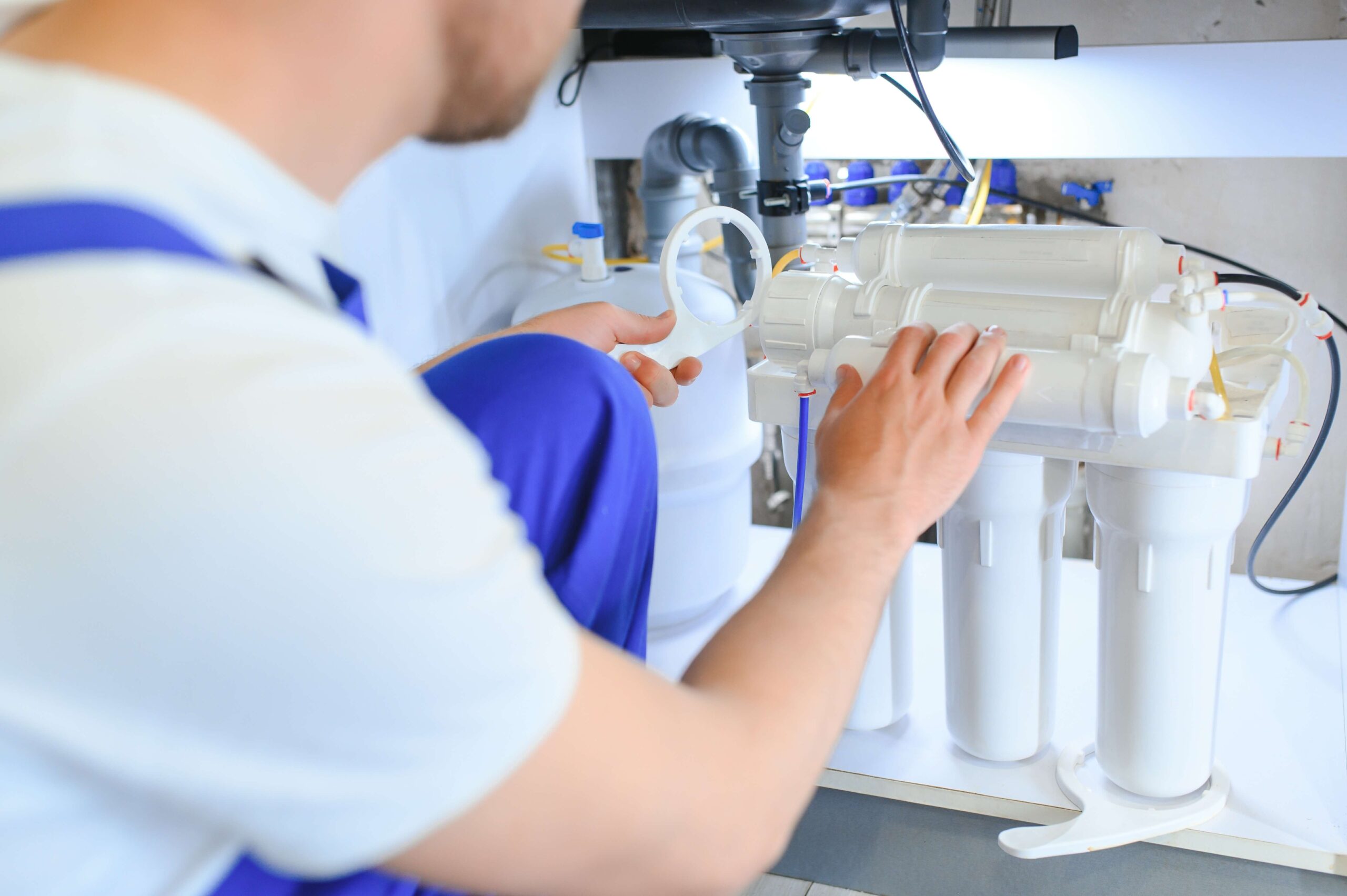
Installation is clean, professional, and done by technicians who service what we install. After the system is in, you get a walkthrough how to maintain it, when filters need changing, and how to reach someone if anything comes up. There is no handoff to a call center. The same local company that installed it is the one you call when you need anything.
Ready to get started?
Most reverse osmosis systems are designed with municipal water in mind water that has already been treated, softened, and filtered before it reaches the home. Pine Ridge well water is a different conversation entirely. The Floridan Aquifer delivers water that is hard, often iron-laden, frequently sulfur-affected, and sometimes tinted with tannins from Citrus County’s heavily vegetated landscape. A system that does not account for those upstream conditions will fail faster, filter less effectively, and cost more to maintain over time.
What we install in Pine Ridge is built around your actual water profile. Under-sink reverse osmosis drinking water systems remove lead, arsenic, nitrates, fluoride, dissolved solids, and contaminants that standard carbon filters cannot touch. For homes where iron or sulfur is significant, pre-treatment is staged before the RO unit to protect the membrane and extend system life. For properties with bacterial contamination risk which is real in any rural community with septic systems nearby UV treatment can be incorporated into the system design.
Unlike municipal water customers who receive an annual Consumer Confidence Report from their utility, Pine Ridge homeowners on private wells have no regulatory backstop. No agency is monitoring your well and no one is required to notify you if something changes. Your water quality is entirely your responsibility, and a properly designed RO and filtration system is the most effective tool available for managing it long-term.
That sulfur smell is hydrogen sulfide gas, produced by sulfur bacteria that are extremely common in the Floridan Aquifer system beneath Citrus County. These bacteria oxidize iron in your well water, which is why the smell often comes with rust-colored staining as well. The odor tends to get noticeably worse during Florida’s summer months heat accelerates bacterial growth, so what was a mild smell in January can become genuinely unpleasant by July.
The fix is not a filter on one faucet. Hydrogen sulfide needs to be addressed at the whole-house level, typically through an oxidizing filter or aeration system upstream of your pressure tank, combined with a reverse osmosis system at the drinking water point if you want the cleanest possible result at the tap. A water test will confirm exactly what concentration of sulfur bacteria you are dealing with and what treatment approach is appropriate for your specific Pine Ridge well. Without the test, any recommendation is a guess.
A reverse osmosis membrane does remove dissolved iron and hardness minerals like calcium and magnesium but there is an important catch. If iron levels in your Pine Ridge water are high, as they commonly are in Citrus County well water, that iron needs to be addressed before it reaches the RO membrane. High iron concentrations will foul the membrane quickly, reducing its effectiveness and shortening its lifespan significantly. That is why pre-treatment matters so much in this area.
The right setup for a Pine Ridge home with iron issues is typically an iron filtration or water softening stage upstream, followed by the reverse osmosis system for drinking water. This protects the membrane, keeps the system performing at full capacity, and addresses hardness throughout the whole house not just at the kitchen tap. Your water test results will show exactly what iron concentration you are working with and what pre-treatment, if any, your system needs before the RO stage.
A water softener and a reverse osmosis system do different things, and in Pine Ridge, most homes with serious water quality issues benefit from both working together. A water softener addresses hardness it removes calcium and magnesium through an ion exchange process, which protects your appliances, plumbing, and fixtures from scale buildup. It does not remove contaminants like nitrates, arsenic, fluoride, dissolved solids, or bacteria.
A reverse osmosis system works at the molecular level. The semi-permeable membrane filters out a much broader range of contaminants the things a softener leaves behind. For Pine Ridge homeowners on private wells with no regulatory monitoring of their water supply, an RO system at the drinking water point gives you a level of filtration that nothing else matches at the residential scale. The two systems are not competing options they serve different purposes, and for well water with multiple issues like hardness and contamination risk, running them in combination is often the most effective approach.
For most residential reverse osmosis systems, pre-filters which are the sediment and carbon stages that protect the membrane need to be replaced every six to twelve months. The RO membrane itself typically lasts two to five years depending on water quality and usage. In Pine Ridge, where well water often carries higher concentrations of iron, minerals, and organic matter than municipal water, pre-filters may need to be changed closer to the six-month end of that range.
Running your system past its maintenance schedule does not just reduce performance it can allow contaminants to pass through a degraded membrane that you assume is still working. The simplest way to stay on track is to schedule an annual service check. We service every system we install, so you are not left trying to figure out filter compatibility or membrane specs on your own. A quick service visit keeps the system performing at the level it was installed to deliver.
That depends entirely on what is in your specific well and without a test, there is no honest answer to that question. Unlike residents on municipal water in cities like Inverness or Crystal River, Pine Ridge homeowners on private wells receive no annual Consumer Confidence Report and no regulatory monitoring of their water supply. The Safe Drinking Water Act does not apply to private wells. What is in your water is your responsibility to find out.
Common issues in Citrus County well water elevated iron, sulfur bacteria, hardness, and tannins are generally not acute health emergencies, but they are not something you want to ignore long-term either. The more serious concern is bacterial contamination, which can occur from septic system proximity, flooding events, or well casing issues. A water test is the only way to know what you are actually dealing with.
Please provide your email address so that we can stay in touch and answer any questions you have! We will be reaching back out shortly.
"*" indicates required fields