Reach Out Today
Please provide your email address so that we can stay in touch and answer any questions you have! We will be reaching back out shortly.

Hear from Our Customers
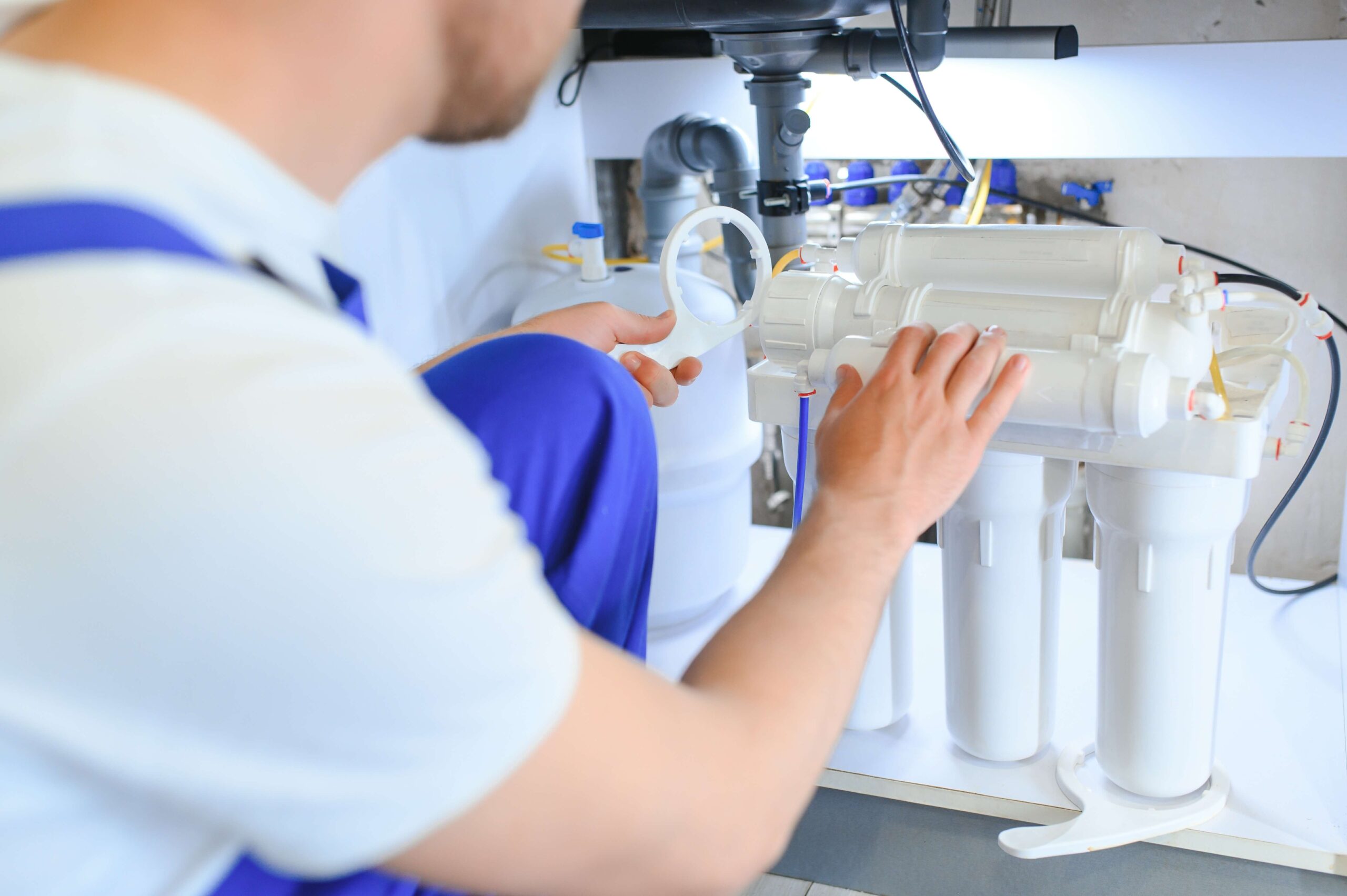
The most immediate change after RO installation is taste. No more chemical edge, no more reaching for bottled water in South Florida’s heat when you should just be able to turn on the tap.
Beyond that, your appliances stop fighting hard water. Your dishwasher, ice maker, and water heater all run cleaner and last longer when they’re not constantly processing mineral-laden water. In Oyster Creek’s subtropical climate where those appliances run every single month of the year not just seasonally that’s real money saved over time.
There’s also the peace-of-mind factor. Broward County’s 2025 FDEP Source Water Assessment identified multiple potential contamination sources in the regional water systems that serve this area. Municipal treatment meets the legal standard. A reverse osmosis system goes further, filtering down to 0.0001 microns and removing contaminants that standard treatment isn’t designed to catch including PFAS, nitrates, lead, and pharmaceutical traces.
We’re not a plumbing company that throws in a filter as an upsell. Water treatment is the only thing on our menu which means the person assessing your Oyster Creek home’s water has spent their career understanding exactly what South Florida water does to homes, appliances, and families. That kind of focus produces better recommendations than a generalist ever could.
We hold a BBB A-rating with a 5-star score and zero complaints on record. Not a handful zero. In Broward County’s home services market, where companies regularly sell a system and become unreachable the moment something needs service, that public record matters. You can look it up at bbb.org before you ever pick up the phone.
We’re also a member of the National Water Quality Association, which means ongoing professional training in Florida-specific water challenges the Biscayne Aquifer’s mineral profile, the chloramine disinfection used in South Broward’s municipal systems, and the saltwater intrusion risks that come with being this close to the Atlantic. This isn’t a company applying a national script to a local problem.
It starts with a real water test not a quick hardness check designed to justify the most expensive system on the truck. We run a lab-grade analysis of what’s actually in your water before recommending anything. For Oyster Creek homeowners on Broward County’s municipal supply, that test consistently shows elevated dissolved solids, chloramine presence, and hardness levels that most people don’t realize are as high as they are until they see the numbers.
From there, the right system gets recommended based on your actual water, your household size, and how you use water day to day. Under-sink reverse osmosis systems are the most common choice for homeowners who want clean drinking and cooking water at the kitchen faucet. Whole-house RO systems handle every tap in the home a stronger solution for households with significant scale buildup or documented water quality concerns.
Once the system is installed, you’re not handed a manual and left to figure out maintenance alone. Filter replacements, membrane service, and ongoing support are part of the relationship because a system that doesn’t get serviced stops doing its job, and a company that disappears after the sale isn’t actually doing theirs.
Ready to get started?
The reverse osmosis systems we install are sized and configured for what Broward County water actually looks like not a one-size-fits-all unit pulled from a national catalog. Biscayne Aquifer water has a specific mineral chemistry, and South Florida’s municipal systems use chloramines rather than standard chlorine for disinfection.
Standard carbon filters aren’t built to handle chloramines effectively. The systems we use include catalytic activated carbon pre-filtration specifically because of how South Florida water is treated that’s a detail that matters and one that generic competitors often miss entirely.
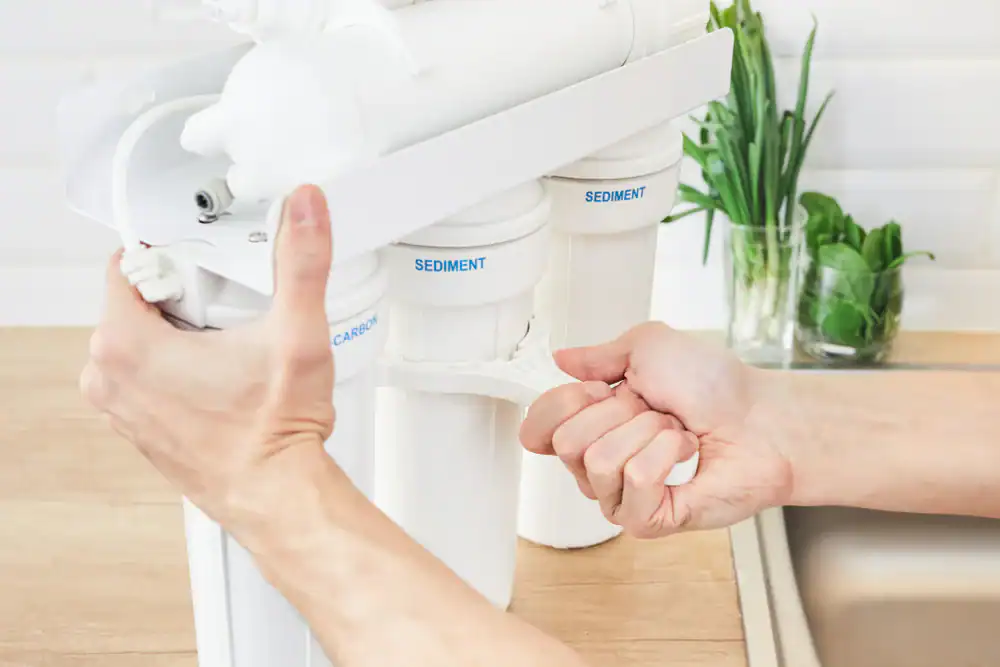
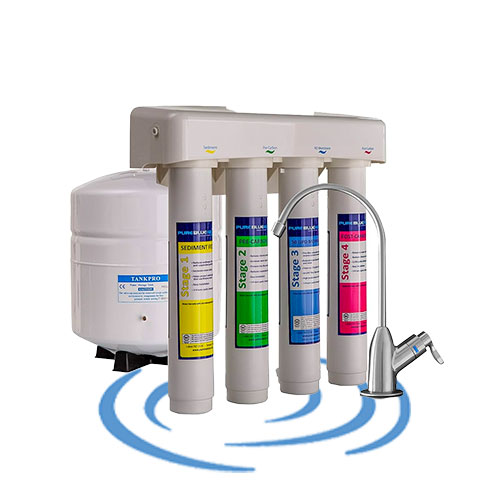
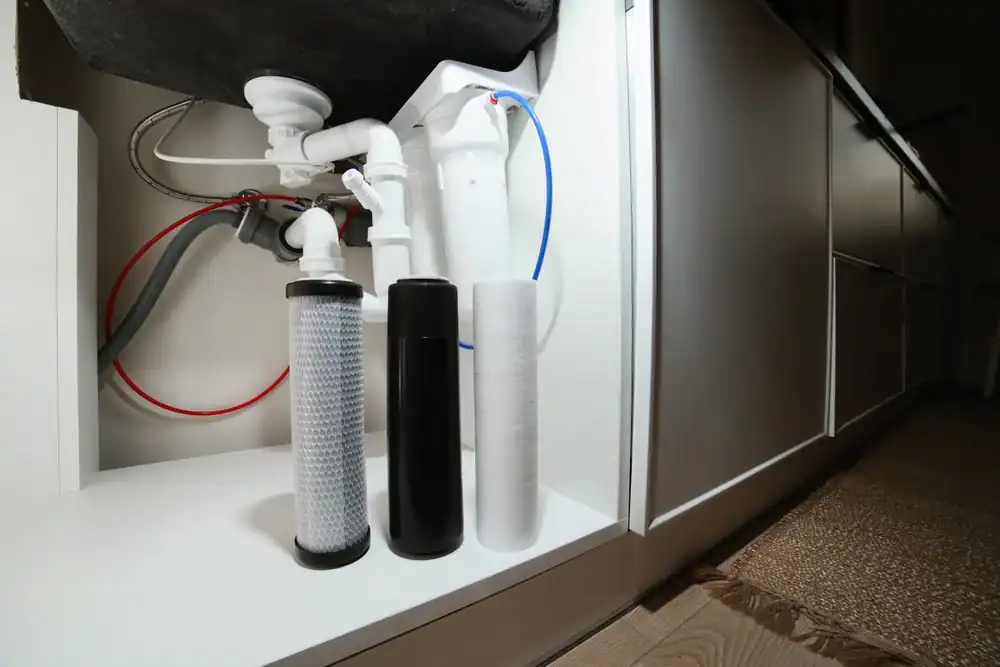
For most Oyster Creek homeowners, an under-sink reverse osmosis drinking water system is the starting point a multi-stage system installed beneath the kitchen sink with a dedicated faucet that delivers filtered water for drinking, cooking, and ice. For households dealing with widespread scale damage, whole-house filtration, or elevated contamination concerns, a point-of-entry system treats every tap in the home before water even reaches an appliance.
If you’re a veteran, active military, law enforcement officer, firefighter, or EMS professional serving Broward County’s communities, a $500 discount applies to your installation. It’s a real reduction on a real investment, and it reflects how we view the people who keep this county running.
Oyster Creek’s municipal water meets all federal legal standards that part is true. But meeting the legal standard and delivering the cleanest possible water are two different things. Broward County’s water supply draws from the Biscayne Aquifer, a shallow limestone formation that’s more vulnerable to surface contamination, agricultural runoff, and saltwater intrusion than the deeper Floridan Aquifer used in most of North and Central Florida.
The 2025 FDEP Source Water Assessment identified multiple potential contamination sources in the regional systems supplying parts of Broward County. Municipal treatment reduces many contaminants, but it’s not designed to remove everything PFAS compounds, pharmaceutical traces, nitrates, and disinfection byproducts can still be present at low levels after treatment.
A reverse osmosis system filters your water down to 0.0001 microns, catching what the plant doesn’t. If you want to know exactly what’s in your water before deciding anything, a professional water test is the right first step and it’s where we start with every Oyster Creek homeowner.
That chemical taste is almost certainly chloramines. Unlike standard chlorine, which dissipates relatively quickly, chloramines are used in South Florida’s municipal distribution systems specifically because they’re more stable they hold up through long pipe runs and maintain disinfection all the way to your tap.
That stability is the point from a public health standpoint. But it also means the chemical residual is still there when your water arrives, and most people can taste it. Standard activated carbon filters the kind in pitcher filters and basic refrigerator units are designed to reduce chlorine, not chloramines.
To effectively reduce chloramine taste and odor, you need catalytic activated carbon, which is a different filtration media. A properly configured reverse osmosis system includes this as part of the pre-filtration stage, which is one reason the water quality difference is so noticeable after installation in Oyster Creek homes. If your current filter isn’t making a dent in the taste, that’s likely why.
These two systems solve different problems, and in South Florida, many homeowners actually benefit from both. A water softener addresses hardness the calcium and magnesium that cause white scale on your faucets, showerheads, and inside your appliances. It works by exchanging those minerals for sodium ions, which reduces scale buildup and protects your plumbing and appliances.
What it doesn’t do is remove dissolved contaminants, PFAS, nitrates, chloramines, or other substances from your drinking water. A reverse osmosis system is a drinking water purification system. It filters water through a semi-permeable membrane that removes 95–99% of dissolved solids including contaminants a softener doesn’t touch.
For Oyster Creek homeowners dealing with Biscayne Aquifer water, the most complete solution is often a combination: a softener protecting the whole house from scale damage, and an under-sink RO system delivering purified drinking and cooking water at the kitchen faucet. We can assess your specific water and tell you exactly what combination makes sense for your home that’s what the water test is for.
An under-sink RO system treats your drinking and cooking water specifically, so it won’t eliminate the scale you’re seeing on showerheads and throughout the rest of the house that requires a whole-house solution. However, a whole-house reverse osmosis system, or a combination of a water softener with an under-sink RO unit, will address both problems.
The softener handles the hardness that causes scale throughout your plumbing and appliances, while the RO system delivers purified water at the point of use. In Broward County’s subtropical climate, this matters more than it might in a cooler region. Your water heater, dishwasher, ice maker, and coffee maker run continuously year-round there’s no winter slowdown where scale accumulation takes a break.
The cost of replacing appliances damaged by hard water over time is real, and it adds up faster in South Florida than most homeowners expect. Addressing the root cause with the right combination of treatment is almost always more cost-effective than replacing equipment repeatedly.
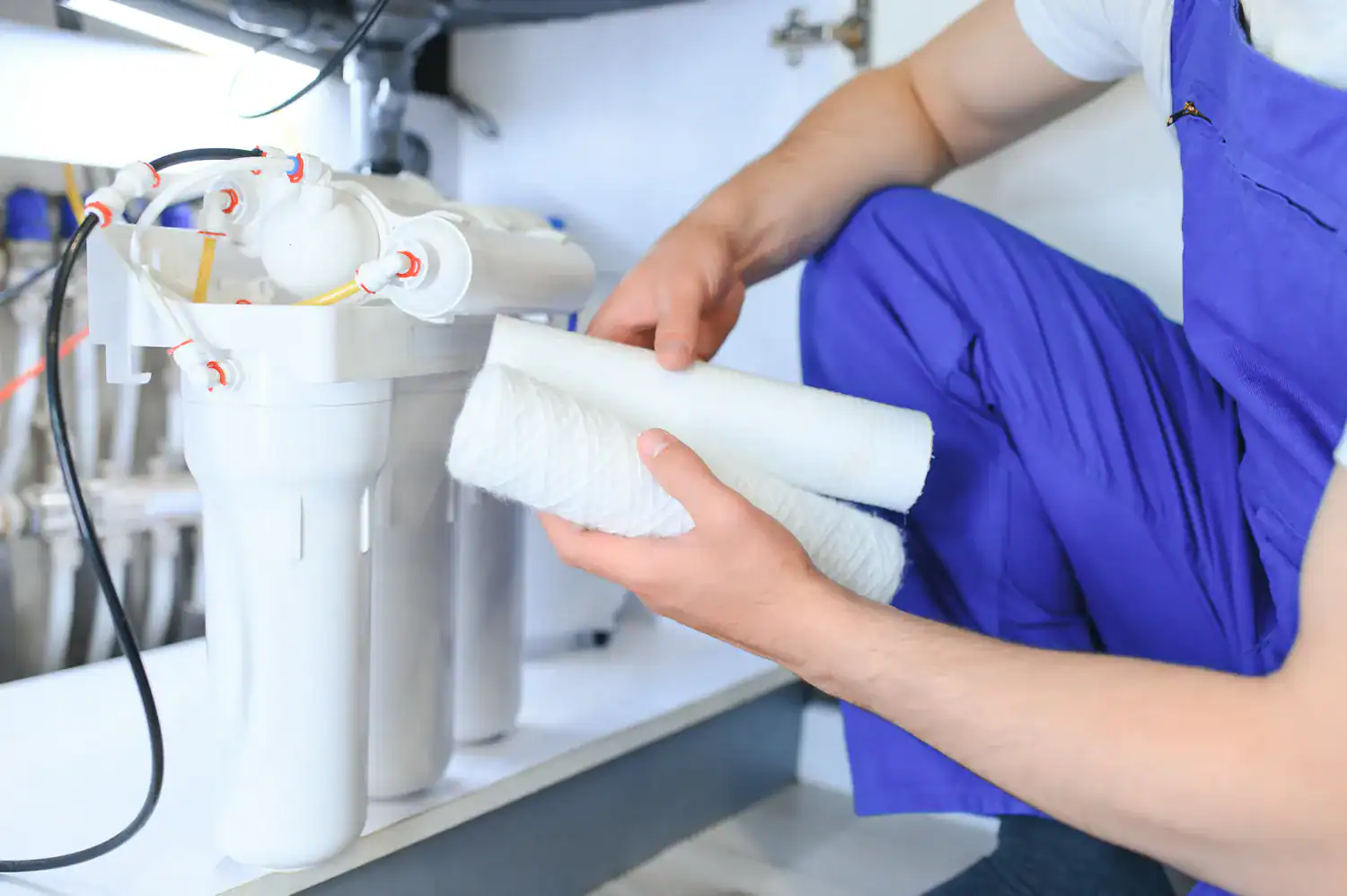
For a standard under-sink reverse osmosis system, the pre-filters the sediment and carbon stages that protect the membrane typically need to be replaced once a year under normal use. The RO membrane itself lasts longer, usually two to five years depending on your water quality and how much water your household uses. A post-filter, which polishes the water as it leaves the storage tank, is generally replaced annually as well.
For Oyster Creek homeowners, the specific service schedule can vary based on what your water test shows. Higher sediment loads or elevated dissolved solids both of which are common with Biscayne Aquifer water can shorten filter life compared to households on lower-demand water sources.
We track the systems we install and follow up on service intervals, so you’re not left guessing when something needs attention. This is part of why the zero-complaint BBB record exists the relationship doesn’t end at installation.
Please provide your email address so that we can stay in touch and answer any questions you have! We will be reaching back out shortly.
"*" indicates required fields