Reach Out Today
Please provide your email address so that we can stay in touch and answer any questions you have! We will be reaching back out shortly.

Hear from Our Customers
If you’ve lived in Maitland for more than a few months, you’ve probably noticed the white crust forming around your faucets, the film on your dishes, or the way your showerhead slowly loses pressure. That’s not a maintenance issue. That’s what happens when water carrying 13 or more grains per gallon of dissolved minerals runs through your home every day.
Orange County sits on top of one of the most mineral-dense aquifers in the country. The City of Maitland draws directly from it. Hard water doesn’t make you sick, but it does scale your appliances, reduce soap effectiveness, and shorten the life of your water heater and dishwasher.
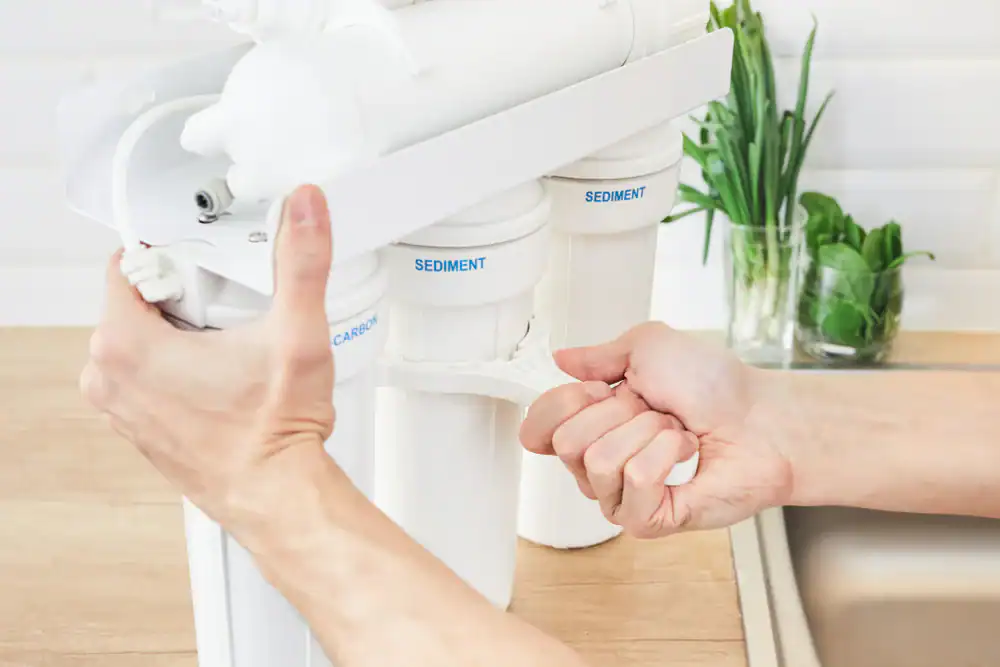
A reverse osmosis system changes that at the point that matters most where you drink. Water gets pushed through a membrane fine enough to block dissolved minerals, chlorine byproducts, and trace contaminants that a standard filter won’t touch. That means no more buying cases of bottled water, no more wondering what’s actually in your glass, and no more scale eating away at your appliances.
For homeowners in Maitland where the median home value sits around $500,000 this isn’t just about taste. A properly installed RO system is one of the most practical investments you can make in a home you’ve put real money into.
—
We do one thing: water treatment. Not plumbing. Not water heaters. Just water and we know Central Florida’s supply the way a specialist should. We understand the Floridan Aquifer, the specific contaminant profile of Orange County municipal systems, and what it actually takes to treat water that’s been sitting in limestone for centuries before it reaches your tap in Maitland.
We hold an A-rating with the Better Business Bureau, a 5-star score, and zero complaints on record which, in this industry, is genuinely rare. We’re also active members of the National Water Quality Association, which means our technicians are trained to the industry’s professional standard, not just licensed to turn a wrench.
Serving homeowners across Orange County and the Maitland area, we don’t recommend a system until we’ve tested your water first. Real lab-grade analysis not a quick dip strip designed to justify a sale. If you’re near the Maitland Center corridor or over by Lake Lily, the process is the same: test first, recommend second, install only what your water actually needs.
—
It starts with a free water analysis. One of our technicians comes to your Maitland home and tests your actual water not a generic Central Florida sample, but what’s coming out of your specific tap. The City of Maitland’s municipal system draws from the Floridan Aquifer, and while the city meets federal legal standards, the EWG has documented trihalomethanes in Maitland’s water above their health guidelines. You deserve to know exactly what’s in yours before we recommend a thing.
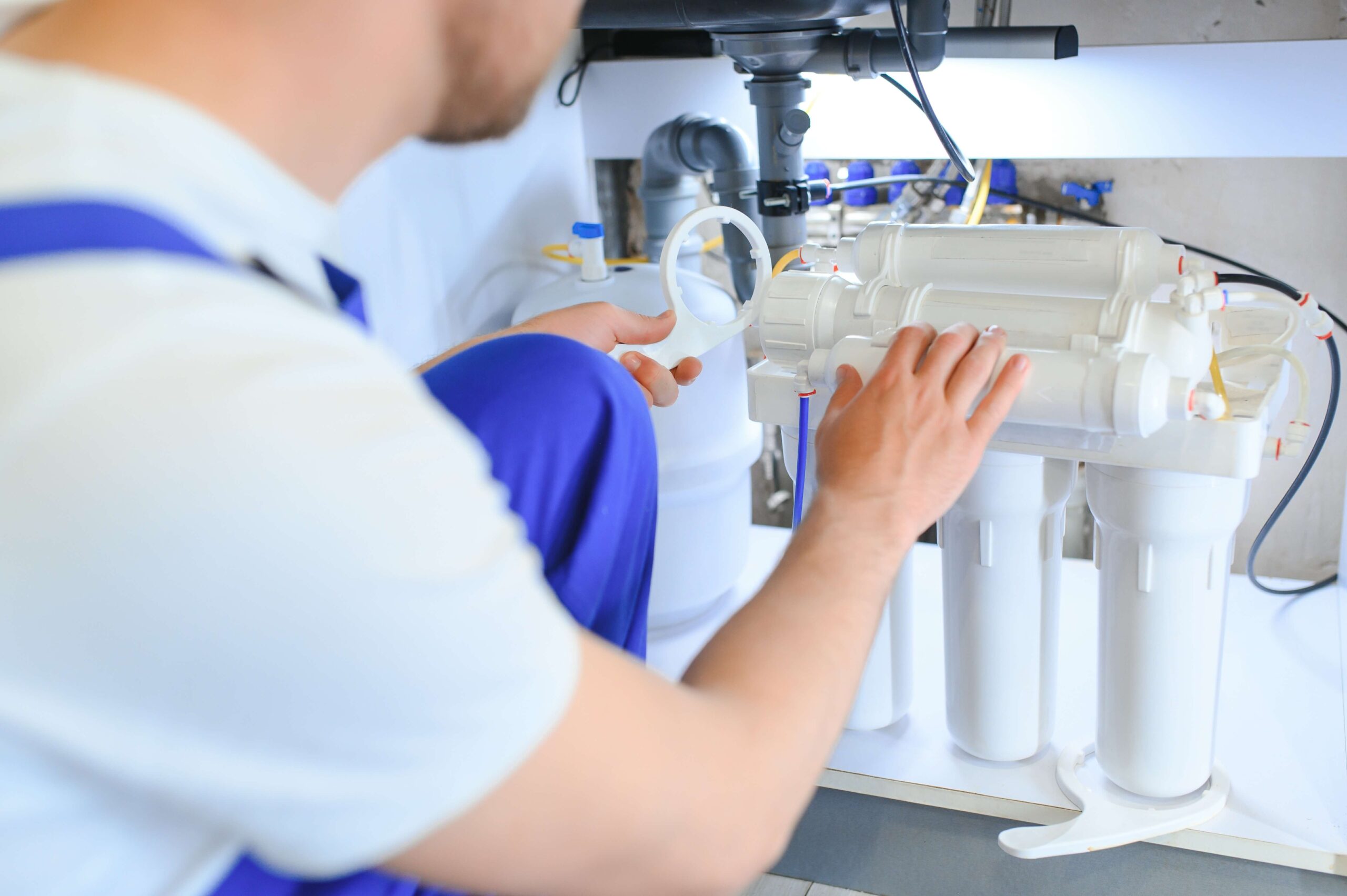
Once the test results are in, you’ll get a straight explanation of what was found and what system, if any, would address it. If an under-sink RO system is the right fit, installation is typically completed in a few hours with no major disruption to your home. Whole-house systems take a bit longer and may require a permit depending on scope we walk you through that before anything is scheduled, so there are no surprises.
After installation, the system runs quietly under your sink or inline with your main supply. Pre-filters typically need changing once a year. The RO membrane itself lasts two to five years depending on your water’s mineral load which, in Maitland, tends to be on the higher end. We handle the maintenance reminders and the service calls, because a system that nobody services isn’t doing its job.
—

Ready to get started?
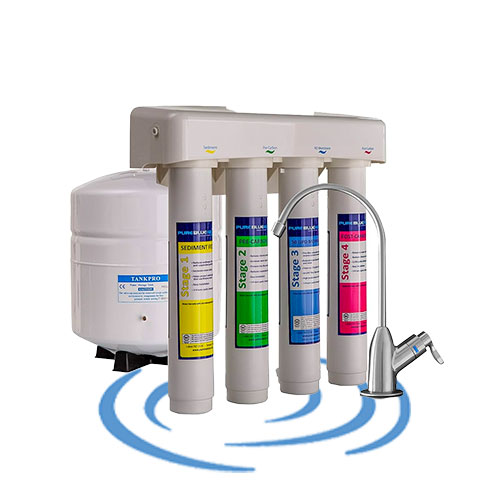
An under-sink reverse osmosis system is the most common installation for Maitland homeowners it sits beneath your kitchen sink, connects to a dedicated faucet, and filters water through a multi-stage process that removes dissolved solids, chlorine byproducts, heavy metals, and PFAS compounds down to the parts-per-trillion level. Given that Maitland’s water system has active PFAS monitoring under the EPA’s 2024 rules, that last point matters more than it used to.
For households that want clean water at every tap not just the kitchen a whole-house reverse osmosis system treats the water before it reaches any fixture in your Maitland home. This is especially relevant in older homes, where aging pipes can introduce additional concerns that a point-of-use filter alone won’t fully address. Homes built in the mid-20th century along some of Maitland’s established neighborhoods near Lake Maitland or Dommerich Estates may have infrastructure that compounds what’s already in the municipal supply.
Both system types use components manufactured to NSF certification standards. The system is sized based on your water test results not a one-size-fits-all package. And because Florida removed fluoride from public water supplies in July 2025, there’s been a noticeable uptick in homeowners re-evaluating what’s actually coming out of their taps. If that’s what brought you here, a water test is the right first step.
—
It depends on what’s in your specific water which is exactly why testing matters before we recommend anything. That said, the City of Maitland draws from the Floridan Aquifer, and that source carries a documented mineral load. Orange County water hardness ranges from 8 to 19 grains per gallon depending on the area, with many zones averaging around 13 GPG. Anything above 10.5 GPG is classified as very hard.
Hard water doesn’t make you sick, but it does scale your appliances, reduce soap effectiveness, and shorten the life of your water heater and dishwasher. Beyond hardness, the Environmental Working Group has documented trihalomethanes disinfection byproducts in Maitland’s municipal water above their health guidelines, even while remaining within EPA legal limits. PFAS monitoring is also ongoing under the EPA’s 2024 rules.
For a family drinking tap water daily in a home worth $500,000 or more, those aren’t abstractions. A reverse osmosis system is one of the few residential technologies that addresses all of it at once.
—
An under-sink reverse osmosis system treats water at a single point typically your kitchen sink through a dedicated faucet. It’s the most common and cost-effective starting point for Maitland homeowners who want clean drinking and cooking water without a major installation. Most under-sink systems include three to five filtration stages and produce water that’s had 95 to 99 percent of dissolved contaminants removed. Installation is usually completed in a few hours.
A whole-house reverse osmosis system treats all the water entering your Maitland home before it reaches any fixture showers, laundry, ice makers, every tap. This is a larger investment and a more involved installation, but it’s the right choice if you want full-home protection or if you have concerns about older plumbing. In Maitland, where a portion of the housing stock dates back several decades, whole-house treatment can also help offset what aging pipes might add to the water after it leaves the municipal system. We’ll tell you honestly which one fits your situation after testing your water not before.
—
Under-sink reverse osmosis systems typically run between $300 and $700 for the unit itself, with professional installation bringing the total to roughly $500 to $1,200 depending on your setup and whether any additional plumbing work is needed. Whole-house systems are a larger investment generally in the range of $2,500 to $6,000 or more, depending on the size of your home, your water’s mineral content, and the system’s flow rate capacity.
For Maitland homeowners, the cost comparison that matters most is usually against bottled water. A family spending $60 to $100 a month on bottled water is spending $720 to $1,200 a year every year on water that’s often just municipal tap water filtered at a factory and shipped in plastic. Most under-sink RO systems pay for themselves within two to four years on that math alone, and then keep producing clean water for another decade or more. We provide transparent pricing after the water test, so you know what you’re getting and why before anything is scheduled.
—
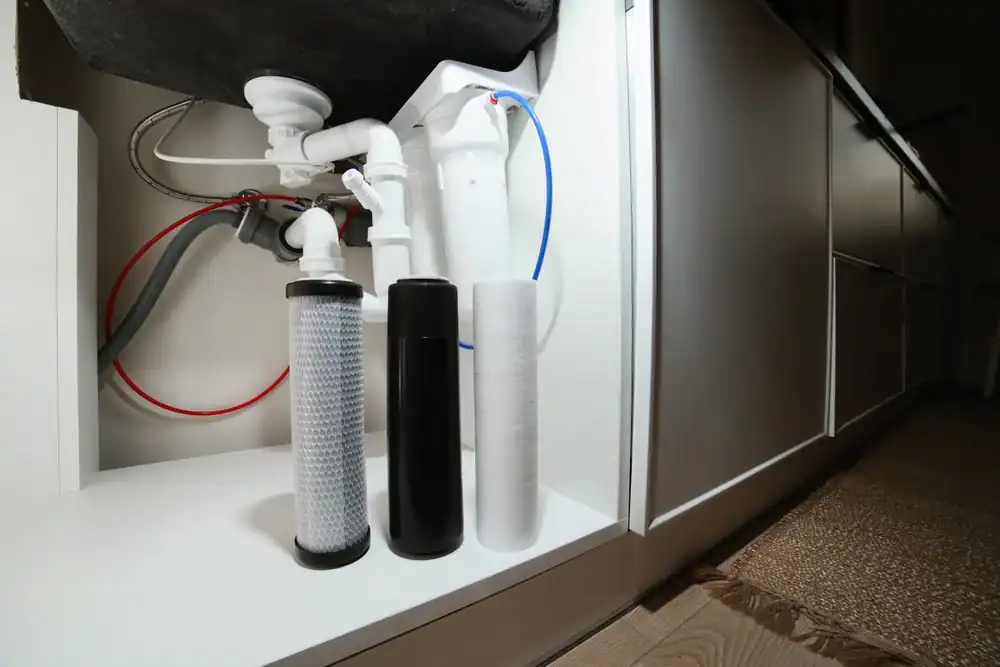
A standard under-sink RO system has two main maintenance items: pre-filters and the RO membrane. Pre-filters which catch sediment and chlorine before water reaches the membrane typically need replacing every 6 to 12 months. The RO membrane itself lasts anywhere from 2 to 5 years depending on how hard your water is and how much water your household uses.
In Maitland, where the municipal supply carries a significant mineral load from the Floridan Aquifer, pre-filters tend to work harder than they would in areas with softer source water. That means staying on a consistent replacement schedule matters more here than it might elsewhere. Skipping a filter change doesn’t just reduce water quality it puts more strain on the membrane and shortens its life. We track your system and reach out when service is due, so you’re not left guessing or waiting until something stops working.
—
Yes reverse osmosis is one of the most effective residential technologies for PFAS removal, capable of reducing PFAS concentrations by 90 percent or more at the point of use. This is relevant in Maitland because the City of Maitland’s water system has active PFAS monitoring data on record under the EPA’s 2024 drinking water rules, which require ongoing testing through 2029.
Current measurements in Maitland are below EPA health-based guidelines, but the regulatory thresholds for safe PFAS exposure have been tightening consistently as research develops. “Below the current legal limit” and “no health concern” are not the same thing and for parents, pregnant women, and anyone drinking tap water daily, that distinction is worth taking seriously. An RO system installed at your kitchen sink gives you a layer of protection that doesn’t depend on where the regulations land next year. If PFAS is part of why you’re researching this, it’s a completely reasonable concern, and a water test will tell you exactly what’s present in your home’s supply.
—
Please provide your email address so that we can stay in touch and answer any questions you have! We will be reaching back out shortly.
"*" indicates required fields