Reach Out Today
Please provide your email address so that we can stay in touch and answer any questions you have! We will be reaching back out shortly.

Hear from Our Customers
If you’ve been buying bottled water or running a pitcher filter, you already know something feels off about your Lake Copeland tap water. The thing is, those fixes don’t actually solve the problem they just work around it.
An under-sink reverse osmosis system removes up to 99% of dissolved contaminants at the point of use. Water is forced through a semi-permeable membrane with pores of 0.0001 microns small enough to block lead, arsenic, PFAS, nitrates, fluoride, and the disinfection byproducts that have been documented in Orlando’s water supply.
For Lake Copeland specifically, that matters more than it might in a newer neighborhood. Most homes here were built between the 1910s and 1940s long before modern plumbing standards existed. Even if Orlando Utilities Commission delivers water that meets federal requirements at the plant, that water still travels through decades of interior pipe before it reaches your glass. Lead, rust, and mineral deposits can enter your water inside your own home, after it leaves the utility’s system entirely.
A point-of-use RO system is the only fix that addresses what happens on your side of the meter. There’s also the hard water factor. Orlando’s water comes from the Floridan Aquifer a massive limestone formation that naturally loads the water with calcium and magnesium. That mineral content leaves scale on your fixtures, your appliances, and the original tile and finishes that make your historic home worth what you paid for it.
Filtered, softened water at the tap protects both your family and the investment you’ve made in your property.
Quality Safe Water of Florida LLC doesn’t install water heaters. We don’t fix toilets or run drain lines. Water treatment is the only thing we do, and that focus means the person who shows up at your Lake Copeland home has seen every variation of Central Florida’s water chemistry including the specific contaminant profile that comes with being on Orlando Utilities Commission’s system and living in a home with older plumbing.
We hold an A-rating with the Better Business Bureau, a 5-star customer rating, and zero complaints on record. That’s a public record you can verify at bbb.org before you ever call us. We’re also members of the National Water Quality Association, which means our recommendations are grounded in current industry standards not whatever system happens to be on the truck.
Homeowners throughout Lake Copeland trust us because we test your water before we recommend anything, we install systems that are sized to your actual results, and we service what we sell. That last part is rarer in this industry than it should be.
It starts with a real water test not a quick hardness strip designed to justify a sale, but lab-grade analysis of what’s actually present in your Lake Copeland home’s water supply.
Where homes have individual plumbing histories and the municipal supply has documented concerns around trihalomethanes, arsenic, and chromium-6, what comes out of your tap can vary from one block to the next. The test tells us what we’re actually dealing with before we recommend anything.
From there, we size and recommend a system based on your results. For most Lake Copeland homeowners, an under-sink reverse osmosis system installed at the kitchen tap is the right starting point it handles drinking and cooking water directly at the point of use. For whole-house concerns, we can discuss a point-of-entry system that addresses water throughout your home, including protecting your older plumbing and appliances from mineral buildup.
Installation is clean and straightforward. Under-sink RO systems don’t require a building permit in Florida and are typically completed in a few hours. Whole-house systems involving supply line modifications may require a licensed contractor and permit coordination with Orange County we handle that coordination.
Because many Lake Copeland homes sit in historic preservation overlay districts, we work carefully around original fixtures and finishes. When we’re done, we walk you through filter replacement schedules, what to expect from your system, and how to reach us when service is due.
Ready to get started?
A reverse osmosis system works by forcing water through a semi-permeable membrane at 0.0001 microns small enough to block lead, arsenic, chromium-6, radium, nitrates, PFAS, fluoride, and the disinfection byproducts like trihalomethanes that independent testing has found in Orlando’s water supply.
It’s not a carbon filter that improves taste. It’s molecular-level filtration that removes what most people don’t even know is in their water.
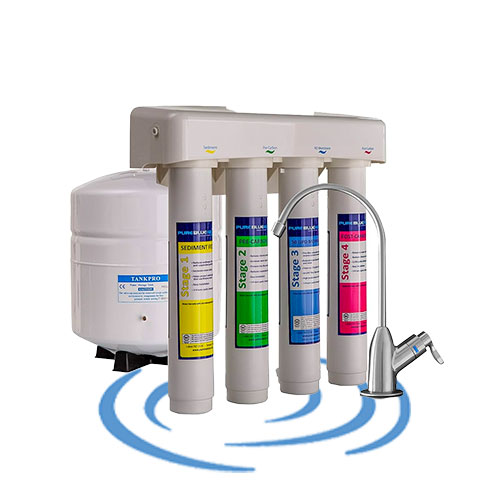
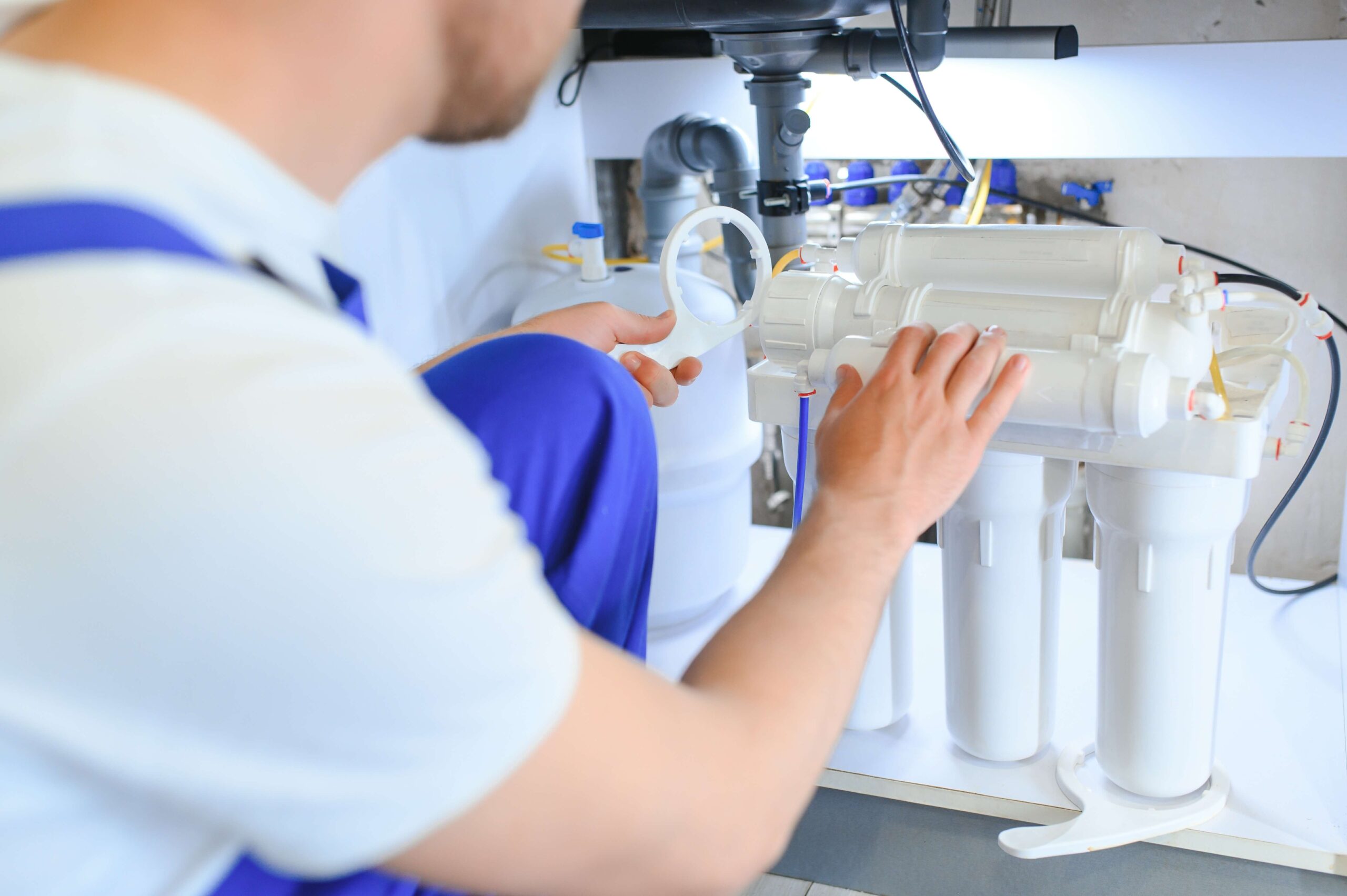
For Lake Copeland homeowners, the system we recommend is based on your actual water test results not a package tier that gets pushed regardless of what your water shows. Most residential installations in this area include a multi-stage under-sink unit with a dedicated drinking tap, a sediment pre-filter, a carbon block stage, the RO membrane itself, and a post-filter polishing stage before the water reaches you.
If your test shows elevated hardness or specific contaminants beyond what an under-sink unit addresses, we’ll talk through whether a whole-house system makes sense for your situation.
If you’re active military, a veteran, or a first responder, you qualify for a $500 discount on your installation. We also actively support the Tunnels to Towers Foundation, which provides mortgage-free homes to the families of fallen first responders and Gold Star families. That reflects what we think a local business should stand for.
Lake Copeland is served by Orlando Utilities Commission, which draws water from the Floridan Aquifer and treats it with ozone and chlorination before distribution. Independent testing has identified several contaminants of concern in OUC’s supply, including total trihalomethanes disinfection byproducts that form when chlorine reacts with organic matter at levels that have approached or exceeded EPA limits. Arsenic, chromium-6, radium, and chlorate have also been documented in OUC water.
Beyond what the utility delivers, homes in Lake Copeland face an additional layer of risk that newer neighborhoods don’t. Most of the housing stock here was built between the 1910s and 1940s, when lead solder and galvanized steel pipes were standard. Lead can leach into your water from your own interior plumbing after the water has already left OUC’s system.
Orange County Utilities has measured lead at up to 7.89 ppb at the 90th percentile. There is no established safe level of lead exposure, according to the EPA, CDC, and American Academy of Pediatrics. A point-of-use reverse osmosis system removes lead and the other contaminants listed above before the water reaches your glass.
Pitcher filters are designed to improve taste and reduce chlorine and they do that reasonably well. What they don’t do is remove lead, arsenic, PFAS, nitrates, fluoride, chromium-6, or the trihalomethanes that have been documented in Orlando’s water supply. Those contaminants pass right through activated carbon filtration because they require a different mechanism to remove.
Reverse osmosis operates at 0.0001 microns, which is small enough to block dissolved heavy metals and chemical compounds that a pitcher filter never touches.
The practical difference matters in a Lake Copeland home. If you’re in a pre-WWII house here, you have decades of plumbing between the municipal supply and your tap. A pitcher filter sitting on your counter does nothing about what’s happening inside those pipes. An under-sink RO system filters at the point of use right before the water reaches you which is the only way to address both what the utility delivers and what your interior plumbing might be contributing.
Most families who make the switch stop buying bottled water entirely within the first month.
Reverse osmosis is one of the most effective technologies available for removing PFAS the so-called “forever chemicals” that have received significant national and local media attention. A properly maintained RO membrane removes the vast majority of PFAS compounds from drinking water, which is more than most filtration technologies can claim.
The 1,4-dioxane situation is worth addressing directly, because it made local news in Orlando in the summer of 2023. Authorities found concentrated levels of 1,4-dioxane a chemical linked to liver and kidney cancer in the Floridan Aquifer, believed to have infiltrated from a now-closed factory. Reverse osmosis does reduce 1,4-dioxane, though it is a smaller molecule than most RO targets and removal rates can vary by system.
If 1,4-dioxane is a specific concern for you, we can discuss that during your water test consultation and recommend the appropriate system configuration. The important thing is that you’re not relying on a pitcher filter or refrigerator filter for a contaminant of this type those technologies are not designed for it.
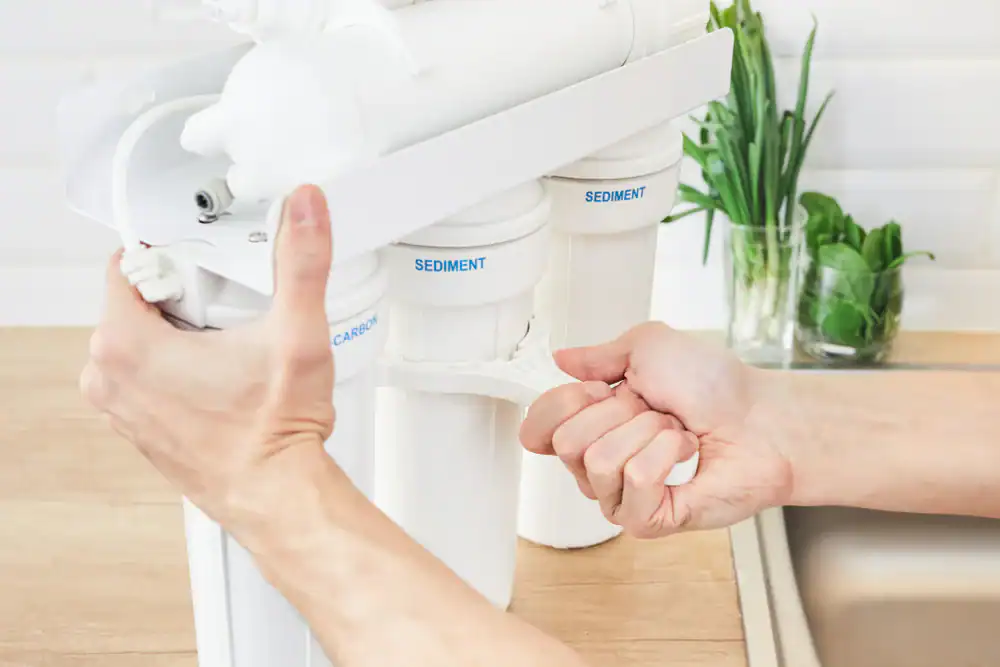
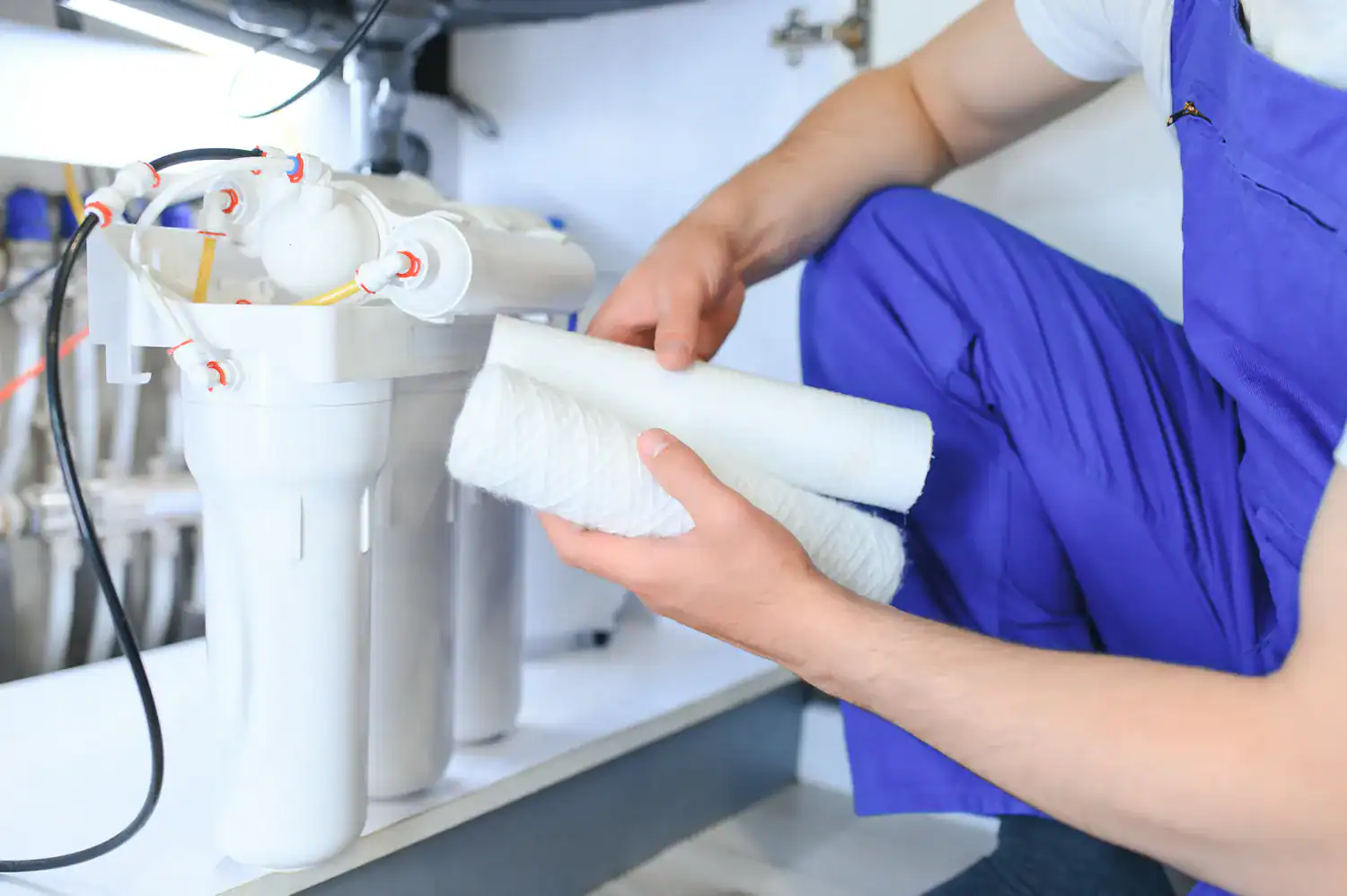
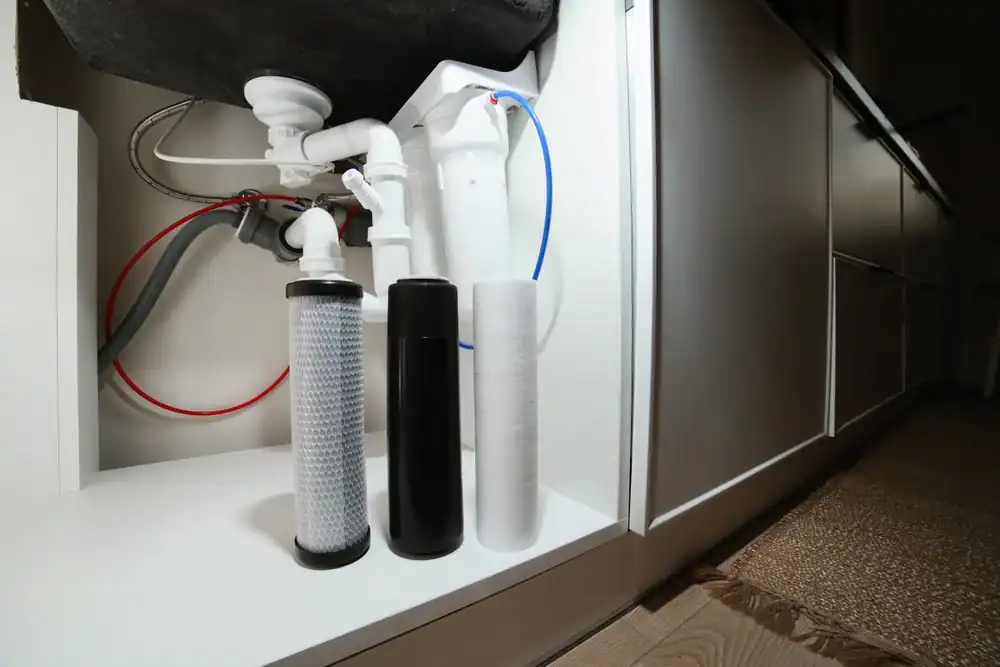
A standard under-sink reverse osmosis system has a few components that need attention on different schedules. The pre-filters typically a sediment filter and a carbon block should be replaced every six to twelve months depending on your water quality and usage. The RO membrane itself typically lasts two to five years. The post-filter polishing stage is usually replaced annually.
Your system will often have an indicator or we’ll set you up with a maintenance schedule so you’re not guessing.
In Central Florida, the Floridan Aquifer’s mineral content can put more load on pre-filters than you’d see in areas with naturally softer water. If your Lake Copeland home has older plumbing which is common throughout this neighborhood’s historic housing stock sediment and particulate levels at your tap may also be higher than average, which can shorten pre-filter life.
We’ll factor that into your maintenance schedule based on what your initial water test shows. And when service is due, we’re still here same company, same contact, same accountability. That’s not a given in this industry, and it’s worth asking any company you consider about their long-term service model before you sign anything.
This is one of the most common questions we get, and it’s a fair one. Under-sink reverse osmosis systems use a small storage tank typically two to four gallons that holds pre-filtered water under pressure. When you open the dedicated RO tap, you’re drawing from that tank, not filtering in real time. Flow from the RO tap will be slightly slower than your standard tap, which is normal and expected.
It’s not a trickle it’s a steady, usable flow that fills a glass or a pot without issue.
Where pressure becomes relevant is in your home’s existing plumbing. Older homes in Lake Copeland can have pressure variations due to aging pipes, mineral buildup inside the lines, or the configuration of the original plumbing. These factors don’t affect the RO system’s output quality, but they’re worth noting during installation.
We assess your under-sink setup before installation to make sure the system is configured correctly for your specific plumbing conditions. If there’s anything that needs to be addressed for proper function, we’ll tell you upfront before any work begins.
Please provide your email address so that we can stay in touch and answer any questions you have! We will be reaching back out shortly.
"*" indicates required fields