Reach Out Today
Please provide your email address so that we can stay in touch and answer any questions you have! We will be reaching back out shortly.

Hear from Our Customers
Once your water is treated, the difference is immediate. Your drinking water stops tasting like it came from the ground. Your appliances stop scaling up and failing early. Your laundry comes out cleaner. The staining stops. The smell goes away. For homeowners in Kendrick who’ve simply normalized these problems over the years, it can feel like a completely different house because the water running through it finally is.
There’s also what you can’t see or taste. Kendrick sits in the middle of Marion County’s agricultural corridor horse farms, cattle operations, row crops and the same porous limestone that gives this region its character also lets fertilizer-derived nitrates and agricultural chemicals seep into the groundwater. A properly configured reverse osmosis system removes what a standard filter won’t touch: nitrates, dissolved minerals, agricultural compounds, and more.
You’re not just improving the taste. You’re addressing what’s actually in the water.
Quality Safe Water of Florida LLC does one thing: water treatment. Not plumbing. Not water heaters. Just water purification, softening, and filtration across North and Central Florida, including the rural well-water communities of Marion County like Kendrick, Sparr, Reddick, and Lowell.
That focus matters because the Floridan Aquifer has a specific personality, and treating it well takes experience that generalists don’t have.
We hold an A-rating with the Better Business Bureau and a 5-star customer rating with zero complaints on file. That’s a public record go to bbb.org and look it up. In an industry where the most common complaint is a company that installs a system and then disappears, that track record is the clearest thing we can show you.
We’re also members of the National Water Quality Association, supporters of the Tunnels to Towers Foundation, and we offer a $500 discount for active military, veterans, and first responders a meaningful number in a county where that community runs deep.
It starts with a real water test. Not a quick hardness strip from a kit an actual lab-grade analysis of what’s coming out of your specific well. Because no two wells in Kendrick are identical, and the right system for your home depends entirely on what your water contains.
Iron levels, sulfur presence, hardness, nitrates, bacterial indicators all of it gets measured before anything gets recommended.
Once the test results are in, a technician walks you through what was found and what it means. If a reverse osmosis system is the right fit, we’ll explain which configuration makes sense for your situation whether that’s an under-sink RO system for drinking water, a whole-house purification setup, or a combination that includes pre-treatment for iron or sulfur before the water ever reaches the RO membrane.
Marion County’s well water often needs that pre-treatment stage, especially in agricultural areas like the Kendrick corridor where iron and hydrogen sulfide concentrations run higher than in suburban wells closer to Ocala.
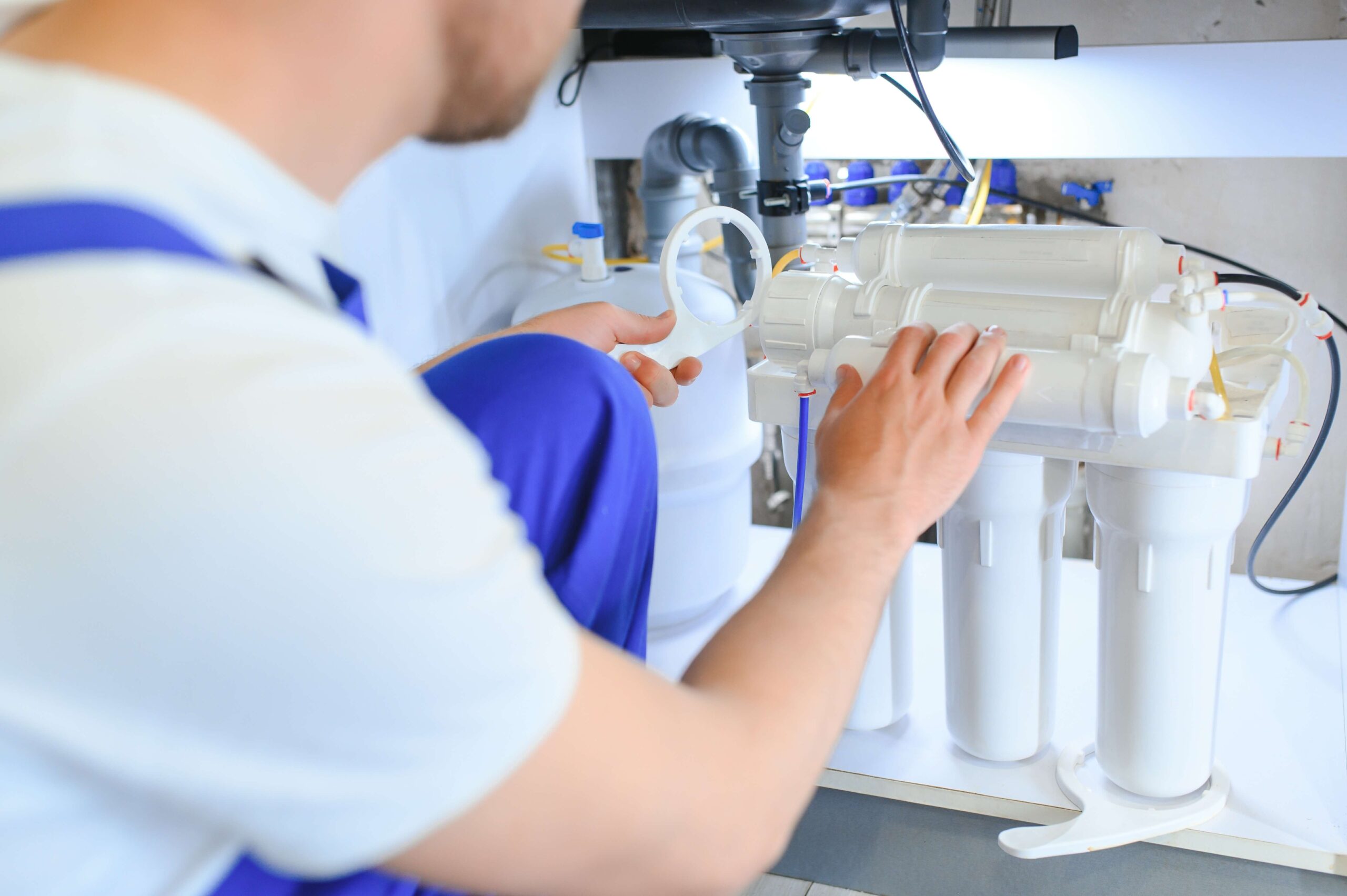
Installation is handled by our own technicians not subcontractors. Because Kendrick is unincorporated Marion County, any plumbing work that modifies existing supply lines falls under Marion County’s Growth Services permitting process, and we coordinate that on your behalf.
After installation, we walk you through the system, explain the maintenance schedule, and stay reachable for service. That last part is the one most companies skip.
Ready to get started?
A reverse osmosis system works by pushing water through a semi-permeable membrane with pores so small 0.0001 microns that dissolved minerals, nitrates, heavy metals, agricultural chemicals, and most contaminants simply can’t pass through. What comes out the other side is clean, clear drinking water.
For Kendrick homeowners on private wells, that process is doing work that no municipal treatment plant is doing on your behalf.
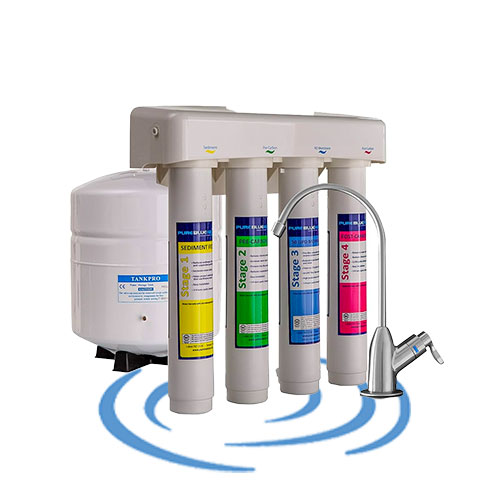
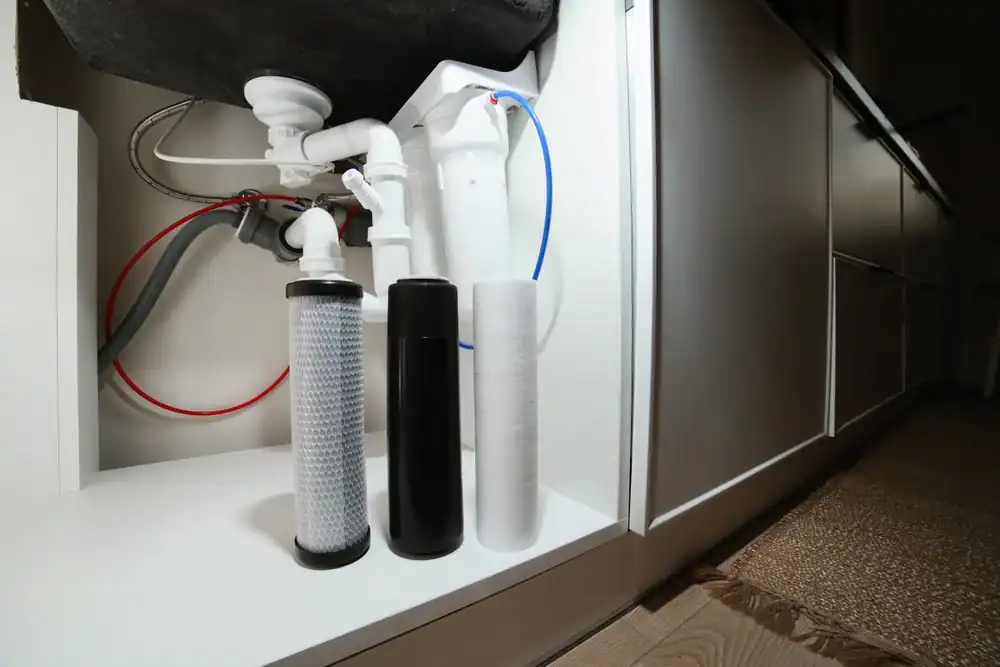
The specific system we recommend for your home depends on what the water test reveals. Under-sink RO systems are the most common starting point they sit beneath the kitchen sink, connect to a dedicated faucet, and produce purified water for drinking and cooking without affecting the rest of the house.
For homeowners dealing with iron staining on fixtures throughout the home, sulfur odor in the bathrooms, or scale buildup on the water heater and laundry appliances, a whole-house purification approach treats the water at the point of entry before it reaches any tap or appliance. Many Marion County well owners end up with a combination: a whole-house pre-treatment system for iron and hardness, paired with an under-sink RO unit for drinking water quality.
We use American-made components and systems built to last 15 to 20 years with proper maintenance. Annual filter and membrane service typically runs $100 to $200 a fraction of what most Kendrick households spend on bottled water every year. We service what we install, on an ongoing basis, which is worth asking about before you sign anything with anyone.

Technically, it might be but you won’t know without testing it. Kendrick is unincorporated Marion County, which means every home is on a private well with zero municipal oversight. There’s no annual water quality report, no regulatory monitoring, and no treatment happening before the water reaches your tap. The EPA does not test or monitor private wells. That responsibility falls entirely on the homeowner.
What makes this more than a theoretical concern is the geology. The Upper Floridan Aquifer the source for virtually every well in Kendrick is karstic limestone, meaning it’s porous and fractured in ways that allow surface contaminants to enter. The USGS has specifically documented that agricultural chemicals, including fertilizer-derived nitrates, are among the primary contamination threats to this aquifer in central Marion County.
Nitrates are colorless, odorless, and tasteless. You cannot detect them without a lab test. At elevated levels, they’re a serious health risk, particularly for infants and pregnant women. A free water analysis is the only honest starting point.
That smell is hydrogen sulfide gas a byproduct of sulfur-reducing bacteria that thrive in the warm, oxygen-poor groundwater conditions common throughout Florida’s aquifer system. In Marion County, where groundwater temperatures run warmer than in most northern states, this is an especially persistent problem.
It’s not a sign that your well is broken or contaminated in a dangerous sense but it is a sign that something in your water chemistry needs to be addressed.
The good news is it’s completely treatable. Depending on the concentration levels found in your water test, the solution might be an oxidizing filter ahead of the main water line, an aeration system, or a combination of pre-treatment and reverse osmosis. What it’s not is something you should keep living with. Hydrogen sulfide is corrosive to plumbing and fixtures over time, and its presence often indicates bacterial activity that warrants a closer look at your overall water quality picture.
A properly functioning RO system removes a wide range of dissolved contaminants by forcing water through a membrane with pores of 0.0001 microns small enough to block dissolved minerals, nitrates, heavy metals, pesticides, herbicides, chlorine byproducts, fluoride, and most organic compounds.
For well water in an agricultural area like Kendrick, the most practically important removals are nitrates and dissolved minerals like calcium, magnesium, and iron compounds that make it past pre-filtration.
It’s worth understanding what RO does not address on its own: it won’t solve an iron or sulfur problem at the whole-house level, and it won’t eliminate bacterial contamination without a UV stage added to the system. That’s why the water test matters so much before any system is sized or configured. A Kendrick homeowner dealing with high iron, sulfur odor, and nitrates in the same well needs a treatment train not just a single filter and the right combination depends entirely on what the test reveals about your specific water.
For a standard under-sink reverse osmosis system with professional installation, most homeowners in Marion County are looking at a range of roughly $300 to $800 for entry-level units up to $1,500 or more for multi-stage systems with UV disinfection or higher-capacity membranes. Whole-house RO or whole-house purification systems which are more common in rural well-water communities like Kendrick where iron and sulfur affect every tap typically run higher, depending on the flow rate required and the pre-treatment stages needed.
The more useful number to think about is the long-term cost. A system built with quality components lasts 15 to 20 years. Annual maintenance filter replacements and periodic membrane service runs approximately $100 to $200 per year.
If your household is currently spending $50 to $100 a month on bottled water, the math on a quality RO system pays off within a few years and keeps paying off for a decade and a half after that. The free water analysis is the right place to start it determines what system you actually need, which keeps you from overspending on something oversized or underspending on something that won’t solve the problem.
RO systems work with well water and in many ways, they’re more necessary for well water than for city water. Municipal water has already been treated before it reaches your home. Private well water in Kendrick has not been treated by anyone.
What comes up from the Floridan Aquifer goes directly into your pipes, and whatever the aquifer contains iron, sulfur, nitrates, hardness minerals, bacteria arrives at your tap without any filtration unless you’ve installed it yourself.
The one important difference with well water is that pre-treatment often matters more. High iron concentrations can foul an RO membrane quickly if the iron isn’t addressed upstream first. Hydrogen sulfide can damage system components. That’s why the water test comes before the system recommendation it determines whether you need pre-treatment stages ahead of the RO unit, and what those stages should be.
A well in Kendrick with high iron, moderate hardness, and elevated nitrates needs a different configuration than a well with primarily hardness and low iron. Getting that right upfront is what separates a system that performs for 15 years from one that disappoints in the first two.
Please provide your email address so that we can stay in touch and answer any questions you have! We will be reaching back out shortly.
"*" indicates required fields