Reach Out Today
Please provide your email address so that we can stay in touch and answer any questions you have! We will be reaching back out shortly.

Hear from Our Customers
The first thing most Holiday Hill homeowners notice is the taste. No chlorine edge, no flat mineral aftertaste just clean water that doesn’t make you reach for the Brita or a case of plastic bottles. That alone is enough for most people. But the benefits run deeper than what you can taste.
JEA draws from the Floridan Aquifer, roughly 1,000 feet underground, and that limestone geology loads your water with calcium and magnesium before it ever sees a treatment plant. You’ve seen the result: white scale crusting around your faucet handles, cloudy film on your glassware, a showerhead that’s half-clogged after a year. A properly installed reverse osmosis system at the point of use paired with the right whole-house approach addresses both what you’re drinking and what’s quietly wearing down your appliances.
For families in the mid-century ranch homes that define so much of Holiday Hill’s housing stock, there’s another layer worth knowing. Older plumbing can leach lead into the water between the meter and your glass, even if JEA’s system-wide numbers look fine. A reverse osmosis membrane stops lead at 95–99% removal efficiency. That’s not a small thing when you have kids drinking from the tap every day before school.
We don’t fix water heaters. We don’t clear drains or service your AC. Water treatment reverse osmosis, whole-house filtration, softening, UV purification is the only thing on our menu. That focus matters because it means every recommendation comes from someone who has spent their entire career thinking about water quality, not dividing their attention across a dozen different trades.
We hold an A-rating with the Better Business Bureau, a 5-star customer rating, and zero complaints on file. You can look that up at bbb.org before you make a single call. In an industry where national companies sell systems and then route your service calls to a call center that doesn’t know your zip code, that record is worth something real. We’re also members of the National Water Quality Association, which means ongoing training in Florida-specific water chemistry including the Floridan Aquifer mineral load that every Duval County homeowner is dealing with.
Serving Holiday Hill and the broader Southside Jacksonville corridor, as well as Century and the northeastern Escambia County area, we know the water here. Not “Florida water” in the abstract this water, from this aquifer, through these pipes.
It starts with a real water test not a quick hardness measurement designed to justify the most expensive system on the truck. We run a lab-grade analysis that looks at your actual contaminant profile: mineral load, pH, chlorine byproducts, lead, iron, and any other factors affecting what comes out of your tap. In Holiday Hill, that test almost always confirms elevated hardness from the Floridan Aquifer and disinfection byproducts from JEA’s chlorination process. In Century, where some residents are on private wells, the test might also flag iron, bacteria risk, or agricultural runoff indicators.
The system recommendation follows the test not the other way around.
Once the right system is identified, installation is handled professionally. Under-sink reverse osmosis systems typically require access to the cold water supply line beneath your kitchen sink and a small drain connection no major plumbing work in most cases. Whole-house configurations are more involved and may require a permit under Duval County or Escambia County building codes depending on scope; we handle that process so you don’t have to navigate it yourself.
After installation, you get a walkthrough of how the system works, what the maintenance schedule looks like, and when filters and membranes will need replacing. We service what we sell which means when that time comes, you’re calling the same company that installed it, not a national hotline.
Ready to get started?
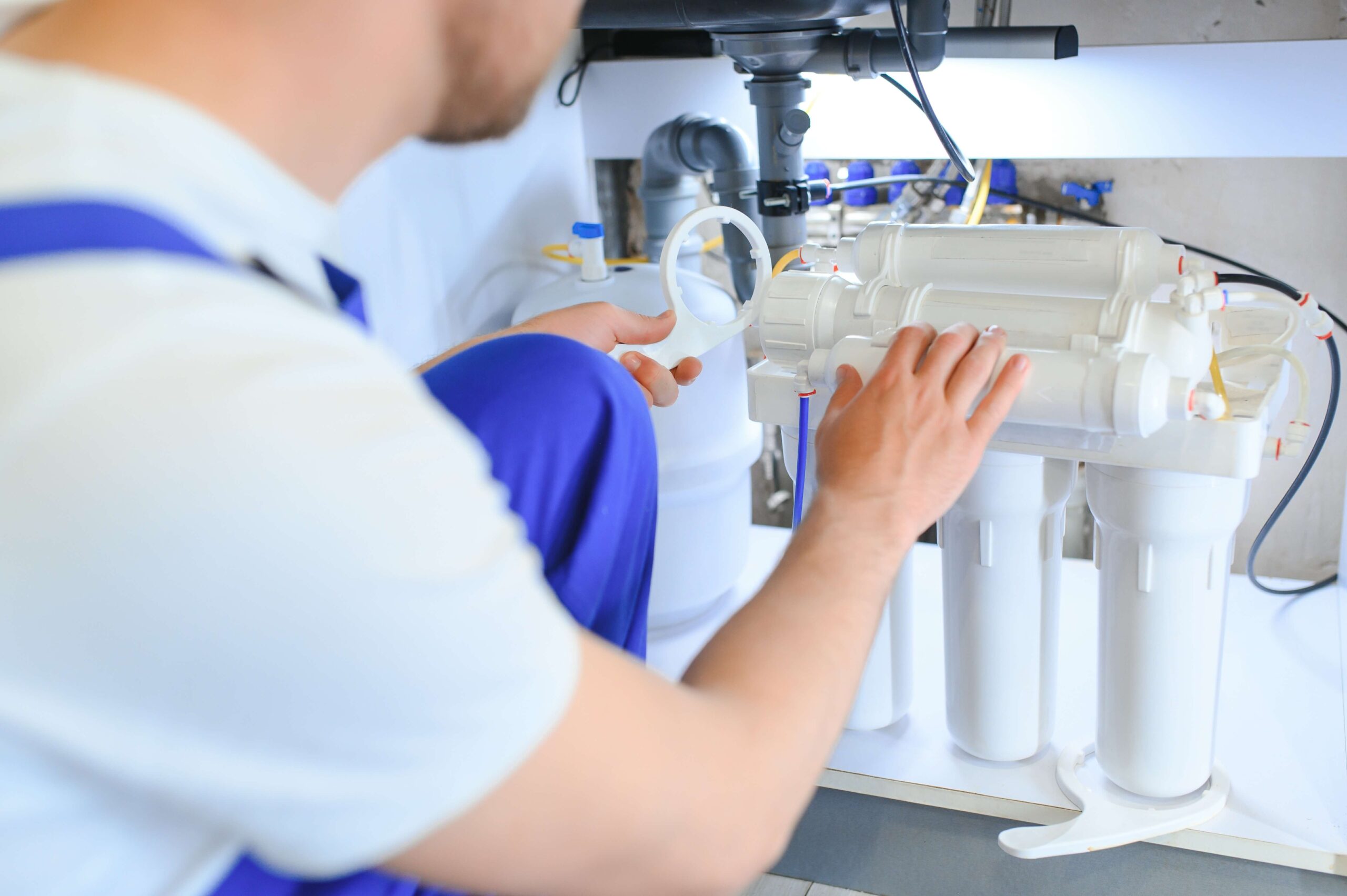
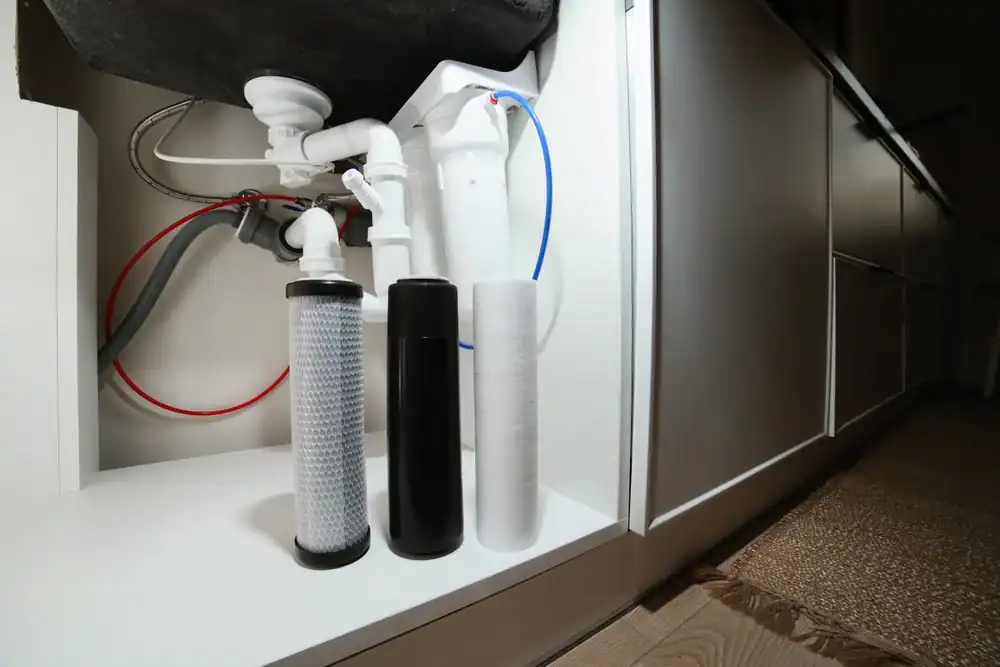
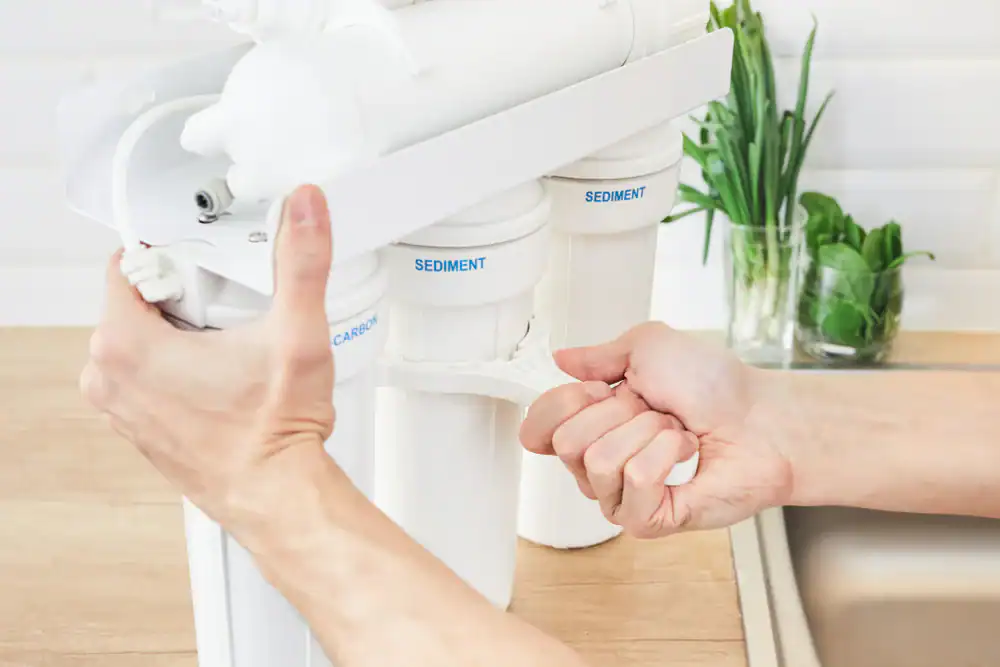
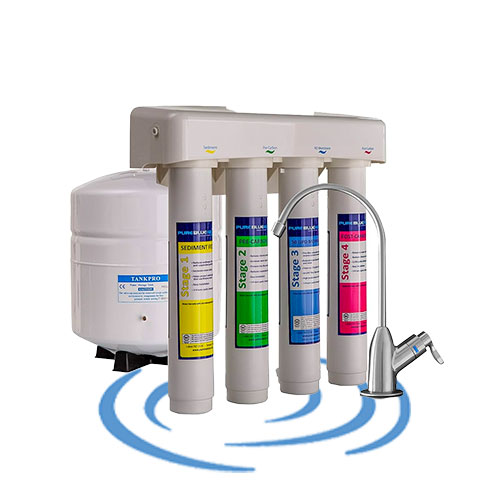
An under-sink reverse osmosis system from Quality Safe Water of Florida is a multi-stage filtration setup that forces water through a semi-permeable membrane with pores of 0.0001 microns. At that level, dissolved salts, heavy metals, chlorine byproducts, PFAS, fluoride, nitrates, and lead get rejected. What reaches your glass is water that has been stripped down to its cleanest form not improved, actually transformed. For Holiday Hill residents dealing with JEA’s documented trihalomethane levels and the hard mineral signature of the Floridan Aquifer, that distinction matters.
For Century homeowners on private wells in northeastern Escambia County, the system configuration may look different. Well water can carry iron, sulfur, or bacteria that require pre-treatment before a reverse osmosis membrane can do its job effectively. We size and build each system around what your water test actually shows not a catalog package pulled off a shelf.
Every system uses USA-manufactured components and is built to last 15–20 years with proper maintenance. Annual upkeep filter replacements and a membrane change every two to five years typically runs $150–$200 per year. Compare that to a family spending $75–$100 a month on bottled water, and the math resolves itself quickly. Active military, veterans, and first responders receive a $500 discount a meaningful number in a region that includes both NAS Jacksonville and the broader military community to the south.
JEA publishes an annual water quality report and meets EPA compliance standards so technically, yes, it meets the legal definition of safe. But compliance and clean aren’t the same thing. Individual trihalomethane samples at some Jacksonville sites exceeded the 80 ppb EPA limit in 2023, and lead was detected at 1.7 ppb in municipal sampling. That number reflects the system average, not what comes out of the tap in a mid-century ranch home in Holiday Hill where older service lines may be adding to it.
PFAS have also been detected at low levels in the JEA service area, and new EPA regulations are tightening the thresholds. A reverse osmosis system removes 95–99% of dissolved contaminants including the ones JEA’s treatment process doesn’t fully address. It’s not about distrust. It’s about going further than the legal minimum, especially if you have children drinking from the tap every day.
A pitcher filter uses activated carbon, which does a reasonable job reducing chlorine taste and some sediment. What it doesn’t do is remove dissolved solids, lead, PFAS, nitrates, fluoride, or disinfection byproducts at meaningful levels. The filtration happens at a much coarser level than most people realize.
Reverse osmosis works at the molecular level. Water is forced through a membrane with pores of 0.0001 microns small enough to reject dissolved salts, heavy metals, and chemical compounds that pass straight through a carbon filter. For Holiday Hill residents dealing with JEA’s chlorination byproducts and the Floridan Aquifer’s mineral load, the difference isn’t subtle. Most families who switch from a pitcher filter to an under-sink reverse osmosis system stop buying bottled water within the first week.
Century’s location in northeastern Escambia County, surrounded by agricultural land, creates a water quality profile that’s worth taking seriously especially if you’re on a private well. The most common issues in this region include iron, which shows up as orange staining on fixtures and laundry; hydrogen sulfide, which produces a sulfur or rotten egg smell; and bacteria risk from agricultural runoff.
We start every Century engagement with a full water analysis before recommending any system. If your well water has iron, for example, a reverse osmosis membrane alone won’t solve it you need pre-treatment first, and the system has to be built accordingly.
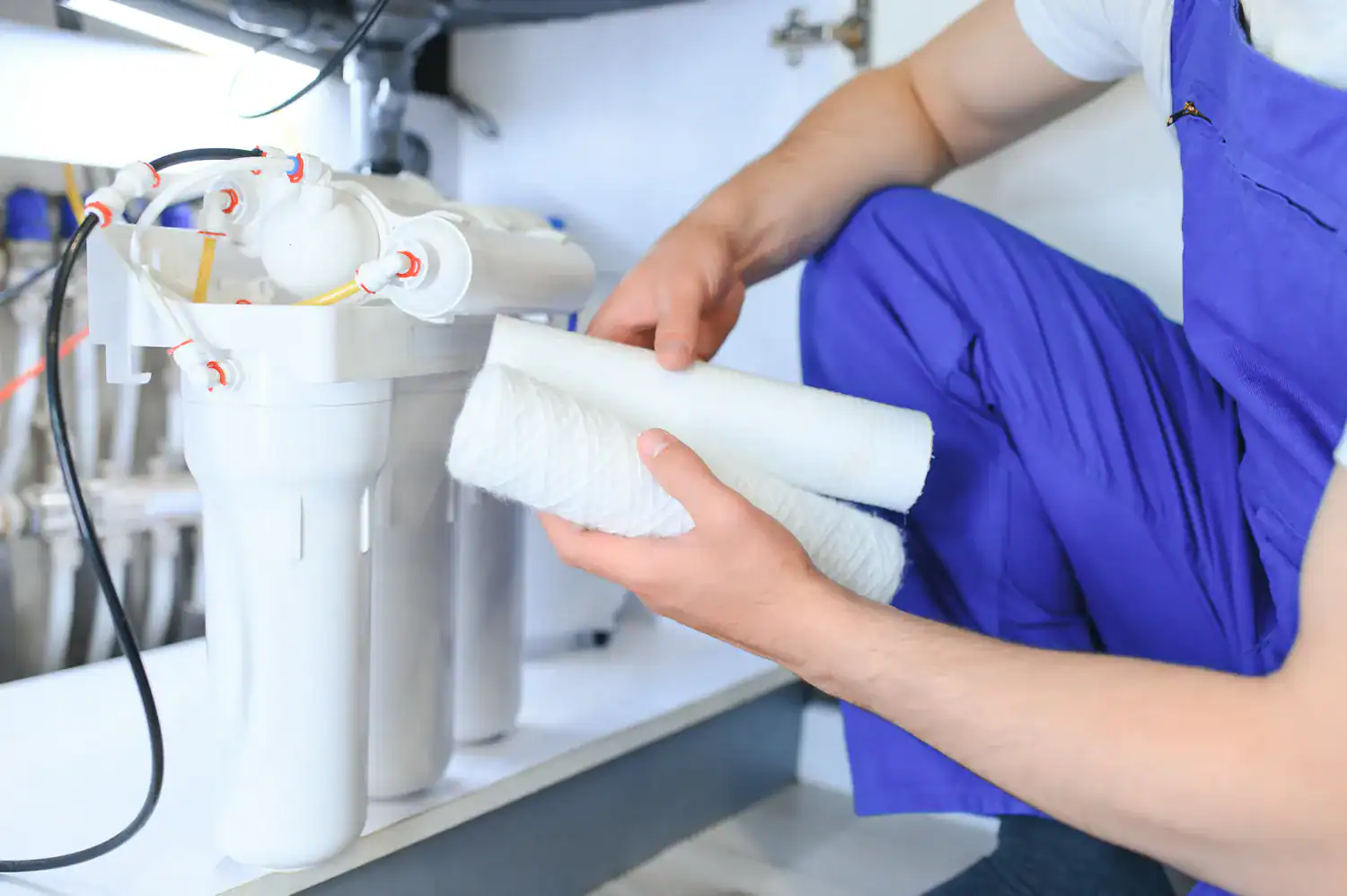
A properly installed reverse osmosis system built from quality components typically lasts 15–20 years. The system itself doesn’t wear out quickly what requires regular attention are the filter stages and the membrane. Pre-filters and post-filters generally need replacing every 6–12 months depending on your water quality and usage. The reverse osmosis membrane itself lasts two to five years under normal conditions.
In Holiday Hill, the Floridan Aquifer’s high mineral content can put slightly more demand on pre-filters than you’d see in a softer water area, so staying on schedule matters. Annual maintenance typically runs $150–$200 in parts and service. We handle this for the systems we install you’re not left searching for a compatible filter cartridge online or calling a national company that doesn’t know what they put in your house. We track your system and show up when it’s time.
This is one of the most practical questions Holiday Hill homeowners should be asking, and most don’t think to ask it until after a storm. Jacksonville’s hurricane season runs June through November, and JEA has historically issued boil-water notices for portions of Duval County following major storm events when infrastructure is compromised. A standard under-sink reverse osmosis system provides an additional layer of protection during those periods but it’s important to understand the limits.
A reverse osmosis membrane removes bacteria and many pathogens, but it is not rated as a standalone solution for heavily contaminated or biologically unsafe water during a declared emergency. If JEA issues a boil-water notice, the safest approach is to follow it. What a reverse osmosis system does is give you a meaningful head start cleaner baseline water, reduced chemical exposure, and a system that continues functioning when the tap is running but the water quality is questionable. For Century residents near agricultural areas, where flooding can affect well quality quickly, a UV purification stage added to the reverse osmosis system provides an additional layer of biological protection.
Please provide your email address so that we can stay in touch and answer any questions you have! We will be reaching back out shortly.
"*" indicates required fields