Reach Out Today
Please provide your email address so that we can stay in touch and answer any questions you have! We will be reaching back out shortly.

Hear from Our Customers
If your water has a faint chlorine smell, leaves white residue on your fixtures, or just doesn’t taste right, you’re not imagining it. Jacksonville’s water comes from the Floridan Aquifer a limestone formation nearly 1,000 feet underground and by the time it reaches your tap in Hidden Hills, it’s carrying an average of 15.3 grains per gallon in dissolved minerals. That’s well above the “very hard” classification.
Add in the disinfection byproducts that form when JEA chlorinates that mineral-rich groundwater, and you have water that’s technically compliant but genuinely hard to live with. For Hidden Hills homeowners, that matters more than most. The homes in this community were built primarily from the late 1970s through the 2000s, which means the plumbing, water heaters, and appliances have been absorbing that mineral load for decades.
Scale builds up inside pipes and water heaters. Dishwashers work harder and fail sooner. Shower glass etches. Fixtures stain. A reverse osmosis system addresses the water at the point you actually use it and a whole-house system addresses every tap, every appliance, every shower.
Once the water is clean, the difference is immediate. Better-tasting drinking water. No more mineral deposits on your fixtures. Appliances that run more efficiently and last longer. And no more monthly spend on bottled water that’s often just municipal tap water packaged in plastic. For a home in Hidden Hills, where properties average over $760,000, protecting your investment with clean water is one of the more straightforward decisions you can make.
Quality Safe Water of Florida LLC does one thing: water treatment. Not plumbing. Not HVAC. Not a side service bolted onto something else. Just water softening, filtration, purification, and reverse osmosis with the training and credentials to back it up.
We hold a BBB A-rating with a 5-star score and zero complaints on file. That’s a public record you can verify right now at bbb.org. We’re also members of the National Water Quality Association, which means ongoing, specialized training in Florida’s specific water chemistry not generic knowledge applied loosely.
For homeowners in Hidden Hills and throughout the East Arlington area, that specialization matters. We know JEA’s water supply, the Floridan Aquifer’s mineral profile, and what it actually takes to treat water in Duval County homes including the older plumbing in established neighborhoods like Hidden Hills. We also support the Tunnels to Towers Foundation and offer a $500 discount to military personnel and first responders a meaningful offer in a county that’s home to NAS Jacksonville.
It starts with a real water test. Before we recommend any system, we analyze what’s actually in your water not a quick hardness check designed to justify a sale, but a lab-grade analysis that identifies what’s present in your specific Hidden Hills home’s supply.
In this area, that typically means elevated mineral hardness from the Floridan Aquifer, chlorination byproducts from JEA’s disinfection process, and in homes with older plumbing, the potential for lead introduced after the water leaves the municipal system. The test tells the truth. Our recommendation follows from there.
Once the analysis is complete, we’ll give you a clear explanation of what was found and what system actually addresses it. For some Hidden Hills homeowners, an under-sink reverse osmosis system is the right starting point it handles drinking and cooking water at the tap, removing up to 99% of dissolved contaminants including lead, PFAS, TTHMs, nitrates, and dissolved solids. For others, a whole-house purification system makes more sense, especially in larger homes where water quality affects every fixture, appliance, and shower.
The recommendation is based on your water, your home, and your priorities not a script. Installation is handled by our trained technicians who understand Jacksonville’s permitting landscape. Under-sink RO units typically don’t require a permit, but whole-house systems that tie into the main supply line may require a plumbing permit through the City of Jacksonville. We walk you through all of it and we service what we install.
Ready to get started?
A reverse osmosis system works by forcing water through a semi-permeable membrane with pores so small 0.0001 microns that dissolved minerals, chemicals, bacteria, and contaminants can’t pass through. What comes out the other side is water that’s been stripped of virtually everything except water molecules.
For Hidden Hills residents on JEA’s system, that means removing the mineral hardness that causes scale buildup, the trihalomethanes and haloacetic acids that form during chlorination, and any lead that may be entering the water through older service lines or fixtures in homes built before the 1990s.
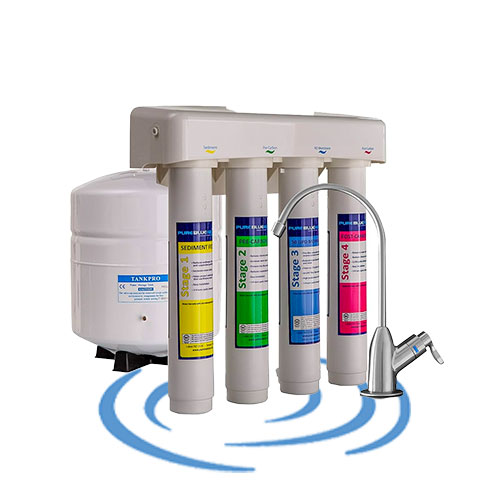
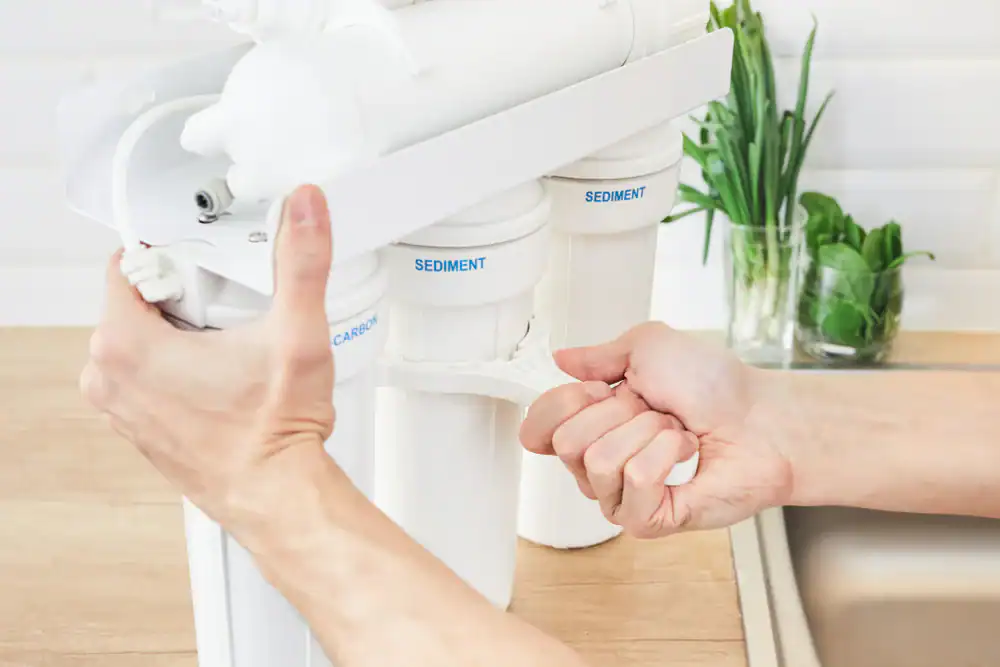
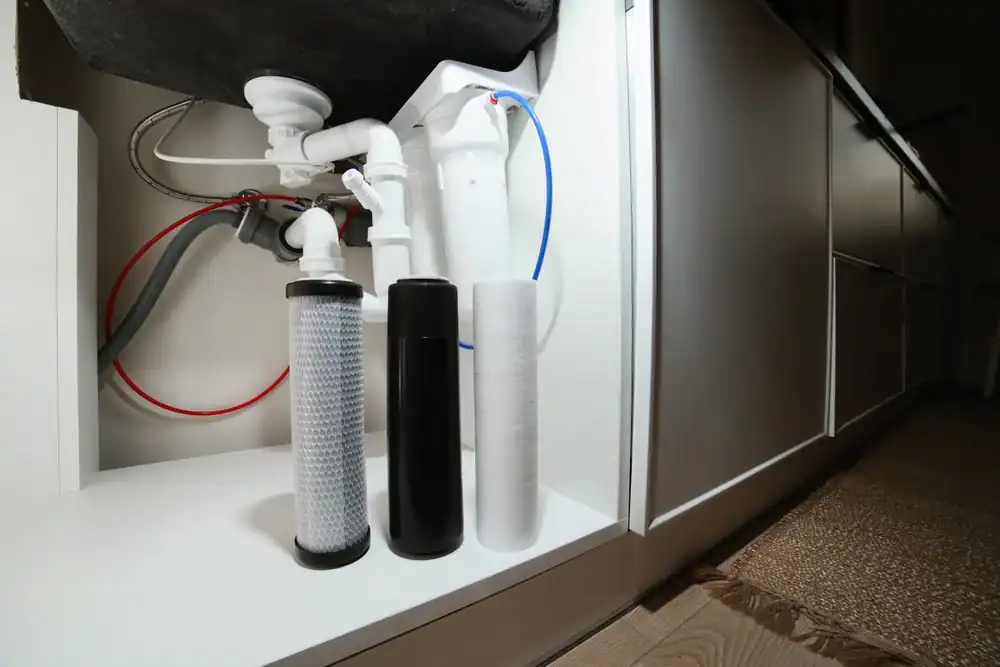
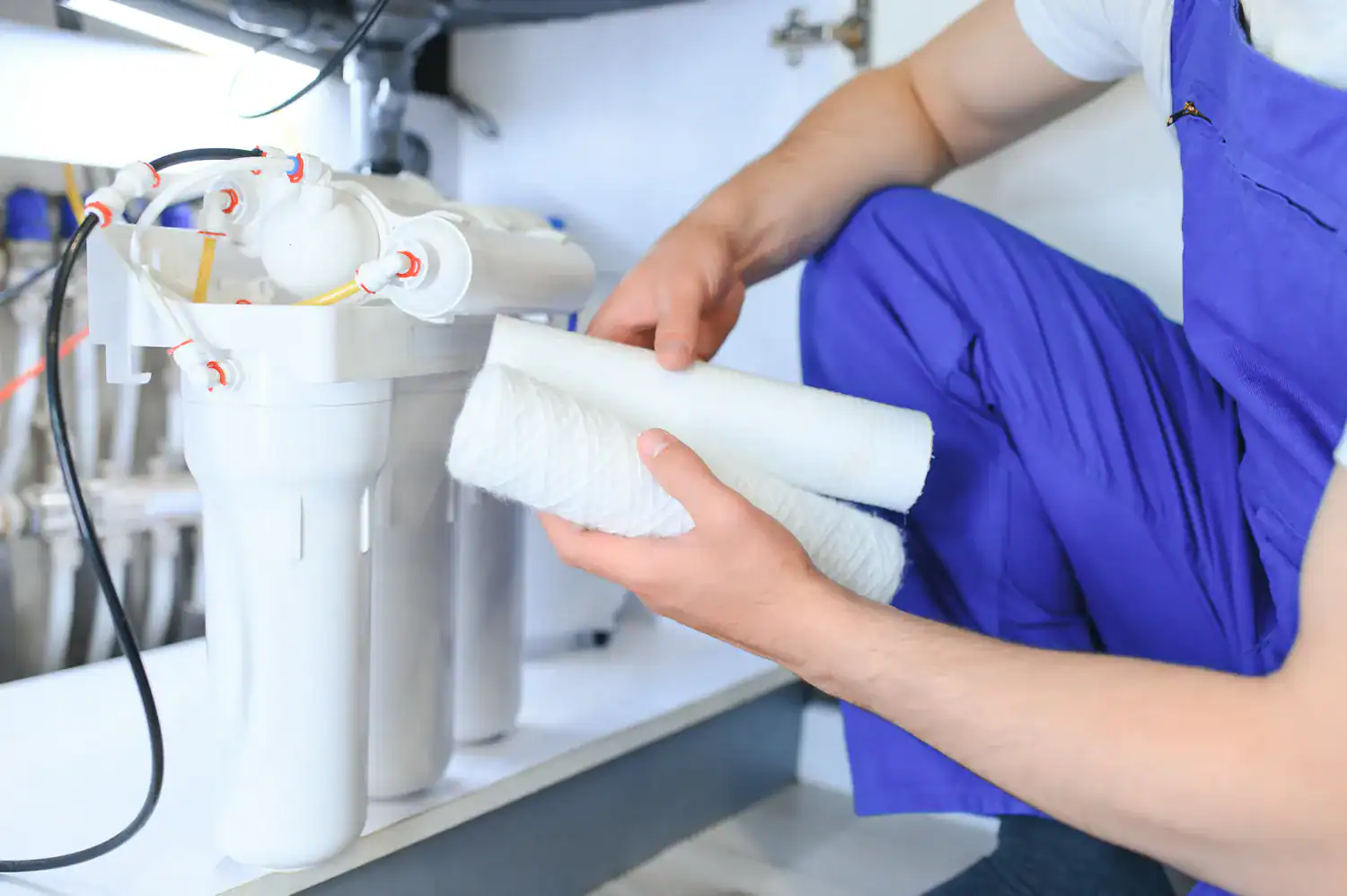
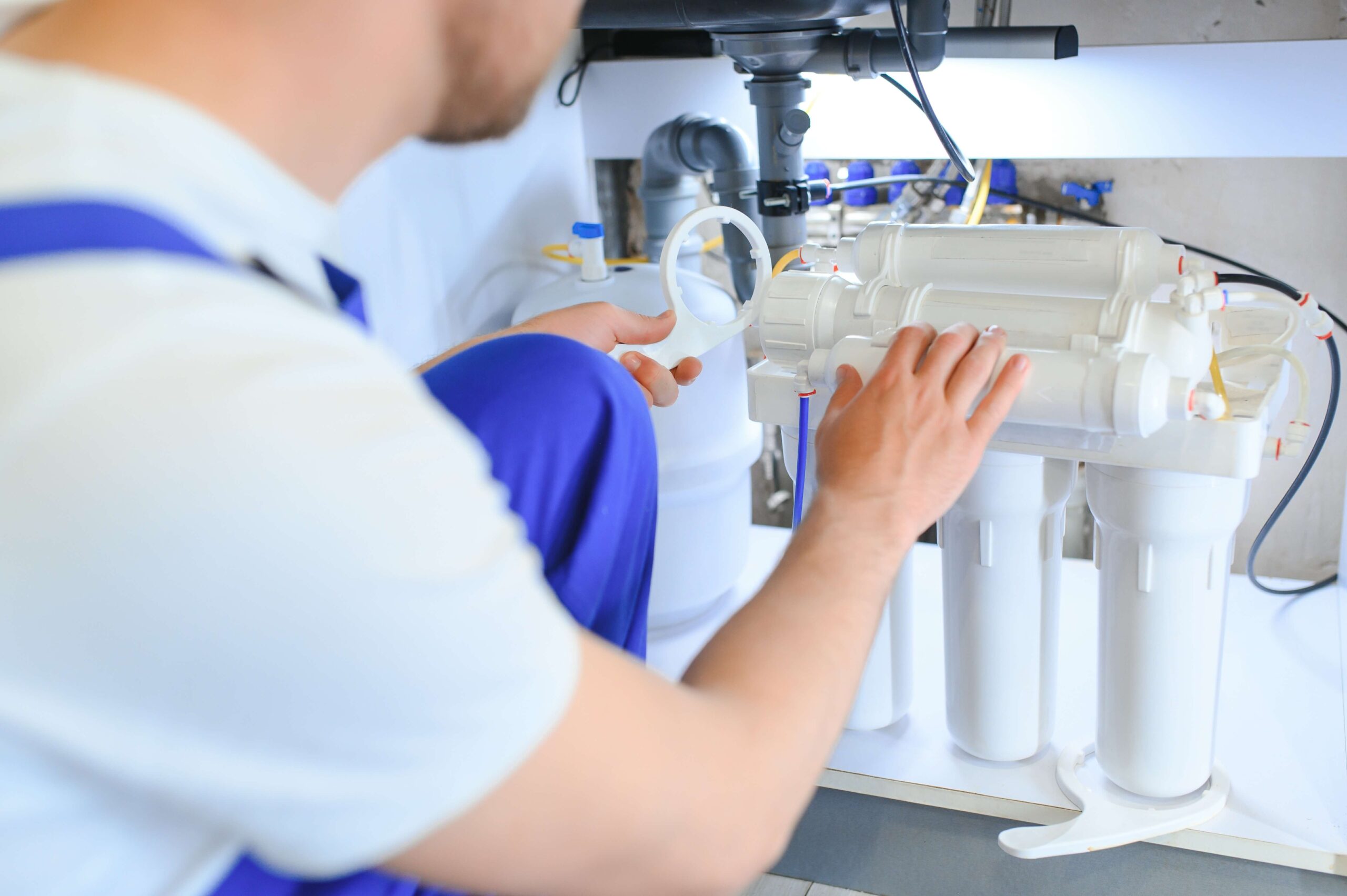
Under-sink RO systems are installed at the kitchen tap and typically include a multi-stage filtration process: a sediment pre-filter, one or more carbon stages to handle chlorine and organic compounds, the RO membrane itself, and a post-filter to polish the water before it reaches your glass. These systems are compact, quiet, and require minimal maintenance typically an annual filter change and a membrane replacement every two to five years depending on usage and water quality.
Whole-house systems follow the same core logic but treat every point of entry, protecting your water heater, dishwasher, showers, and laundry from the mineral load that JEA’s Floridan Aquifer source consistently delivers. We specialize in whole-house purification it’s where we focus and where we do our best work. But the right system for your home depends on what your water test shows and what you’re trying to solve. We’ll tell you honestly which approach fits your situation, and we’ll be available to service it long after the installation is done.
JEA meets all federal Safe Drinking Water Act standards, and they publish an annual water quality report that confirms it. But meeting the legal standard and producing water you’d genuinely want to drink every day aren’t always the same thing.
JEA’s own 2024 report acknowledged that individual TTHM monitoring sites exceeded 80 parts per billion during 2023 that’s the federal maximum contaminant level for trihalomethanes, which are disinfection byproducts that form when chlorine reacts with the natural organic matter in Floridan Aquifer groundwater. System-wide averages stayed compliant, but that’s a system-wide average across a large municipal network.
For Hidden Hills homeowners specifically, there’s also the question of what happens after the water leaves JEA’s system. Homes built in the late 1970s through the 1990s a significant portion of the Hidden Hills housing stock may have plumbing fixtures or service lines that introduce lead after the water leaves the street. JEA’s own lead sampling detected 1.7 ppb at the municipal level, which is below the federal action level, but lead contamination originates at the home’s plumbing, not the source. A water test specific to your home is the only way to know what’s actually coming out of your tap.
Hard water leaves calcium and magnesium deposits called scale on every surface it contacts. Inside your pipes, that scale accumulates over years and gradually restricts flow. Inside your water heater, it settles on the heating element and forces the unit to work harder to reach the same temperature, shortening its lifespan and increasing your energy bill.
In your dishwasher, it etches glassware and leaves a white film on dishes. On your shower glass and tile, it creates the cloudy, spotted buildup that no standard cleaner fully removes. Jacksonville water averages 15.3 grains per gallon well above the 10.5 GPG threshold for “very hard” classification. Some ZIP codes in Duval County exceed 300 parts per million.
For homeowners in Hidden Hills, where properties range from $400,000 to over $1.2 million and many homes were built decades ago, that mineral load has had a long time to accumulate. Replacing a water heater costs $800 to $1,500. A dishwasher runs $600 to $1,200. Remediating etched tile and shower glass is expensive and often incomplete. Treating the water before it reaches those appliances is significantly cheaper than replacing them after the damage is done.
A water softener addresses hardness specifically it removes the calcium and magnesium ions that cause scale by exchanging them for sodium ions through a process called ion exchange. It protects your pipes, appliances, and fixtures from mineral buildup, and it makes soap lather more effectively. What it doesn’t do is remove chlorine, disinfection byproducts, PFAS, nitrates, or the dissolved solids that affect the taste and safety of your drinking water.
A reverse osmosis system works differently. It forces water through a membrane that physically blocks dissolved contaminants including the minerals a softener removes, plus the chemical compounds, heavy metals, and biological contaminants that a softener doesn’t touch. An RO system at the kitchen tap produces water that’s been reduced to near-pure H2O.
For Hidden Hills homeowners dealing with both hard water and JEA’s chlorination byproducts, the most complete solution is often a combination: a whole-house softener or conditioner to protect the home’s infrastructure, paired with an under-sink RO system for drinking and cooking water. A water test will show you exactly what’s present and which combination actually makes sense for your home.
Yes reverse osmosis is one of the most effective technologies available for removing PFAS, also called “forever chemicals,” from drinking water. RO membranes block PFAS compounds at very high rates, typically 90% or greater depending on the specific compound and system quality.
For Hidden Hills residents, PFAS is worth taking seriously. While JEA’s municipal supply did not show PFAS detection during the EPA’s 2023–2025 monitoring period, groundwater near military installations in the Jacksonville area has shown PFAS contamination including detections at Cecil Field Naval Air Station. The Floridan Aquifer, which supplies JEA’s wells, is a shared underground system, and proximity to military installations with known PFAS history creates an ongoing monitoring concern.
Many Hidden Hills homeowners choose to address PFAS proactively rather than wait for a detection event. PFAS accumulates in the body over time it doesn’t flush out quickly which means the argument for filtering it out at the tap is strongest precisely when you’re drinking the water regularly over years and decades. An RO system with a quality membrane handles PFAS along with the other dissolved contaminants in your water, making it one of the more complete single-system solutions available for residential drinking water.
An under-sink reverse osmosis system for a residential home typically runs between $300 and $800 for the unit itself, with professional installation adding to that depending on the complexity of the setup and whether any additional plumbing connections are needed. Whole-house reverse osmosis systems are a larger investment generally starting around $1,500 and ranging upward depending on the size of the home and the treatment stages required.
For Hidden Hills homes, which average over 2,000 square feet and often include multiple bathrooms, larger kitchens, and significant appliance loads, whole-house systems are sized accordingly. Ongoing maintenance is minimal compared to the cost of what it prevents. Under-sink systems typically need pre-filters replaced annually at a cost of $50 to $150, and the RO membrane itself lasts two to five years depending on your water quality and usage.
Compare that to the $600 to $1,200 per year many Hidden Hills households spend on bottled water water that’s often just municipally sourced tap water run through industrial RO and packaged in plastic. The math shifts quickly. A properly installed RO system typically pays for itself within a few years when you account for the bottled water savings alone, before factoring in appliance protection and reduced maintenance costs.
Please provide your email address so that we can stay in touch and answer any questions you have! We will be reaching back out shortly.
"*" indicates required fields