Reach Out Today
Please provide your email address so that we can stay in touch and answer any questions you have! We will be reaching back out shortly.

Hear from Our Customers
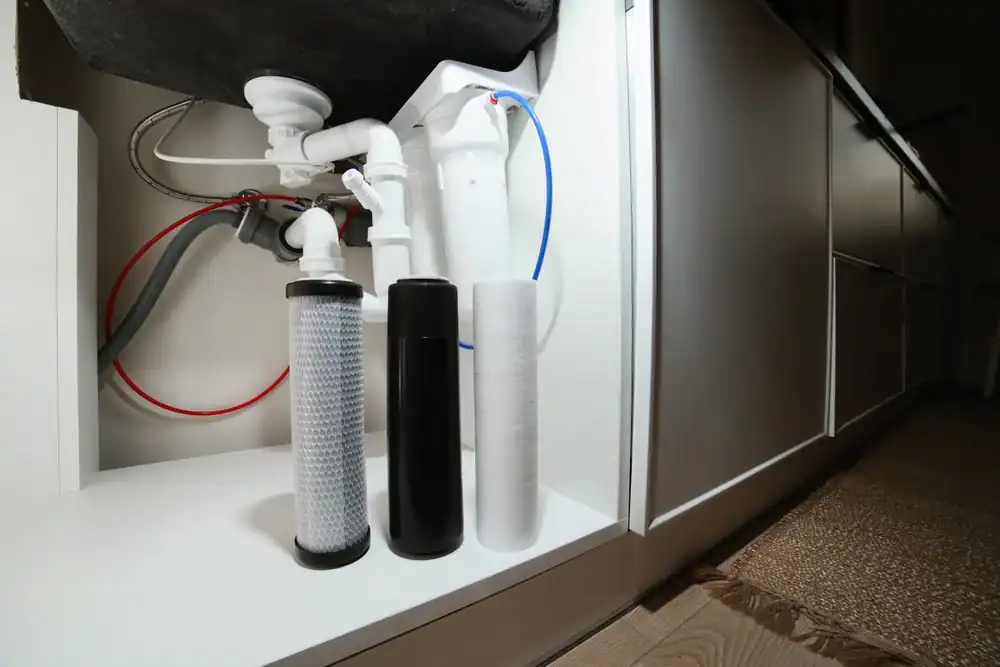
You stop buying cases of bottled water every week. Your coffee tastes different. You fill a glass from the tap without thinking twice about it. That’s what clean drinking water actually feels like, and most Hastings homeowners haven’t had it from their own tap in years.
For families on private wells in the 32145 area, the issue runs deeper than taste. Decades of fertilizer application across the flat, sandy farmland surrounding Hastings have created a real nitrate loading problem in local groundwater. The Floridan Aquifer here is unconfined, meaning surface-applied nitrates from fields along SR-207 and surrounding county roads travel downward into the water your well pulls from. You can’t smell nitrates. You can’t see them. They don’t change the color of your water. The only way to know they’re there is to test.
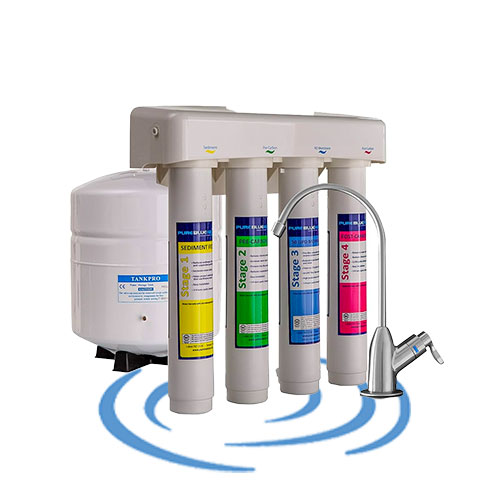
A reverse osmosis system is one of the most effective ways to remove them once you do. Beyond nitrates, groundwater in the Hastings area is naturally high in iron, dissolved minerals, and sometimes hydrogen sulfide that rotten egg smell that makes drinking from the tap feel like a last resort. An under-sink RO system handles all of it at the point where it matters most: where you drink and cook. The result is water that’s genuinely cleaner than most bottled brands, produced right at your own sink, at a fraction of the cost per gallon.
Quality Safe Water of Florida LLC doesn’t install water heaters. We don’t run drain lines or fix toilets. Water treatment is our entire business, which means when we recommend a reverse osmosis system for your home near Hastings, that recommendation comes from focused expertise not an upsell attached to a plumbing job.
We hold an A-rating with the Better Business Bureau, a 5-star rating, and zero complaints on record. You can verify that yourself at bbb.org right now. In an industry where the most common complaint is companies that sell systems and disappear when service is needed, that record isn’t something we take lightly.
We’re also members of the Water Quality Association, which means our technicians are trained specifically in Florida water chemistry including the agricultural groundwater conditions that affect well owners throughout the Hastings area and St. Johns County. We service what we sell, and we’ll still be here in five years when your system needs maintenance.
We also offer a $500 discount for active military, veterans, and first responders. Hastings is a community that takes service seriously, and so do we. We’re proud supporters of the Tunnels to Towers Foundation, which builds mortgage-free homes for Gold Star and fallen first responder families because the values behind that work are the same ones we bring to every job.
It starts with a real water test not a quick hardness check designed to steer you toward the most expensive system on the menu. We conduct an actual lab-grade analysis of your specific water supply. For Hastings homeowners on private wells, that means testing for nitrates, iron, sulfur, pH, hardness, and other parameters that vary by property and well depth.
The farmland around Hastings doesn’t produce the same groundwater risk as a property two miles away from the nearest field, and your recommendation should reflect that. Once we understand what’s actually in your water, we size and specify the right reverse osmosis system for your home.
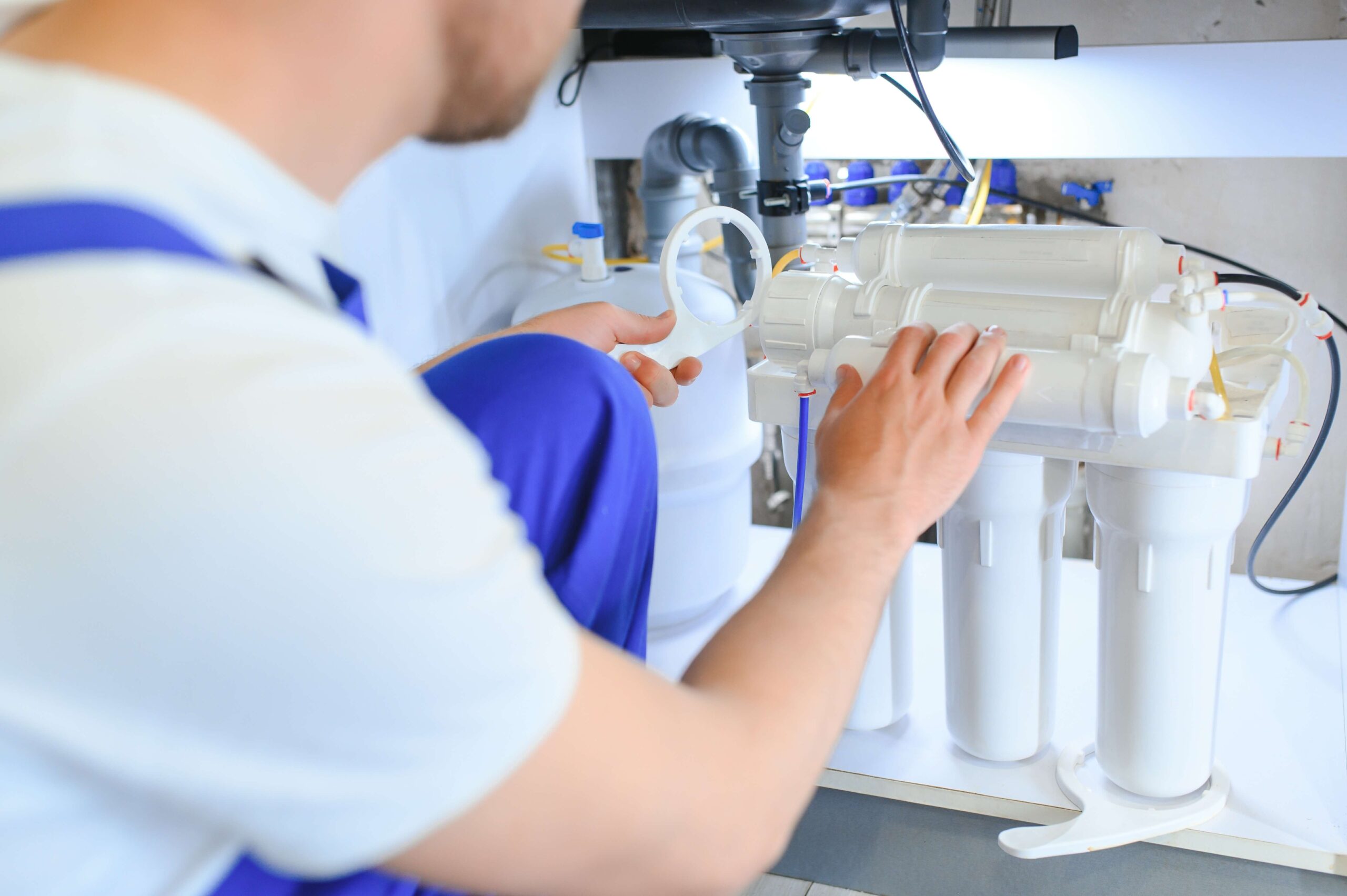
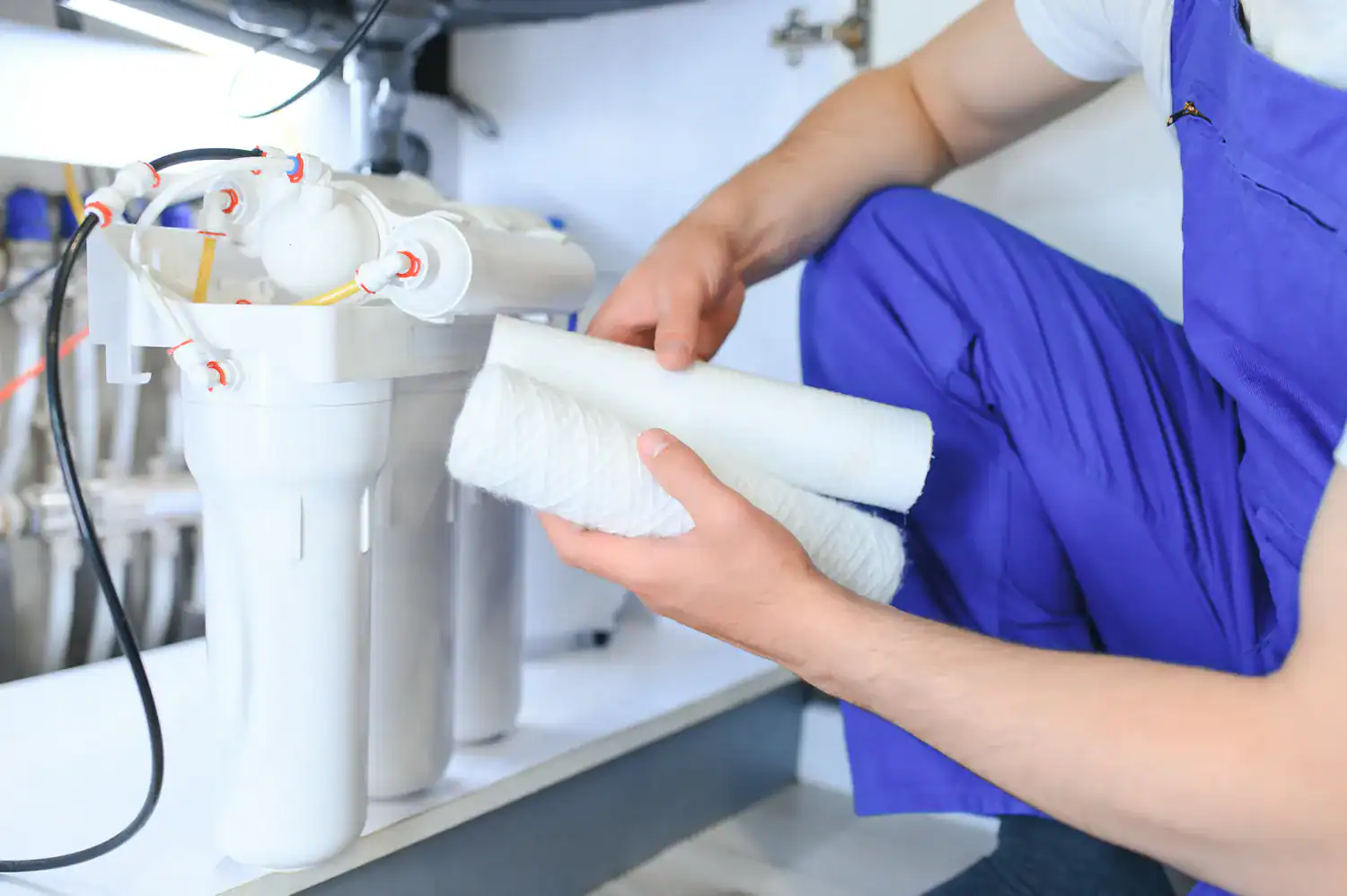
Under-sink RO systems are the most common installation for drinking and cooking water they connect to your existing cold water line beneath the sink, store purified water in a small tank, and deliver it through a dedicated faucet. Installation typically takes two to three hours and doesn’t require structural modifications to your home. In St. Johns County, under-sink RO installations generally don’t require a building permit, though whole-house systems that involve supply line modifications may.
We handle all permitting questions as part of our installation process. After installation, we walk you through exactly what was installed, how to maintain it, and when to expect filter and membrane replacements. A standard RO membrane lasts roughly two years under normal use. When it’s time, we answer the phone and show up. That’s the part most companies skip and the part we’ve built our entire reputation on.
Ready to get started?
A reverse osmosis membrane filters at 0.0001 microns smaller than any bacterium, virus, dissolved chemical, or agricultural contaminant. That includes nitrates from fertilizer runoff, PFAS (forever chemicals), lead, arsenic, fluoride, dissolved solids, iron, and pharmaceutical traces. No pitcher filter, refrigerator filter, or water softener removes all of these. An RO system does, and it does it consistently at the point of use where it matters most.
For Hastings homeowners, the system we install is specified based on your actual water test results not a one-size-fits-all package. If you’re on a private well with elevated iron or sediment which is common for properties near active farmland in the Hastings area we may recommend whole-house pre-treatment alongside an under-sink RO unit to protect the membrane and extend its life.
Every system we install uses professional-grade components, sized correctly for your household’s daily water demand, and backed by a company that services what it sells. The long-term math is straightforward. If your household spends $75 to $100 per month on bottled water because you don’t trust the tap, that’s $900 to $1,200 a year and over the 15 to 20-year lifespan of a properly maintained RO system, you’re looking at $13,500 to $18,000 in avoided costs. The system pays for itself. The bottled water never does.
Yes. The farmland surrounding Hastings has been cultivated for potato and vegetable production for over a century, and fertilizer application across those flat, sandy soils creates a documented nitrate loading risk in local groundwater. The Floridan Aquifer in western St. Johns County is unconfined, meaning it doesn’t have a thick layer of clay or rock separating the surface from the water below. Nitrates from fertilizers applied to fields along SR-207 and surrounding county roads can and do reach the groundwater that private wells draw from.
The EPA’s maximum contaminant level for nitrates in drinking water is 10 mg/L. Above that threshold, nitrates are associated with methemoglobinemia commonly called blue baby syndrome in infants, and ongoing research links chronic low-level nitrate exposure to other health concerns. The critical detail is that nitrates are colorless, odorless, and tasteless. You will never detect them without testing. If your home is on a private well in the 32145 area and you haven’t had your water tested for nitrates recently, that’s the first step and it’s exactly where we start.
A reverse osmosis membrane filters at 0.0001 microns, which is smaller than virtually any contaminant you’d find in Florida groundwater or municipal tap water. That includes nitrates, lead, arsenic, fluoride, PFAS (the so-called forever chemicals that have been found in water systems across Florida), dissolved solids, chlorine and chloramine byproducts, pharmaceutical traces, and most bacteria and viruses. It also removes the iron that causes orange staining and the dissolved minerals that leave white scale deposits on your fixtures and appliances.
What it doesn’t remove: beneficial minerals like calcium and magnesium are reduced significantly, which is why some people add a remineralization stage to their system. It also doesn’t soften water in the traditional sense a water softener addresses hardness throughout the whole house, while an RO system addresses it at the point of use. For most Hastings homeowners dealing with the combination of agricultural groundwater risk and the naturally high mineral content of Floridan Aquifer water, an RO system at the drinking water tap sometimes paired with whole-house conditioning is the most effective and cost-efficient approach.
Refrigerator filters are carbon-based, and carbon filtration is genuinely useful for improving taste and reducing chlorine. But carbon filters have real limitations. They don’t remove nitrates which matters significantly if you’re on a well near Hastings farmland. They don’t remove dissolved solids, fluoride, arsenic, lead, or PFAS. Most refrigerator filters are rated to reduce certain contaminants to a degree, not eliminate them, and their performance degrades as the filter loads up often before the indicator light tells you to change it.
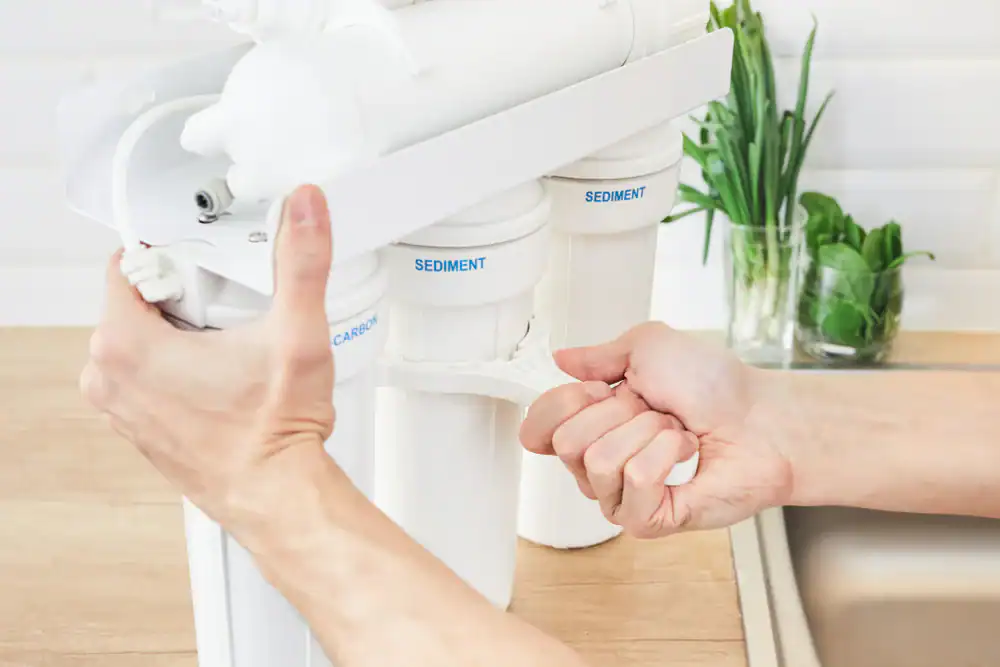
A reverse osmosis system uses a multi-stage process: a sediment pre-filter removes particles, a carbon stage handles chlorine and organic compounds, and then the RO membrane itself does the heavy lifting at 0.0001 microns. That’s a fundamentally different level of filtration than any carbon-only system. For households in the 32145 area where the water source is a private well with potential agricultural contamination, a refrigerator filter is not a substitute for an RO system.
For a standard under-sink RO installation which connects to your existing cold water supply line beneath the sink and adds a dedicated faucet St. Johns County generally does not require a building permit. The installation doesn’t modify your main supply line or alter your home’s plumbing infrastructure in a way that triggers permit requirements. It’s a point-of-use appliance connection, similar in scope to installing a dishwasher.
Where permitting can come into play is with whole-house reverse osmosis systems, which involve modifications to the main supply line and sometimes connections at the well or pressure tank. Those installations may require a plumbing permit through St. Johns County Building Services. Private well owners who add treatment equipment may also want to notify the St. Johns County Health Department, particularly if the installation involves changes to well connections. We handle all permitting questions as part of our installation process you don’t need to navigate that on your own.
A properly installed and maintained reverse osmosis system typically lasts 15 to 20 years. The system itself the housing, fittings, and tank is built to go the distance. What needs periodic replacement are the consumable components: the sediment pre-filter and carbon stages every 6 to 12 months depending on your water quality, and the RO membrane itself every 2 to 3 years under normal household use. If your well water has elevated iron or sediment which is common for properties near active farmland in the Hastings area pre-filters may need more frequent changes to protect the membrane.
Annual maintenance costs for a standard under-sink system typically run $100 to $200 for filter replacements, depending on the system and your water conditions. Membrane replacement, when it’s needed, adds to that cost but is infrequent. Compare that to a household spending $75 to $100 per month on bottled water $900 to $1,200 per year and the math is clear. The system is an investment with a measurable return.
Please provide your email address so that we can stay in touch and answer any questions you have! We will be reaching back out shortly.
"*" indicates required fields