Reach Out Today
Please provide your email address so that we can stay in touch and answer any questions you have! We will be reaching back out shortly.

Hear from Our Customers
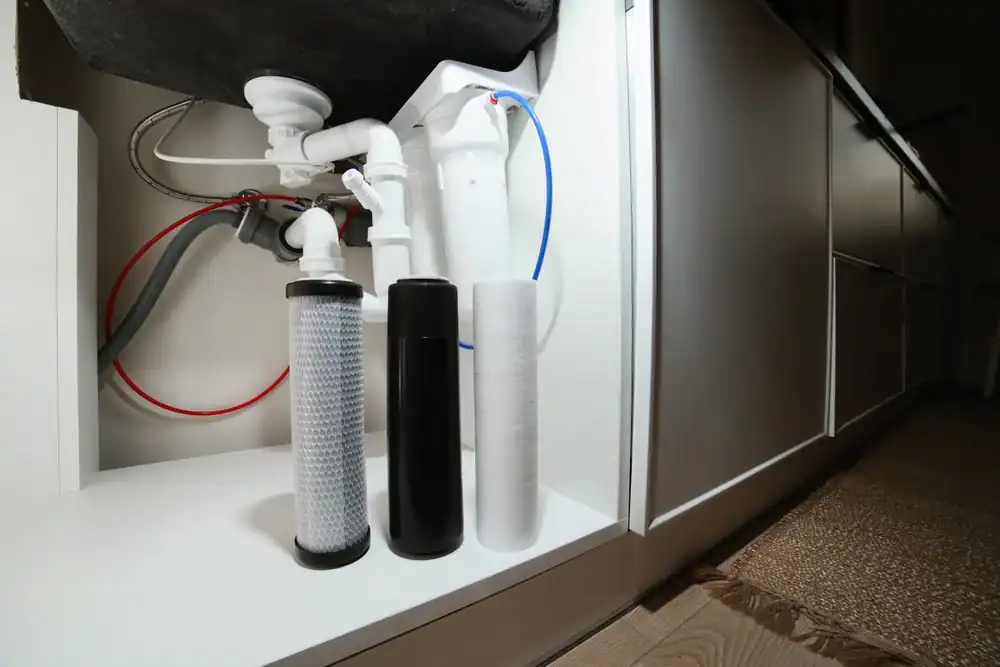
The orange staining around your drain is not a cleaning problem. The sulfur smell in the morning is not coming from your pipes. The white scale coating your faucets is not cosmetic.
These are symptoms of what is in your water. In Grand Island, where most homes pull from private wells running through Lake County’s limestone-heavy Floridan Aquifer, these symptoms are extremely common.
A properly installed reverse osmosis system removes the dissolved minerals, iron, hydrogen sulfide, and contaminants that cause all of it. What you get on the other side is water that tastes clean, appliances that last longer, and the confidence that what your family drinks every day has actually been filtered not just run through a pitcher with a carbon pad.
For Grand Island families, that matters more than it does in a city with a municipal treatment plant. You are the last line of defense between your well and your glass.
Grand Island’s citrus farming history also left a legacy worth knowing about: Ethylene Dibromide, a pesticide used in Florida’s citrus groves for decades, has been detected in Lake County groundwater. The Florida Department of Health monitors for it here. A quality RO system working at the membrane level removes agricultural chemical residues that no pitcher filter or refrigerator filter can touch.
We’re headquartered in Leesburg same county as Grand Island, same water, same Floridan Aquifer. This is not a national franchise dispatching a technician from three counties away.
Water treatment is the only thing we do. No plumbing add-ons, no HVAC, no upsells into services we are not trained for. Just water.
We hold a BBB A-rating with a 5-star score and zero complaints on record a public fact you can verify at bbb.org before you ever call. Our National Water Quality Association membership means the recommendations you receive are grounded in actual water science, not a sales quota.
When the job is done, we service what we install. That is not standard in this industry, which is exactly why it matters.
We also offer a $500 discount for active military, veterans, and first responders the largest discount available from any water treatment company in this market. And we support the Tunnels to Towers Foundation, which builds mortgage-free homes for Gold Star and fallen first responder families.
It starts with a real water test. Not a quick hardness strip designed to justify the most expensive system on the shelf actual lab-grade analysis of what is in your water.
In Grand Island, that test commonly turns up elevated hardness between 100 and 300 PPM, iron, hydrogen sulfide, and sometimes nitrates from agricultural runoff or emerging contaminants like PFAS. You see the results. You understand what you are dealing with. Then and only then does a recommendation get made.
From there, the system gets sized and configured for your actual water not the average Florida home’s water. An under-sink reverse osmosis system is installed at your kitchen tap for drinking and cooking water. If whole-house treatment makes more sense given what the test shows, that conversation happens transparently, with a clear explanation of what each option does and does not address.
Because Grand Island is an unincorporated community under Lake County jurisdiction, any installation that requires permitting gets handled as part of the process. You do not have to navigate the Florida Department of Health’s well permitting system or the county building department on your own.
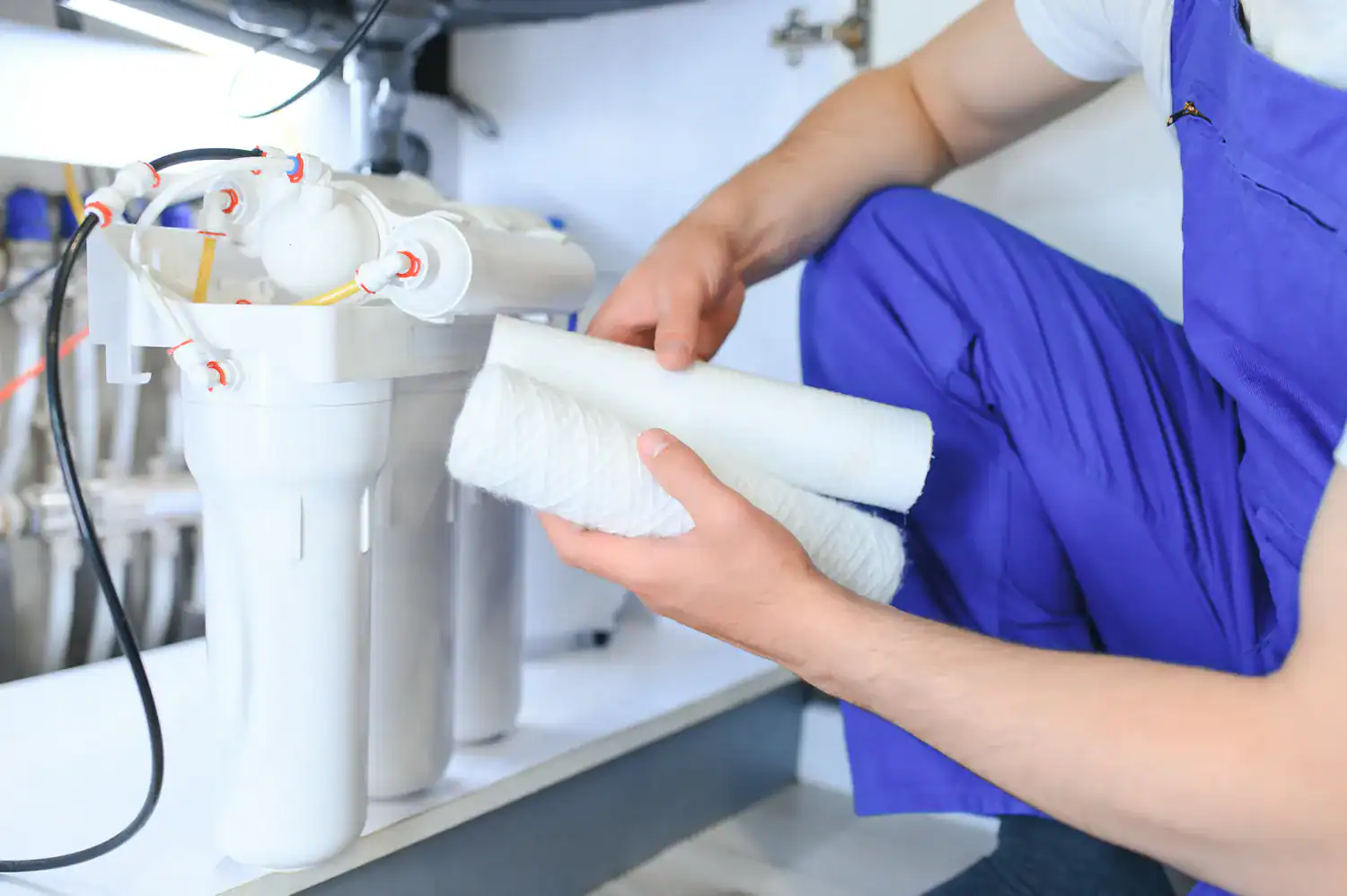
After installation, the filter and membrane schedule is explained clearly pre-filters typically every six to twelve months, membrane replacement every two to five years and we will be there when that time comes.
Ready to get started?
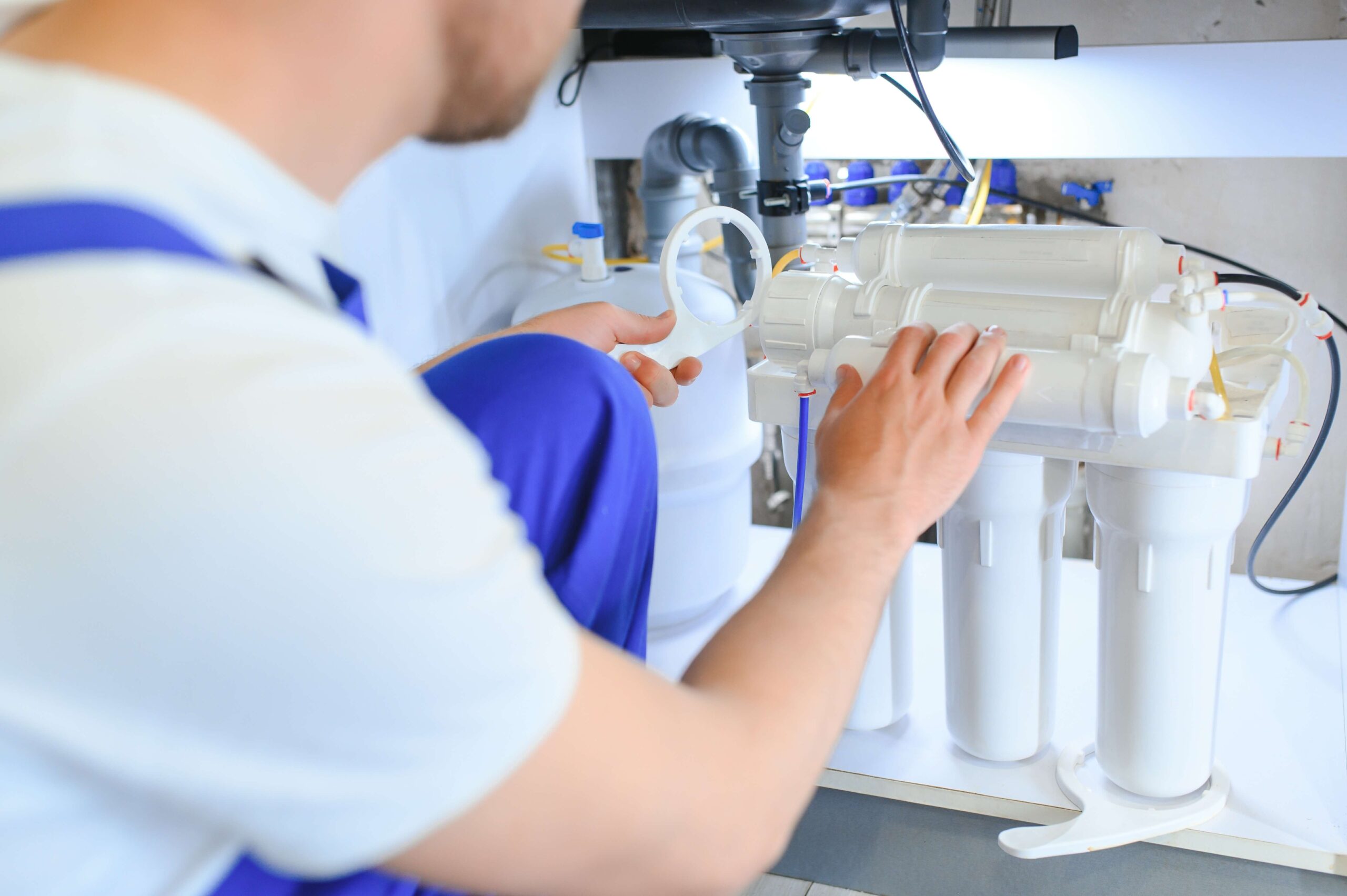
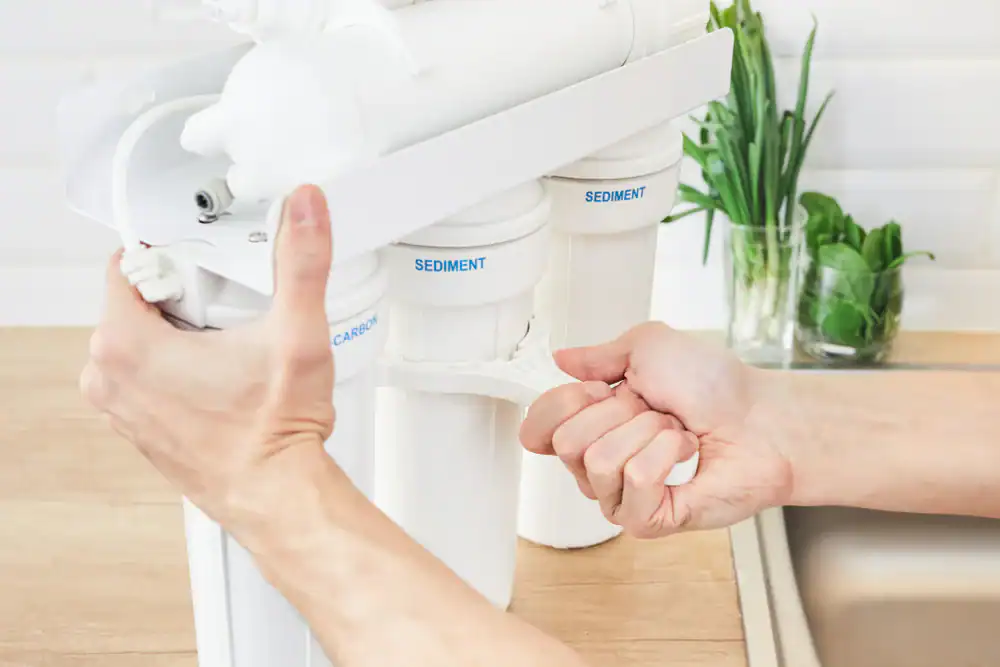
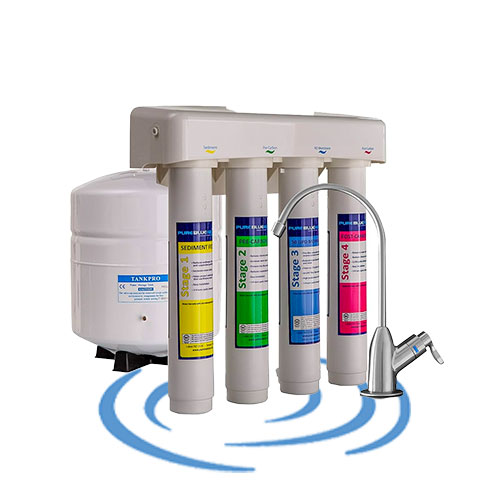
An under-sink reverse osmosis system is the most common installation for Grand Island homeowners who want clean drinking and cooking water without overhauling their entire plumbing setup. It sits beneath the kitchen sink, connects to a dedicated tap, and filters water through multiple stages sediment pre-filtration, activated carbon, and a semi-permeable RO membrane working at 0.0001 microns before it reaches your glass.
For households dealing with iron, sulfur, nitrates, PFAS, or the EDB groundwater contamination legacy documented in Lake County’s citrus-growing areas, this is the level of filtration that actually addresses the problem.
For homes where iron staining is affecting laundry, fixtures, and irrigation or where scale buildup is visibly shortening the life of appliances a whole-house reverse osmosis or combination system treats the water at the point of entry, before it reaches any pipe or appliance in the home. This is particularly relevant for properties near Lake Yale or Lake Eustis, where seasonal lake-level fluctuations during Florida’s wet season can shift well water quality in ways that point-of-entry treatment handles more consistently than point-of-use alone.
Every installation includes a full water analysis, a system recommendation based on what the test actually shows, professional installation with any required Lake County permitting handled, and a clear maintenance schedule. We service every system we install filter replacements, membrane swaps, annual checkups.
If you are in Sunlake Estates, Grand Isle, Grand Island Resort, or anywhere else in the 32735 ZIP code, the service commitment does not change based on where you live.
For most Grand Island homes, yes and the reasons are specific to this area. Grand Island is an unincorporated community, which means the majority of residential properties draw from private wells. There is no municipal water utility testing your water or treating it before it reaches your tap. What comes out of your well reflects exactly what the Floridan Aquifer has been doing to that water underground and in Lake County, that typically means elevated hardness, dissolved iron, hydrogen sulfide, and sometimes agricultural contaminants from the area’s long citrus farming history.
A reverse osmosis system is not the right answer for every single water problem, but for drinking and cooking water quality in a well-dependent community like Grand Island, it is the most effective technology available. It removes the contaminants that hardness filters and carbon filters leave behind, including PFAS and agricultural chemical residues.
The honest answer is: get your water tested first. Once you see what is actually in your well, the decision becomes straightforward.
For a standard under-sink reverse osmosis system professionally installed in a Grand Island home, you are typically looking at a range of $500 to $1,200 depending on the system configuration, the number of filtration stages, and what your water test reveals about what needs to be addressed. Whole-house reverse osmosis systems, which treat water at the point of entry before it reaches any fixture or appliance, run higher generally $1,500 to $4,500 or more depending on home size and water conditions.
The comparison that matters most for Grand Island families is not system cost versus zero it is system cost versus what you are already spending. A household buying $40 to $60 worth of bottled water every week is spending $2,000 to $3,000 per year on a problem a properly installed RO system solves permanently. The system pays for itself, and then it keeps paying for itself for the next 15 to 20 years.
Annual maintenance pre-filter replacements and eventual membrane swaps runs roughly $100 to $200 per year. That is the real math.
A quality reverse osmosis system removes a broad range of contaminants that are specifically relevant to Grand Island and Lake County well water. That includes dissolved minerals causing hardness calcium and magnesium at the 100 to 300 PPM levels commonly found throughout Lake County as well as dissolved iron, hydrogen sulfide (the source of that sulfur smell), nitrates from agricultural fertilizer runoff, and PFAS compounds that standard carbon filters cannot touch.
For Grand Island specifically, one contaminant worth knowing about is Ethylene Dibromide, or EDB a pesticide used extensively in Florida’s citrus groves from the 1950s through the 1980s that has been detected in Lake County groundwater. The Florida Department of Health in Lake County actively monitors for EDB in the area’s wells because of the community’s citrus farming history.
The RO membrane, working at 0.0001 microns, removes chemical residues at the molecular level which is why it handles contaminants that no pitcher filter, refrigerator filter, or basic carbon system can address.
An under-sink reverse osmosis system treats water at a single point typically your kitchen tap giving you clean filtered water for drinking and cooking. It does not change what comes out of your showers, your laundry connection, or your appliances. For most Grand Island families whose primary concern is what they are drinking and cooking with, an under-sink system is the right starting point and the most cost-effective solution.
A whole-house reverse osmosis system treats water at the point of entry, before it reaches any pipe, fixture, or appliance in your home. This matters most when iron staining is damaging fixtures and discoloring laundry, when scale buildup from Lake County’s hard water is visibly shortening the life of your water heater and dishwasher, or when the water test reveals contaminant levels that make whole-home treatment the more thorough answer.
For homes near Lake Yale or Lake Eustis where seasonal wet-season fluctuations can shift well water quality noticeably between summer and winter, whole-house treatment provides a more consistent barrier year-round. The right answer depends on what your water test shows which is always the first step.
A standard reverse osmosis system has two main maintenance requirements: pre-filter replacements and membrane replacement. Pre-filters the sediment and carbon stages that protect the RO membrane typically need to be replaced every six to twelve months depending on your water quality and usage. In Grand Island, where well water commonly carries elevated iron and sediment, pre-filters may need attention on the shorter end of that range.
The RO membrane itself generally lasts two to five years under normal residential use. Annual maintenance parts run roughly $100 to $200 for most under-sink systems a fraction of what most Grand Island households spend on bottled water in a single month.
We service every system we install, which means you are not on your own trying to figure out which filter goes where or calling a company that stopped picking up after the installation check cleared. We will remind you when service is due and show up when it is time.
For Grand Island homeowners who have dealt with service companies that disappear after the sale, that follow-through is not a small detail.
Please provide your email address so that we can stay in touch and answer any questions you have! We will be reaching back out shortly.
"*" indicates required fields