Reach Out Today
Please provide your email address so that we can stay in touch and answer any questions you have! We will be reaching back out shortly.

Hear from Our Customers
When your home sits in the agricultural corridor around Gopher Ridge, your water tells a story about what’s in the ground beneath you. Fertilizer application on the potato and vegetable farms throughout the Hastings and Spuds area creates real nitrate loading in local groundwater and a standard pitcher filter or refrigerator cartridge doesn’t touch nitrates.
A properly installed reverse osmosis water filtration system forces your water through a membrane fine enough to reject dissolved salts, nitrates, heavy metals, and synthetic chemicals at the molecular level. That’s not a marketing claim it’s how the membrane works.
Beyond nitrates, the Floridan Aquifer that feeds most private wells in this part of St. Johns County is limestone-based. That means naturally elevated mineral content, which shows up as iron staining in your toilet bowl, scale buildup on your faucets, and that faint sulfur smell that you’ve probably started to ignore. An RO drinking water system at your kitchen tap doesn’t just improve taste it removes the dissolved solids that cause those problems at the point of use, so what comes out of your drinking tap is genuinely different from what’s coming out of the well.
For families in Gopher Ridge who have been buying cases of bottled water every week because they don’t trust the tap, the math is simple. At $30 to $50 a week, that’s $1,500 to $2,600 a year on plastic bottles most of which are filled with municipal tap water run through a commercial RO system. Installing one at home produces the same quality water at a fraction of the per-gallon cost, and a well-maintained system lasts 15 to 20 years.
Quality Safe Water of Florida LLC doesn’t install water heaters, fix pipe leaks, or run drain lines. Water treatment is our entire business testing, filtration, purification, and conditioning. That focus matters when you’re dealing with well water in an agricultural area like the Hastings corridor near Gopher Ridge, where the chemistry is shaped by decades of farming activity and Floridan Aquifer geology. A generalist plumber who installs an RO system between toilet replacements is not the same thing.
We hold an A-rating with the Better Business Bureau, a 5-star customer rating, and zero complaints on file a public record you can verify at bbb.org right now. We’re also members of the National Water Quality Association, which means ongoing professional training specific to Florida’s aquifer conditions and agricultural water quality challenges. That’s not a credential most competitors in this space can point to.
We serve North and Central Florida, and the St. Johns County interior including Gopher Ridge and the surrounding Spuds and Hastings area is squarely within our service footprint. We’re not stretching a service map to reach you. We know this region’s water.
It starts with a real water test not a quick hardness check designed to justify a sale, but a lab-grade analysis of what’s actually in your well water. For a Gopher Ridge property, that means looking at nitrate levels, iron content, sulfur, hardness, pH, and any bacterial indicators that might point to surface contamination. Because there’s no municipal water quality report that applies to your private well, this step isn’t optional it’s the only way to know what you’re actually dealing with.
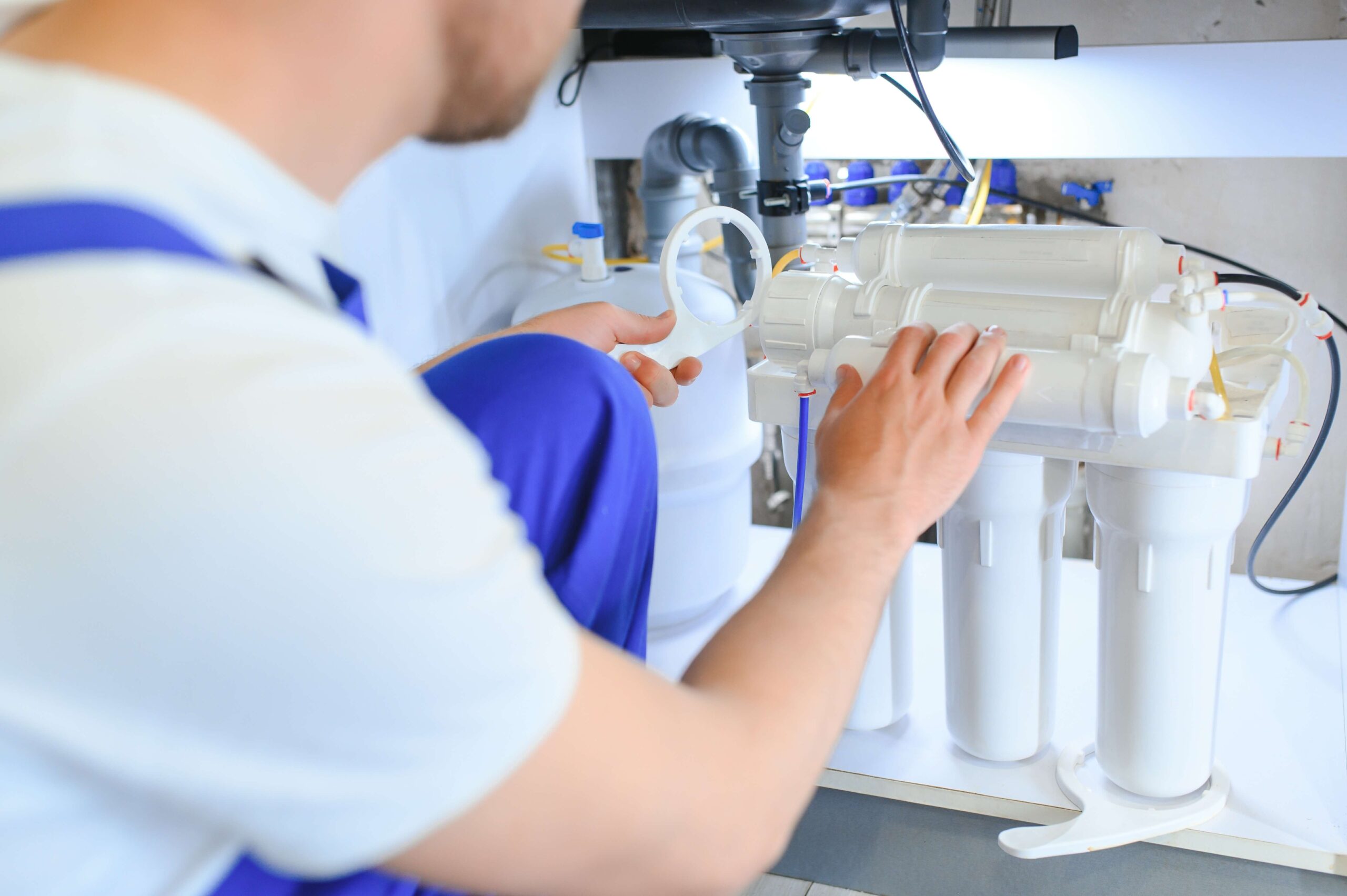
Once the test results are in, our recommendation is built around your specific water chemistry. If your iron levels are elevated, pre-filtration gets added before the RO membrane so the membrane isn’t doing work it wasn’t designed to handle. If sulfur is present, that gets addressed in the treatment sequence too. Under-sink reverse osmosis systems are typically installed at the kitchen tap and don’t require a building permit in St. Johns County for standard residential installation the process is clean, contained, and usually completed in a single visit.
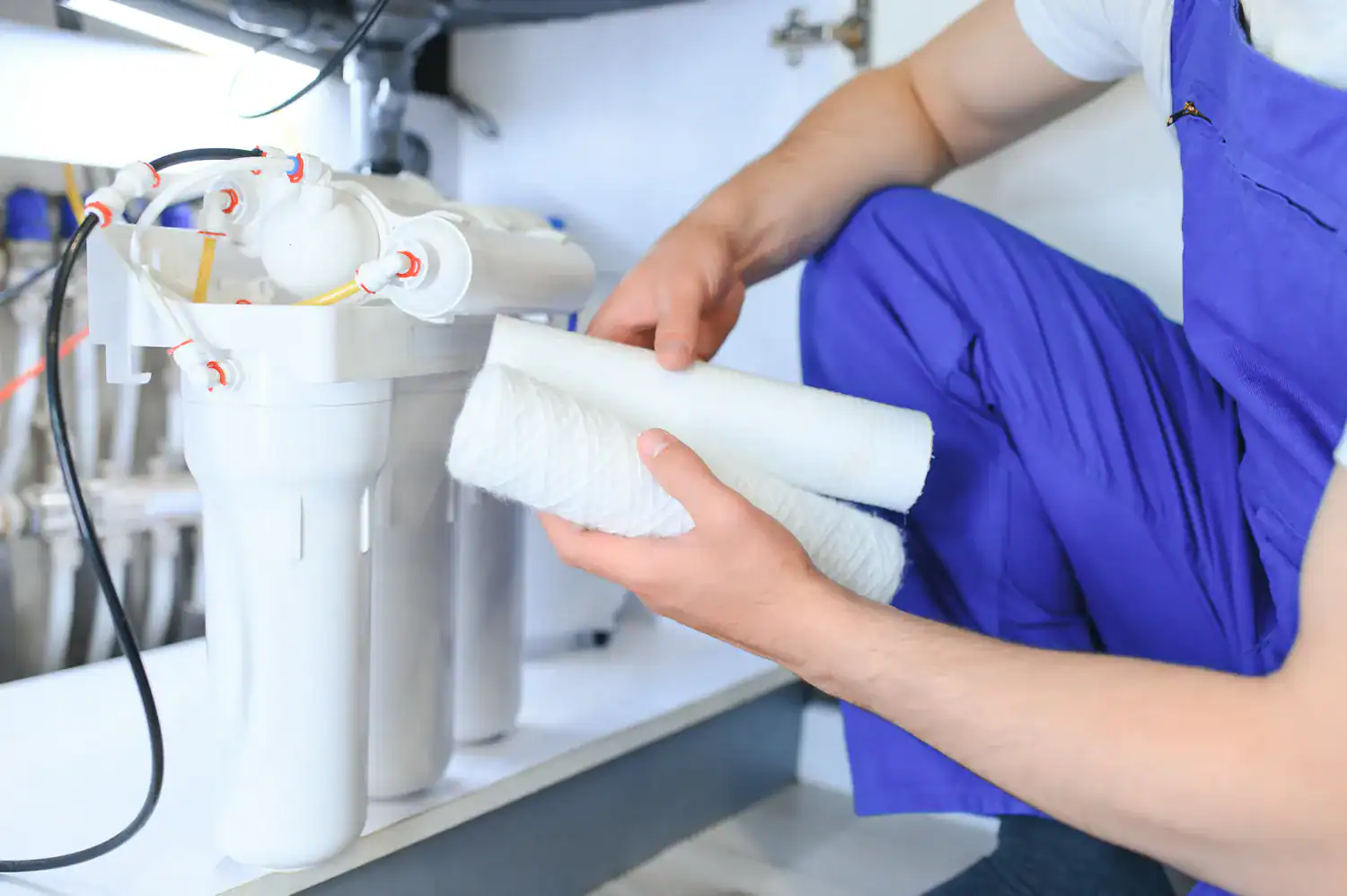
After installation, you get a walkthrough of the system how to monitor it, when pre-filters need changing (typically every six months), and when the RO membrane itself is due for replacement (usually every two years). We service what we install, so when that time comes, you’re not tracking down a manufacturer’s customer service line or figuring it out on your own.
Ready to get started?
Most reverse osmosis systems sold online or through national brands are designed with municipal water in mind water that’s already been treated, disinfected, and tested before it reaches the home. Private well water in Gopher Ridge doesn’t work that way. Your water comes straight from the aquifer, and what’s in the aquifer reflects the geology and land use around it. That requires a different approach to system configuration, pre-filtration, and membrane selection.
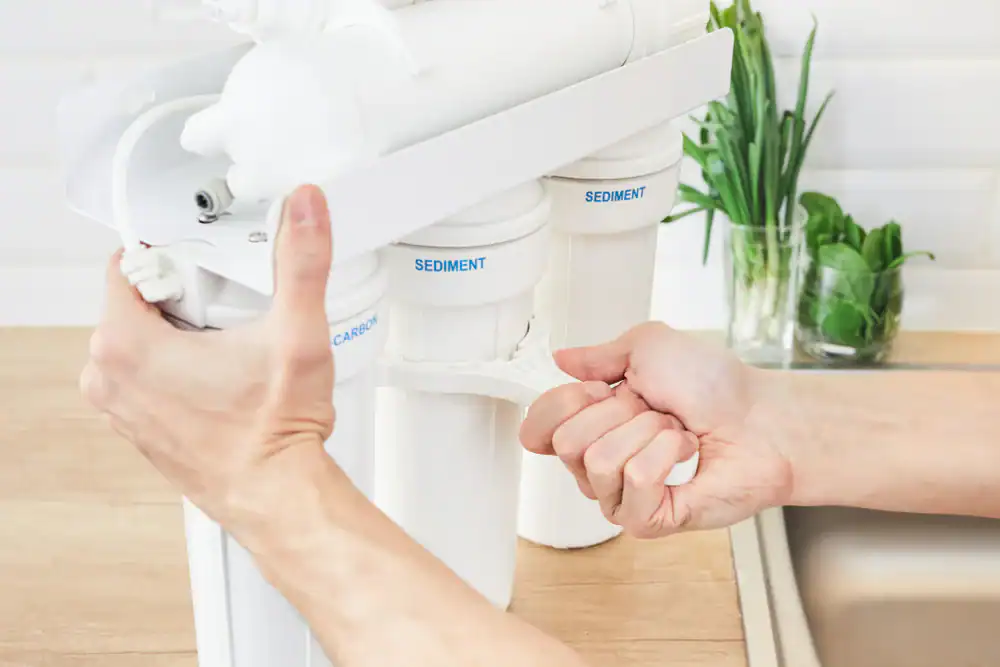
A residential reverse osmosis system installed by us is sized and configured based on your actual test results. For homes in the Hastings and Spuds corridor near Gopher Ridge where iron is a common issue, that often means a sediment and iron pre-filter upstream of the RO membrane to protect it and extend its service life. For properties where nitrate levels are a concern which is a documented reality in agricultural St. Johns County the RO membrane is the primary line of defense, and getting the system right the first time matters.
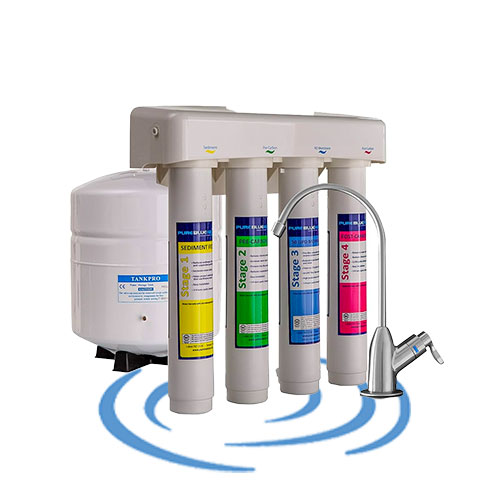
The system itself is compact and installed under the kitchen sink, with a dedicated drinking water tap at the counter. It doesn’t require major plumbing modifications, and installation under St. Johns County’s unincorporated guidelines for standard appliance-level work is straightforward. If you’re a veteran, active military, or first responder, we offer $500 off the largest discount of any water treatment company serving this area, with no complicated qualifications attached.
It’s a fair question, and the honest answer is: it depends on your specific well, but the risk here is real and documented. The agricultural corridor around Gopher Ridge which includes thousands of acres of potato, cabbage, and vegetable farms in the Hastings and Spuds area involves significant fertilizer application. Nitrate, a nitrogen-based fertilizer compound, is one of the most common groundwater contaminants in rural farming areas across Florida. It moves through sandy soils relatively easily and can reach shallow aquifers that feed private wells.
The St. Johns River Water Management District has invested in physical stormwater treatment infrastructure in the Hastings corridor specifically to reduce nitrogen and phosphorus loading from agricultural runoff which is itself an acknowledgment that the problem is significant enough to warrant state-level intervention. The EPA’s maximum contaminant level for nitrates in drinking water is 10 mg/L, but health researchers have flagged risks at much lower concentrations, particularly for infants and pregnant women. The only way to know your specific level is to test your well. That’s where the process starts.
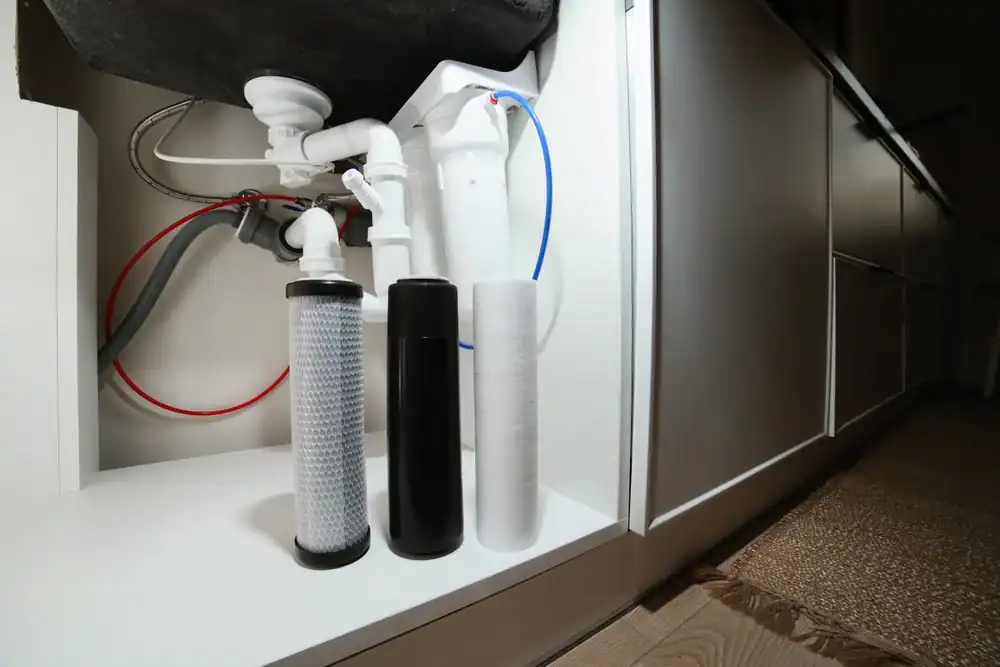
A reverse osmosis water filtration system works by pushing water through a semi-permeable membrane with pores small enough to reject dissolved contaminants at the molecular level. For well water in the Floridan Aquifer region of St. Johns County, that means it removes nitrates, dissolved iron, sulfates, hardness minerals like calcium and magnesium, fluoride, lead, arsenic, PFAS compounds, pharmaceutical traces, and most dissolved solids. It also significantly reduces the taste and odor issues including the sulfur smell that’s common in this area’s well water that come from naturally occurring compounds in limestone-based aquifers.
What it doesn’t do is replace a whole-house treatment system if you have heavy iron or sediment levels. Those contaminants can foul an RO membrane quickly if they’re not addressed upstream with appropriate pre-filtration. That’s why testing your water first matters so the system is configured to handle what’s actually in your well, not what’s typically in someone else’s municipal supply.
They solve different problems, and in many homes in this part of St. Johns County, you actually need both. A water softener addresses hardness it exchanges calcium and magnesium ions for sodium ions, which prevents scale buildup in pipes, appliances, and water heaters. It’s effective at protecting your plumbing and extending appliance life, but it doesn’t remove nitrates, dissolved chemicals, heavy metals, or most other contaminants. It also doesn’t improve the taste or safety of your drinking water in any meaningful way.
A reverse osmosis system operates at the point of use typically at the kitchen tap and removes a much broader range of dissolved contaminants from the water you actually drink and cook with. For a Gopher Ridge household dealing with both hard water from the Floridan Aquifer and potential nitrate or chemical contamination from surrounding agricultural land use, a water softener handles the whole-house scale and appliance protection side, while an RO system handles the drinking water quality side. They complement each other rather than compete.
For a standard under-sink reverse osmosis system, the pre-filters typically a sediment filter and one or two carbon block filters need to be replaced roughly every six months. The RO membrane itself is more durable and usually lasts between two and three years under normal use. A post-filter, which polishes the water as it leaves the storage tank, is typically changed annually. These intervals can vary based on your water quality and household usage volume.
For homes in Gopher Ridge drawing from a private well with elevated iron or sediment levels, pre-filter replacement intervals may be shorter iron and particulates load up filters faster than cleaner municipal water would. This is another reason why the initial water test matters: it gives a realistic picture of how hard your system will have to work, which affects maintenance scheduling and long-term cost. We service what we install, so filter replacements aren’t something you have to figure out on your own or source from a third-party supplier.
Yes, in most cases. The sulfur smell that rotten egg odor that’s a common complaint from well water users throughout the Floridan Aquifer region comes from hydrogen sulfide, a gas produced by sulfur-reducing bacteria and naturally occurring sulfur compounds in the aquifer. An RO system’s carbon pre-filters are effective at reducing hydrogen sulfide, and the membrane stage removes additional dissolved sulfur compounds. For most households, the combination of pre-filtration and RO treatment eliminates the odor at the drinking tap entirely.
That said, if the sulfur concentration in your well is very high, pre-treatment upstream of the RO system such as an oxidizing filter or aeration may be needed to protect the membrane and fully address the issue throughout the house, not just at the kitchen tap. A water test will identify the sulfide level and determine whether the RO system alone is sufficient or whether a broader treatment approach makes more sense for your specific well. There’s no single answer that applies to every property in this area.
Please provide your email address so that we can stay in touch and answer any questions you have! We will be reaching back out shortly.
"*" indicates required fields