Reach Out Today
Please provide your email address so that we can stay in touch and answer any questions you have! We will be reaching back out shortly.

Hear from Our Customers
The first thing most Fort Caroline homeowners notice is the taste. That flat, chemical edge in your tap water the one that sends you reaching for bottled water or a pitcher filter that barely keeps up disappears. What you get instead is clean, clear water straight from your kitchen sink, at a fraction of what you’re spending on bottles every month.
But the benefits go further than taste. Fort Caroline’s housing stock is mostly 30 to 50 years old, and hard water from the Floridan Aquifer has been quietly working on your appliances, your fixtures, and your water heater the entire time. A properly installed RO system paired with the right whole-house treatment stops that damage from compounding. Your appliances last longer. Your fixtures stop scaling up. Your water heater doesn’t die five years early.
For families living close to Mayport Naval Station, there’s another layer worth knowing about. PFAS contamination near military installations is a documented concern across the country, and reverse osmosis is one of the most effective technologies available for removing it. A properly functioning RO membrane rejects the vast majority of PFAS compounds far more effectively than a standard carbon filter.
Quality Safe Water of Florida LLC does one thing: water treatment. No plumbing, no water heaters, no side services. Just water tested, diagnosed, and treated correctly. That focus means every recommendation we make is built around what your water actually contains, not what’s easiest to sell.
We hold an A-rating with the Better Business Bureau, a 5-star rating, and zero complaints on record. You can verify that at bbb.org before you ever pick up the phone. We’re also members of the Water Quality Association, which means our technicians are trained specifically in Florida’s water challenges including the mineral-heavy output of the Floridan Aquifer that runs beneath all of Duval County.
Fort Caroline homeowners whether you’re off Monument Road, in Beacon Hills, or closer to the river on Fort Caroline Road get the same process: a real lab water analysis first, a system recommendation second. That’s how it should work, and it’s how we’ve built a clean public record in this market.
It starts with a water test not a quick hardness strip designed to justify the most expensive system on the truck, but an actual lab-grade analysis. For Fort Caroline residents on JEA municipal water, that means testing for chloramine disinfection byproducts, mineral hardness from the Floridan Aquifer, and emerging contaminants including PFAS.
For homes on private wells in the area, we also check for iron, sulfur, and biological contamination that’s common in this part of northeast Jacksonville. Once the results are in, you get a clear explanation of what’s in your water and a system recommendation that matches it.
The sizing matters a system built for a two-person condo and a system built for a five-person Fort Caroline home with older plumbing are not the same thing. We size every installation to your actual usage and water chemistry.
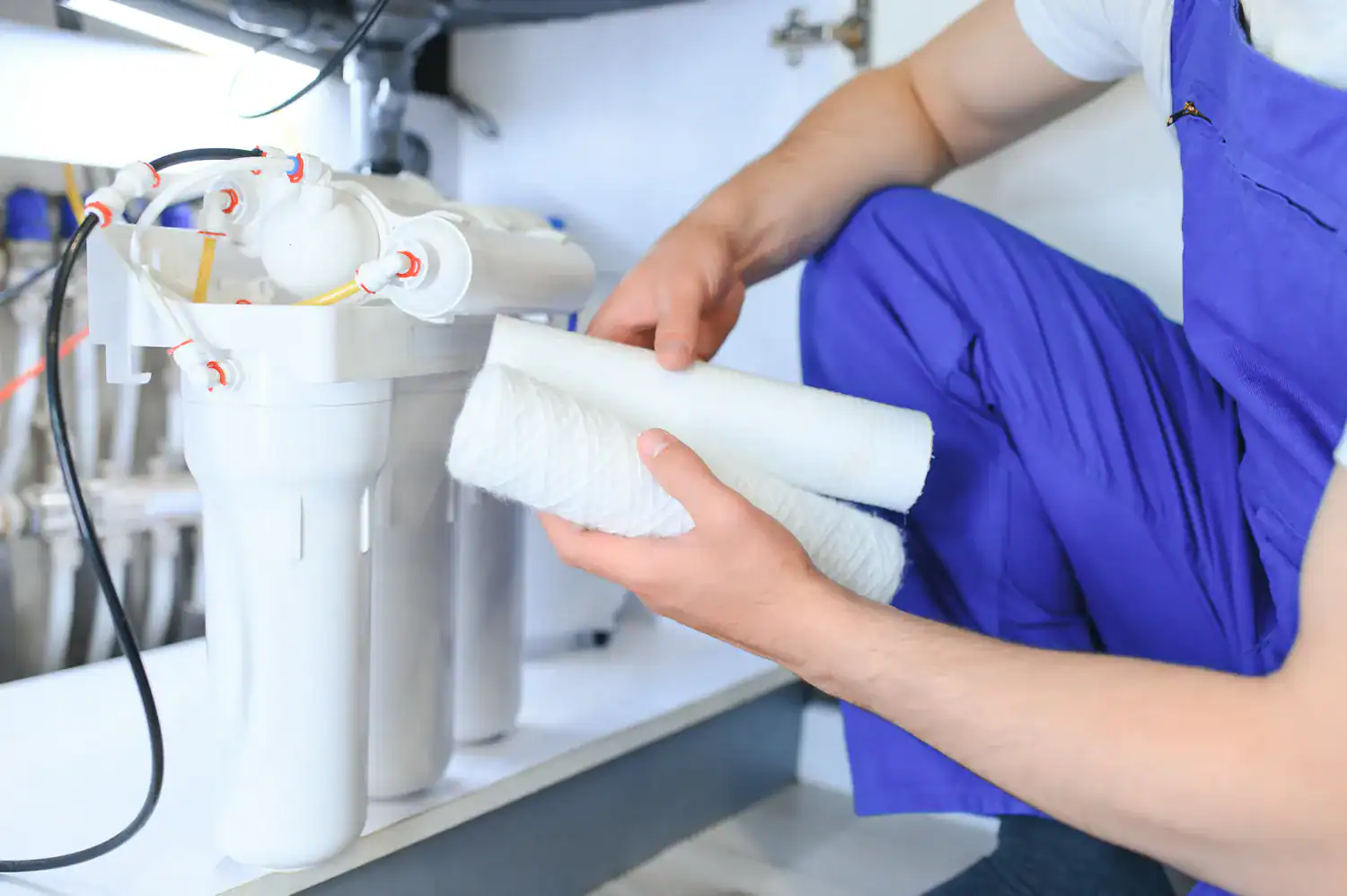
Installation is handled by our trained technicians who know what they’re doing. In Duval County, whole-house water treatment installations may require a permit through the City of Jacksonville’s Building Inspection Division we handle that process as part of the job, so you’re not left with unpermitted work that becomes a problem when you sell. After installation, we’re still available. Filter replacements, membrane service, system checks we show up, because that’s the part most companies in this industry skip.
Ready to get started?
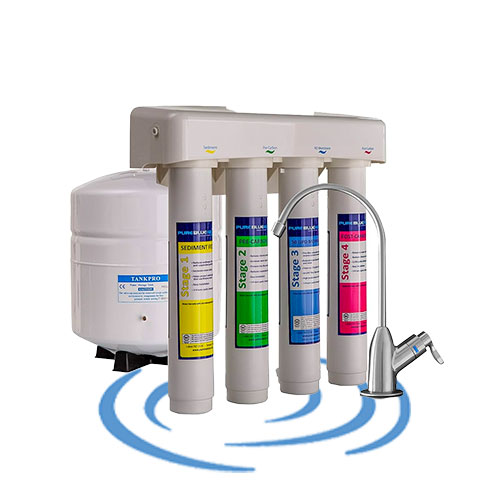
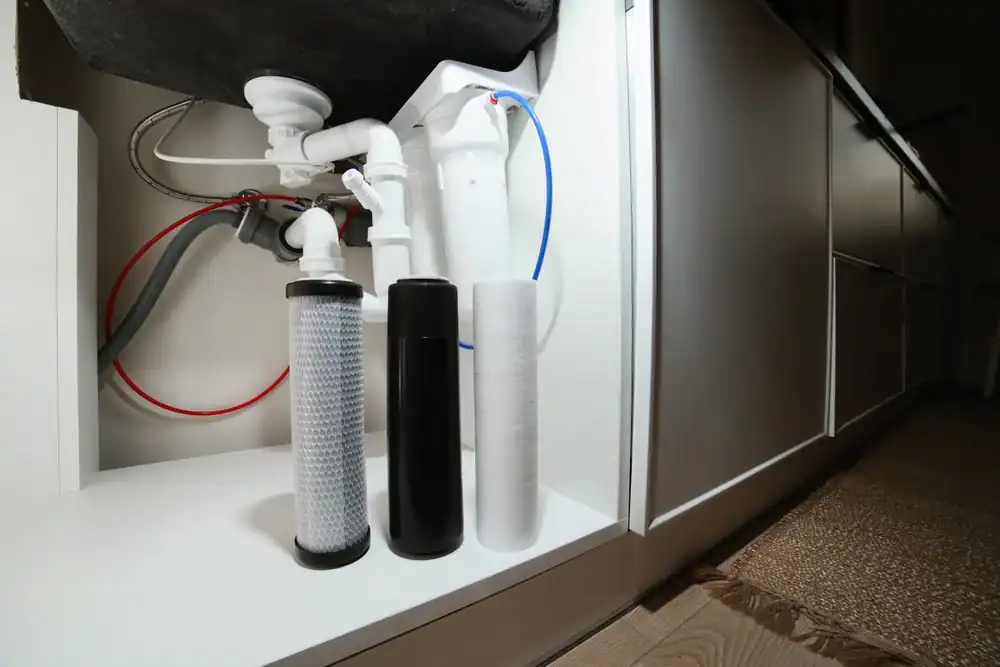
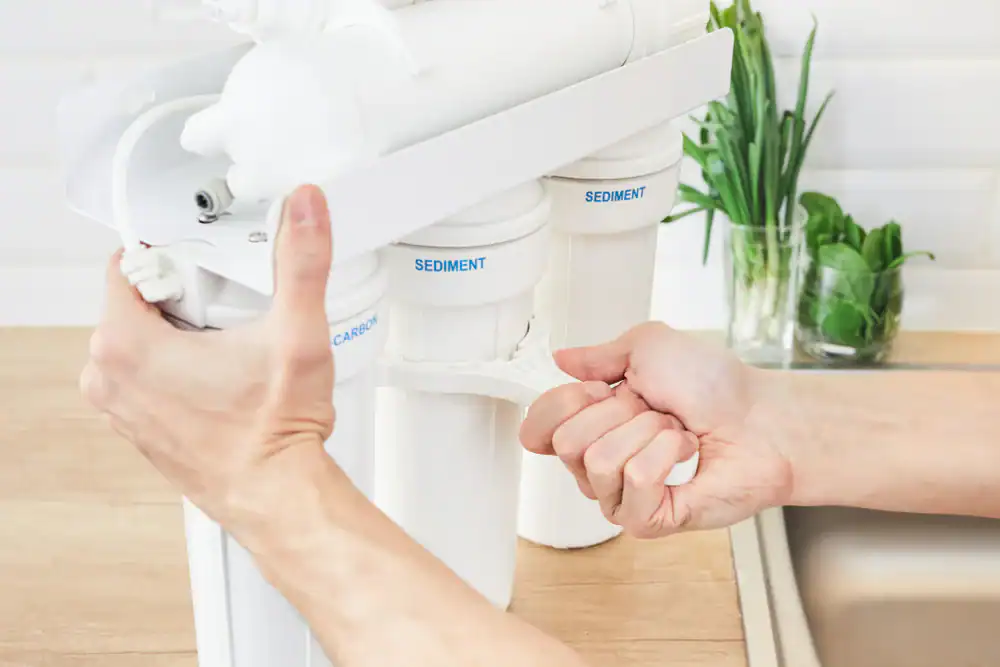
JEA uses chloramine disinfection across much of its Jacksonville distribution system, and standard carbon filters don’t touch it. A properly designed under-sink reverse osmosis system uses catalytic activated carbon in the pre-filter stage specifically to address chloramines followed by a high-rejection RO membrane that handles dissolved minerals, heavy metals, nitrates, and PFAS compounds. What comes out of your tap is water that has been through a multi-stage process, not just filtered through a single cartridge.
For Fort Caroline homeowners dealing with hard water scale on fixtures, a white film on shower doors, or a water heater that seems to need replacing earlier than it should, the conversation often expands to whole-house treatment. That’s where our specialty sits whole-house purification systems that address hardness and chemical contamination at the point of entry, with an RO drinking water system at the kitchen sink for the cleanest possible water where you actually consume it.
If you’re active-duty military stationed at Mayport, a veteran who settled in Fort Caroline after service, a firefighter, or a first responder we offer a $500 discount on installation. It’s the largest discount of its kind in this market, and it applies to a significant portion of Fort Caroline’s homeowning community. All systems use NSF/ANSI-certified components, and the membranes and key parts are manufactured in the United States.
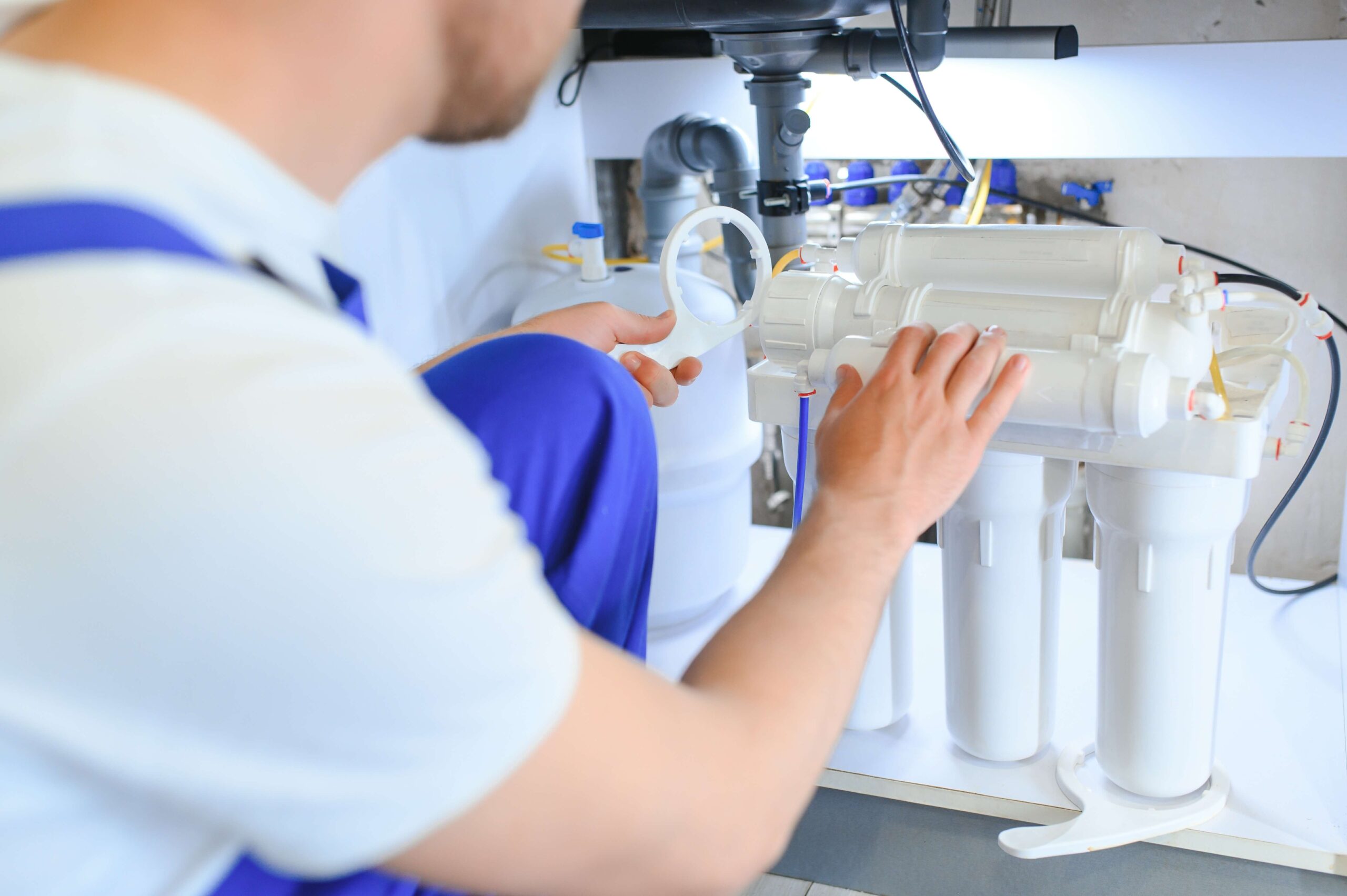
JEA draws from the Floridan Aquifer, which naturally mineralizes water as it moves through limestone formations beneath Duval County. That produces moderately hard water enough to leave scale on your fixtures, shorten your water heater’s lifespan, and leave a film on dishes and glass surfaces. On top of that, JEA uses chloramine disinfection in portions of its distribution system. Chloramines don’t dissipate the way free chlorine does, and they aren’t removed by standard pitcher filters or refrigerator filters. They require catalytic activated carbon which is part of a properly designed RO system’s pre-filter stage.
So the short answer is: it depends on what you want from your water. If you’re fine with the taste and not concerned about disinfection byproducts or mineral accumulation on your appliances, you might get by without one. But if you’ve noticed a chemical taste, white scale buildup, or you’re spending real money on bottled water every month, an under-sink RO system addresses all of it and a lab water test will tell you exactly what you’re dealing with before you spend a dollar on equipment.
PFAS sometimes called “forever chemicals” have been detected near military installations across the country, largely due to the historical use of AFFF firefighting foam. Mayport Naval Station is one of the largest naval installations on the East Coast, and Fort Caroline sits directly adjacent to it. Whether PFAS has affected your specific water supply depends on your source JEA municipal water versus a private well and where your property sits relative to any documented contamination plumes.
JEA publishes an annual water quality report, and private well owners in the area can have their water tested independently. What’s clear is that reverse osmosis is one of the most effective technologies available for PFAS removal. A properly functioning RO membrane rejects the vast majority of PFAS compounds far more effectively than a standard carbon filter. We test for PFAS as part of our water analysis process, so if it’s a concern for your household, you’ll get a real answer based on your actual water.
A well-built reverse osmosis system installed correctly in a Fort Caroline home should last 15 to 20 years. The system itself is durable what requires regular attention are the filter stages and the membrane. Pre-filters typically need replacement every six to twelve months depending on your water quality and usage volume. The RO membrane itself usually lasts two to five years before it needs replacing, though homes with higher mineral loads from the Floridan Aquifer may see the membrane work harder and need attention sooner.
The annual cost of maintaining an under-sink RO system runs roughly $100 to $200 in filter replacements a fraction of what most Fort Caroline families spend on bottled water in a year. What matters most is that someone actually shows up to do that maintenance when it’s due. We service what we install, which sounds like a baseline expectation but is apparently not standard practice in this industry. If your membrane is due for replacement or your pre-filters are overdue, we’re reachable and we come out.
They solve different problems, and for most Fort Caroline homes, you actually want both working together. A water softener addresses hardness the calcium and magnesium minerals that come up through the Floridan Aquifer and cause scale buildup on your fixtures, inside your water heater, and through your appliances. It works by exchanging those minerals for sodium ions, which dramatically reduces scale accumulation and extends the life of your plumbing and appliances. But a softener doesn’t purify your drinking water. It doesn’t remove chloramines, PFAS, nitrates, or dissolved contaminants.
That’s where a reverse osmosis system comes in. An RO system at your kitchen sink takes the softened water and runs it through a multi-stage filtration and membrane process that removes what a softener leaves behind including disinfection byproducts from JEA’s treatment process, trace heavy metals from older plumbing (Fort Caroline’s housing stock is old enough that this is worth checking), and emerging contaminants. The combination of whole-house softening at the point of entry and an RO drinking water system at the tap is the setup we most commonly recommend for northeast Jacksonville homes, because it addresses both the infrastructure damage and the drinking water quality in one complete approach.
An under-sink reverse osmosis system for a Fort Caroline home typically runs in the range of $300 to $800 for the unit itself, with professional installation adding to that depending on your existing plumbing configuration and whether any modifications are needed under the sink or to your water line. Whole-house reverse osmosis systems which we specialize in are a larger investment, generally starting around $1,500 and ranging higher depending on the size of your home and the complexity of your water treatment needs.
The more useful number to keep in mind is what you’re currently spending on bottled water. A Fort Caroline family going through a case or two of water per week is spending $600 to $1,200 a year on something that an RO system replaces at the tap for a fraction of the ongoing cost. The system pays for itself, usually within two to three years, and keeps working for 15 to 20 years after that. If you qualify for the military or first responder discount which applies to a large portion of Fort Caroline’s homeowning population given the proximity to Mayport and NAS Jacksonville that $500 reduction makes the math even more straightforward from day one.
Please provide your email address so that we can stay in touch and answer any questions you have! We will be reaching back out shortly.
"*" indicates required fields