Reach Out Today
Please provide your email address so that we can stay in touch and answer any questions you have! We will be reaching back out shortly.

Hear from Our Customers
The Floridan Aquifer runs under all of St. Johns County, and in the rural southwest where Elkton sits, USGS data shows total hardness levels that can reach 1,700 milligrams per liter. That’s not just a number it’s the white crust on your faucets, the scale building up inside your water heater, and the reason your soap never quite rinses clean. A properly installed RO system pulls those dissolved minerals out before they ever reach your glass or your appliances.
For homeowners on private wells in Elkton and there are many, given how spread out this area is the concern goes beyond hardness. The farming activity around Elkton means fertilizer runoff, nitrates, and other agricultural contaminants are real risks for shallow wells. An RO system filters at 0.0001 microns, which is smaller than any bacteria, nitrate molecule, or dissolved chemical. What you can’t see in your water is often the part worth worrying about most.
The practical result is straightforward. Your drinking water tastes clean. Your coffee tastes better. Your water heater lasts longer. You stop buying cases of bottled water every week. And if you’re on a fixed income which describes a lot of Elkton households eliminating that bottled water habit adds up to real money back in your pocket over time.
We’re not a plumbing company that installs filters on the side. Water treatment is the only thing we do softening, filtration, purification, and reverse osmosis. That singular focus means the technician walking into your Elkton home has seen hundreds of Florida water problems, not a handful, and can tell the difference between what your system actually needs and what sounds good on a brochure.
We hold a BBB A-rating with a 5-star score and zero complaints on record. That’s a public record you can verify at bbb.org right now not a claim, a fact. We’re also members of the National Water Quality Association, which means our technicians are trained specifically in water chemistry and system design, including the Floridan Aquifer conditions that define water quality throughout St. Johns County.
If you’re active military, a veteran, or a first responder, there’s a $500 discount available and in a community like Elkton with the veteran presence this area carries, that’s worth knowing before you call anyone else.
It starts with a real water analysis. Not a quick hardness test designed to justify a sale an actual lab-grade assessment of what’s in your specific water supply, whether you’re on a private well or on St. Johns County utility service. In Elkton, those two situations can produce very different results. A well near active farmland carries different risks than a county-supplied home, and the system recommendation should reflect that difference.
Once the analysis is done, you get a clear explanation of what was found and what system addresses it. Under-sink reverse osmosis handles your drinking and cooking water at the point of use. A whole-house RO system treats every tap in the home protecting your water heater, your appliances, and every fixture from the mineral load that southwestern St. Johns County groundwater is known to carry. The recommendation is built around your test results, not a package that’s already been decided before anyone walked through your door.
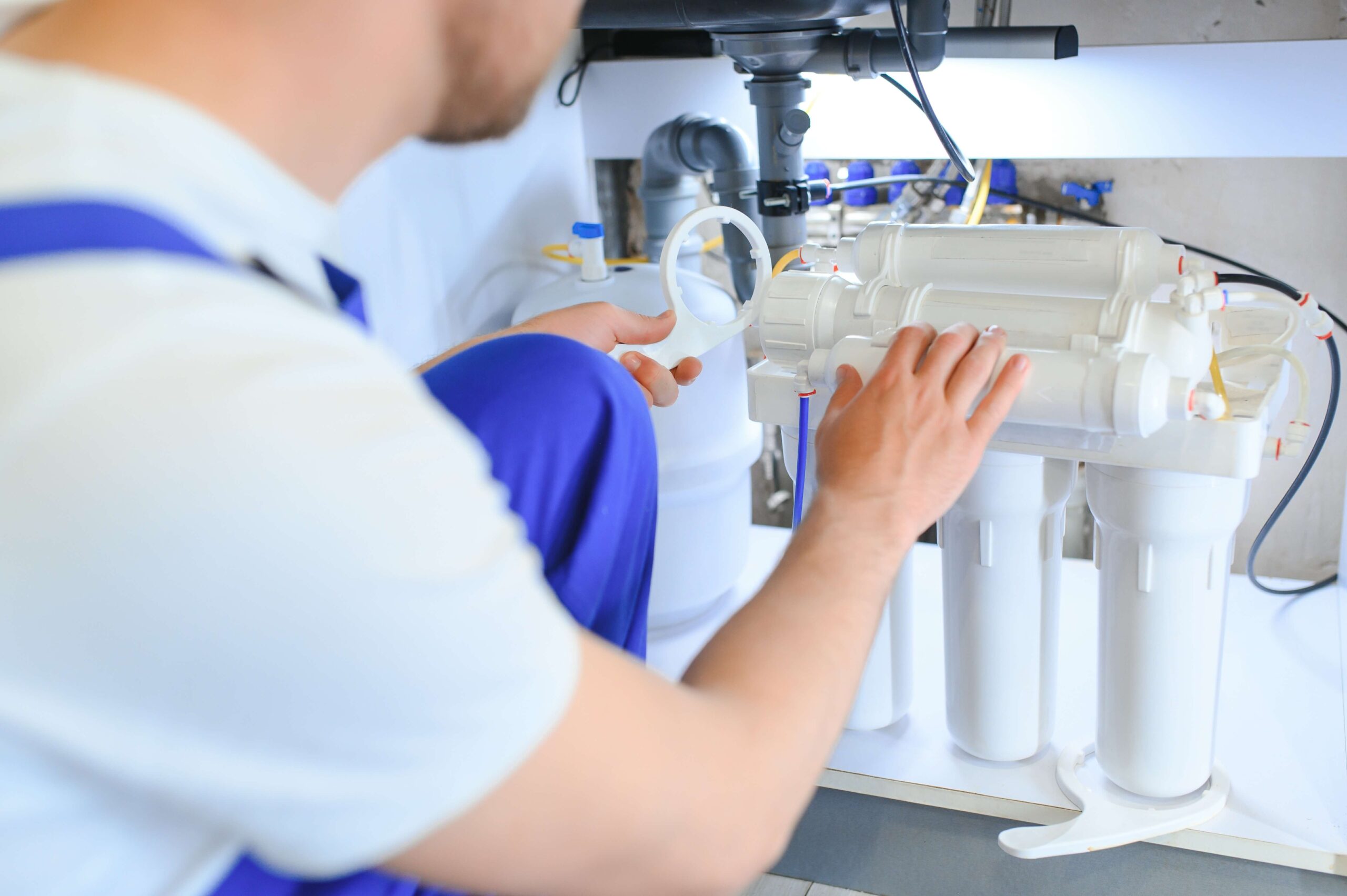
Installation is handled by trained technicians who know what they’re doing. Under-sink RO systems typically don’t require a permit in Florida, but any whole-house installation involving your main supply line is handled in compliance with St. Johns County requirements no shortcuts. After installation, you’ll know exactly what maintenance looks like, when filters need changing, and who to call when that time comes. We service what we sell and we’ll still be here in five years when you need that service.
Ready to get started?
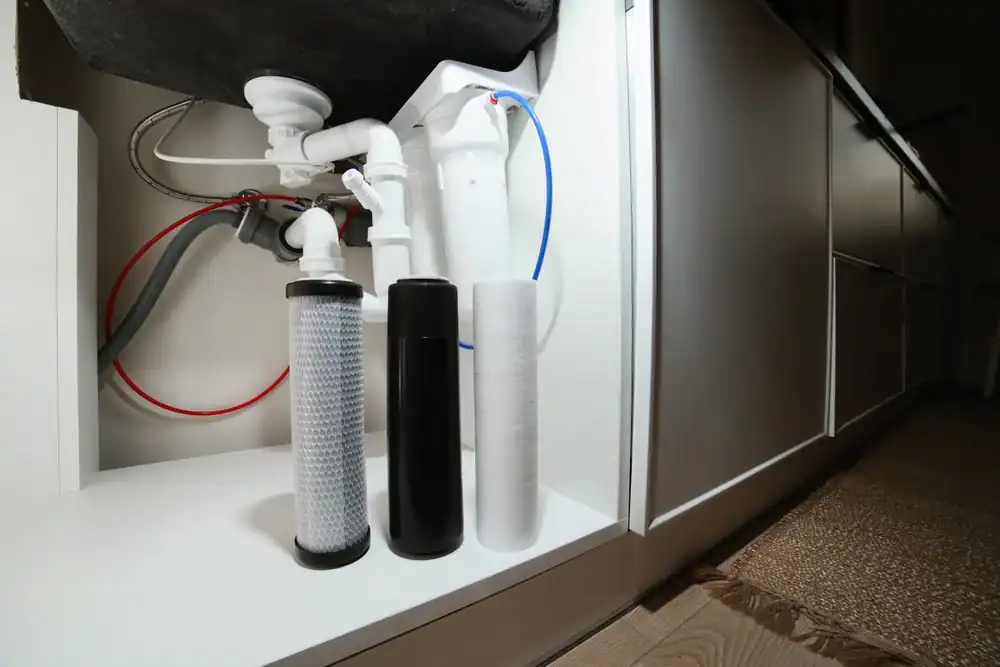
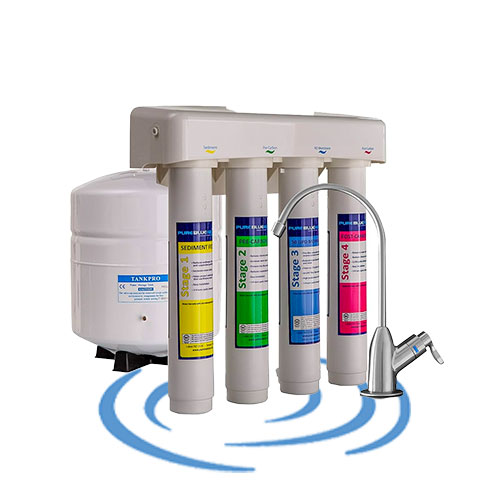
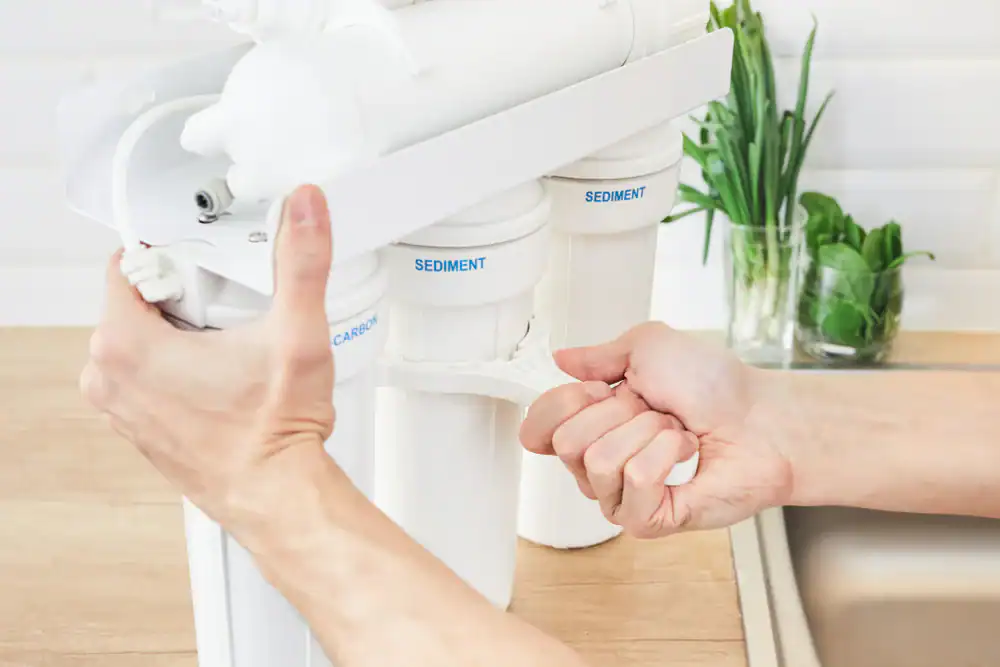
An under-sink reverse osmosis system is the most common starting point for Elkton homeowners who want clean drinking water without overhauling their entire plumbing setup. It installs beneath the kitchen sink, connects to a dedicated faucet, and filters your drinking and cooking water through multiple stages sediment pre-filter, carbon block, RO membrane, and post-filter polish before it reaches your glass. For a household dealing with the mineral-heavy water that comes out of the Floridan Aquifer in this part of the county, the difference in taste and clarity is immediate.
For homes with more serious water quality issues high iron, heavy sulfur smell, bacterial concerns from an aging private well, or the elevated chloride levels documented in southwestern St. Johns County a whole-house reverse osmosis or whole-house filtration system addresses the problem at the point of entry, before water reaches any tap, appliance, or shower in the home. This is where our depth of experience in Florida water treatment shows most clearly, and it’s the type of project where getting the system sizing and configuration right actually matters.
Every engagement starts with that water test. The system we recommend at the end of it is the one that fits what your water actually contains not the most expensive option, not the cheapest one, just the right one for your address. And when filters are due, or something needs attention down the road, the same company that installed it is the one that picks up the phone.
The honest answer is: it depends on your specific well, and most people in Elkton have never had their water tested. Private wells in unincorporated St. Johns County have no regulatory oversight and no annual testing requirement. There’s no treatment plant standing between the ground and your tap. The USGS has documented that in much of St. Johns County, water from the Floridan Aquifer doesn’t meet the EPA’s secondary drinking water standards and that’s the aquifer most wells in this area tap into.
In the Hastings-Elkton agricultural corridor specifically, private wells also face contamination risks that don’t apply to suburban areas: nitrates from fertilizer runoff, pesticide residues, and bacterial infiltration from surface water are all documented concerns for shallow wells near active farmland. You may not be able to taste or smell any of it. That’s exactly why a lab-grade water test not a quick sales pitch disguised as a test is the right first step before assuming your water is fine.
A reverse osmosis system forces water through a semi-permeable membrane with pores small enough to block dissolved contaminants that standard filters can’t touch. We’re talking about lead, arsenic, nitrates, fluoride, PFAS compounds, dissolved salts, chlorine byproducts, pesticide residues, and most bacteria and viruses. The filtration happens at 0.0001 microns for context, a human hair is roughly 70 microns wide. What passes through the membrane is essentially just water molecules.
For Elkton homeowners dealing with the high mineral load that comes out of southwestern St. Johns County groundwater calcium, magnesium, and in some cases elevated chloride levels from ancient saline water still present in the deeper aquifer RO is one of the only filtration methods that actually removes dissolved solids rather than just improving taste or odor. A carbon filter helps with chlorine and some organics. A water softener exchanges minerals. An RO system removes what’s left. That’s why it’s often the final stage in a whole-house treatment setup.
An under-sink reverse osmosis system the kind that installs beneath your kitchen sink and connects to a dedicated drinking water faucet typically runs in the range of $300 to $700 for the unit itself, with professional installation adding to that depending on your existing plumbing setup. A whole-house reverse osmosis system, which treats every tap in the home at the point of entry, is a larger investment generally in the $1,500 to $4,000 range depending on system capacity, the specific contaminants being addressed, and whether additional pre-treatment is needed for things like iron or sulfur.
The more useful comparison isn’t the installation cost versus doing nothing it’s the installation cost versus what you’re already spending. A household buying bottled water regularly can easily spend $600 to $1,200 a year on it. Hard water scale buildup shortens the life of water heaters, which cost $800 to $1,500 to replace. When you run those numbers over five or ten years, a professionally installed RO system is rarely the expensive option. It’s usually the cheaper one, done once and done right.
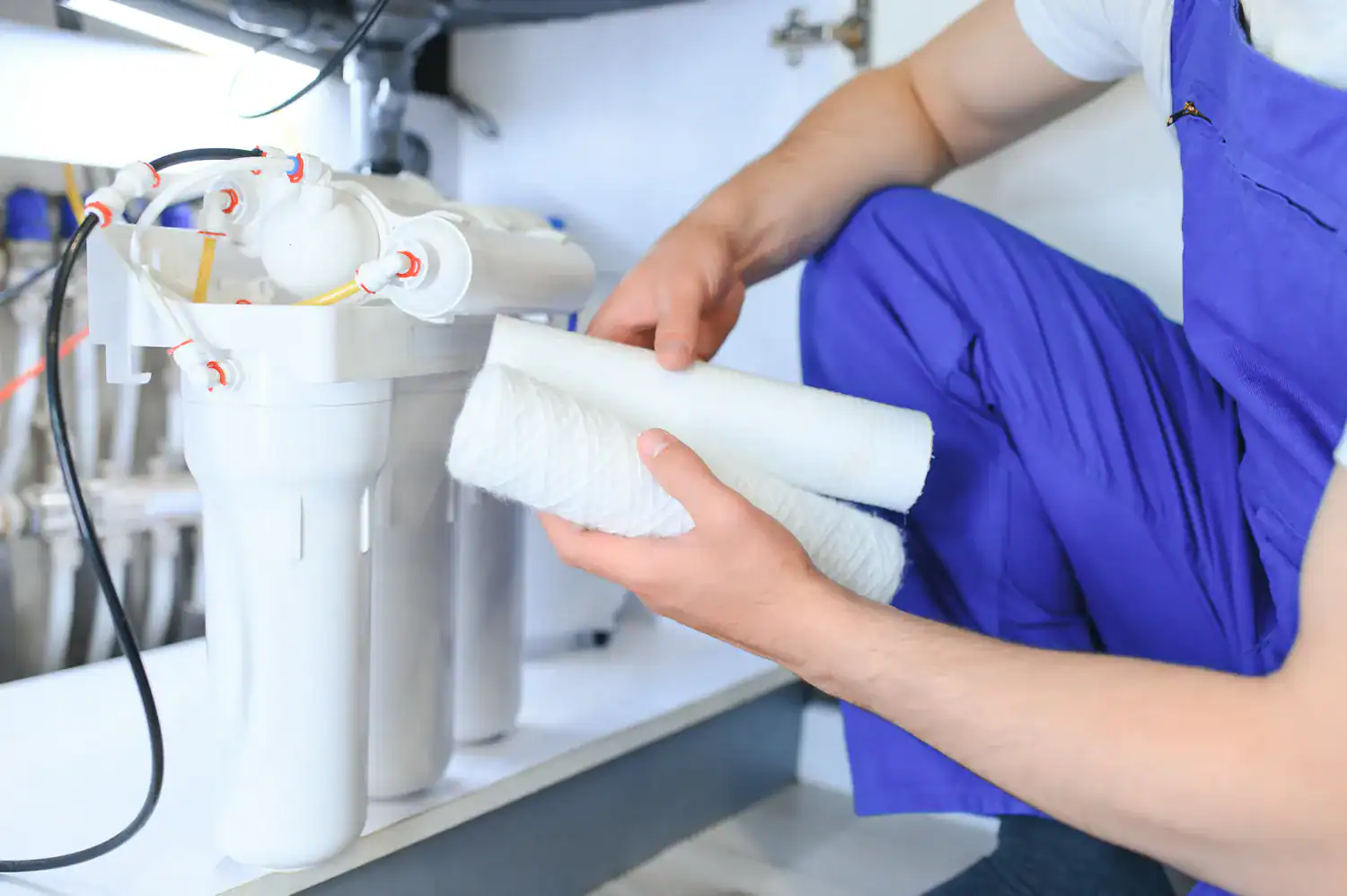
For most under-sink RO systems, the pre-filters sediment and carbon need to be replaced roughly every six to twelve months depending on your water quality and usage. The RO membrane itself typically lasts two to five years. Florida’s water conditions, particularly in areas like Elkton where mineral content is high, can shorten pre-filter life because the filters are working harder to handle the sediment and dissolved solids load before water reaches the membrane.
If you’re on a private well in Elkton, filter life can vary more than it would on municipal supply, because well water quality isn’t consistent the way treated utility water is. A heavy rain season, a change in nearby agricultural activity, or a drop in your well’s water table can all shift what’s coming through your system. The practical answer is: check your pre-filters annually at minimum, and don’t skip them a clogged pre-filter puts strain on the membrane and shortens its life significantly. We’ll walk you through a maintenance schedule that fits your specific system and water conditions.
This is one of the most common questions, and the answer genuinely depends on your water test results which is why testing first matters. A water softener addresses hardness specifically. It exchanges calcium and magnesium ions for sodium ions through a process called ion exchange, which eliminates scale buildup and makes soap lather properly. What it doesn’t do is remove nitrates, PFAS, heavy metals, bacteria, or dissolved solids. It makes your water softer, not necessarily safer to drink.
A reverse osmosis system, on the other hand, removes a much broader range of contaminants including hardness minerals but works best when the incoming water isn’t overloaded with sediment or extremely high mineral content. In parts of Elkton where hardness levels are particularly high, running water through a softener first extends the life of the RO membrane significantly. Many whole-house setups in this area use both: a softener at the point of entry to handle hardness and protect the plumbing, and an RO system at the point of use for drinking and cooking water. The right combination for your home depends on what’s actually in your water not a one-size-fits-all recommendation.
Please provide your email address so that we can stay in touch and answer any questions you have! We will be reaching back out shortly.
"*" indicates required fields