Reach Out Today
Please provide your email address so that we can stay in touch and answer any questions you have! We will be reaching back out shortly.

Hear from Our Customers
The moment clean water starts coming out of your tap, a few things stop happening. The weekly bottled water run. The white film on your coffee maker. The faint chemical smell when you run the hot water.
These aren’t small annoyances. They’re signs that what’s coming out of your pipes in Del Mar is doing quiet damage every single day. Hard water scale clogs fixtures and destroys water heaters. Chloramines affect taste and odor. Invisible contaminants PFAS, lead, nitrates accumulate in your body over years of drinking and cooking with untreated water.
Most Del Mar homeowners try a pitcher filter first. It doesn’t work because standard activated carbon isn’t designed for chloramine chemistry. JEA uses chloramines in much of its service area, and those compounds require catalytic carbon a different filtration stage entirely to break the bond and remove the taste and odor.
A reverse osmosis system addresses the full picture. Multi-stage filtration removes chloramines through catalytic carbon pre-treatment. The RO membrane itself with pores at 0.0001 microns handles dissolved solids, PFAS, lead, nitrates, and other contaminants that no pitcher filter can touch. You get genuinely clean water at every pour, not just the illusion of it.
We don’t install water heaters or fix leaky faucets. Water treatment is the only thing we do and that focus matters when you’re trying to solve a real problem, not just buy a product off a truck.
We hold an A-rating with the Better Business Bureau, a 5-star customer rating, and zero complaints on file. You can look that up at bbb.org right now. In an industry where national companies routinely sell systems and then become unreachable for service, that record means something. We’re also members of the National Water Quality Association which sets the professional standard for water treatment training and product certification.
Serving communities throughout North and Central Florida, including the Jacksonville metro area where Del Mar sits, we bring the same test-first process to every home. No guessing. No generic recommendations. Just an honest look at what’s actually in your water before anything gets installed.
We service what we sell. That means when your filters need replacing or your system needs service, you reach us not a call center in another state and we show up. For a Del Mar homeowner who’s been burned by a national company that disappeared after the sale, that’s not a small promise.
It starts with a water test not a quick hardness check designed to justify the most expensive system on the truck, but a real lab-grade analysis of what’s actually in your water. For Del Mar homeowners on JEA municipal service, that means testing for chloramines, PFAS, lead, total dissolved solids, nitrates, and pH.
The results drive the recommendation. If your water doesn’t need a particular treatment stage, we won’t sell you one.
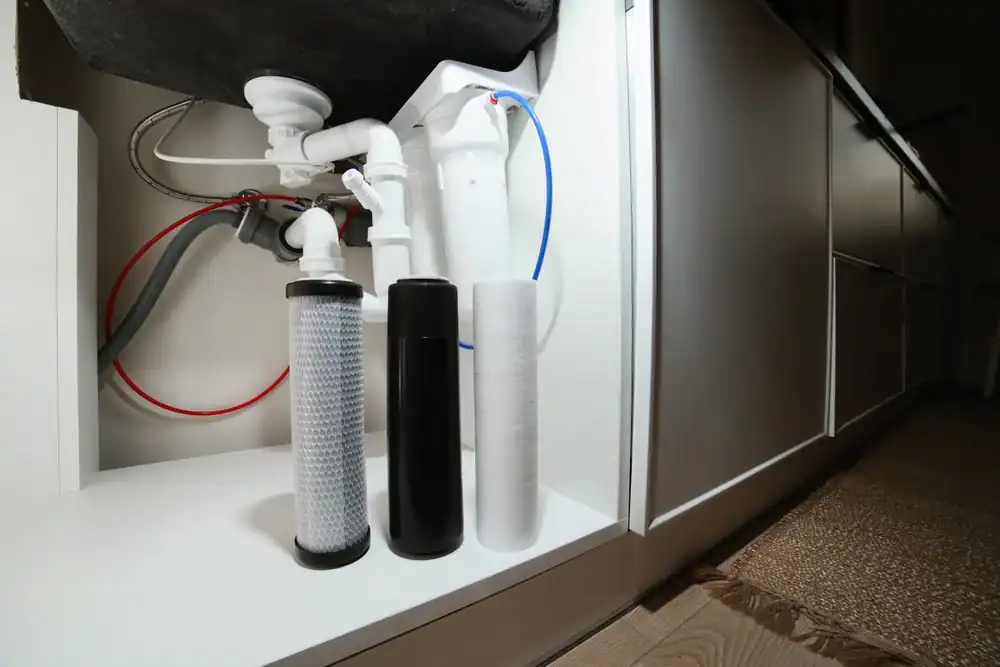
Once the test results are in, you’ll get a clear recommendation typically an under-sink reverse osmosis system for drinking and cooking water, or a whole-house system if the mineral and contaminant load warrants it. The installation itself is straightforward for most Del Mar homes. An under-sink RO system connects to your existing supply and drain lines beneath the kitchen sink and doesn’t require a building permit in most Duval County residential installations.
Whole-house systems that tie into the main supply line may involve a permit depending on scope, and we handle that process as part of the job.
After installation, you’ll know exactly what filter stages your system has, when each one needs to be replaced, and how to reach us when that time comes. There’s no mystery maintenance schedule and no disappearing act after the invoice is paid.
Ready to get started?
A reverse osmosis system works by forcing water through a semi-permeable membrane with pores of 0.0001 microns small enough to block dissolved contaminants that boiling, pitcher filters, and standard carbon filters can’t touch. That includes PFAS compounds that have been detected in Northeast Florida water systems, lead that can leach from older service lines in established Del Mar neighborhoods, nitrates from fertilizer runoff, and pharmaceutical traces.
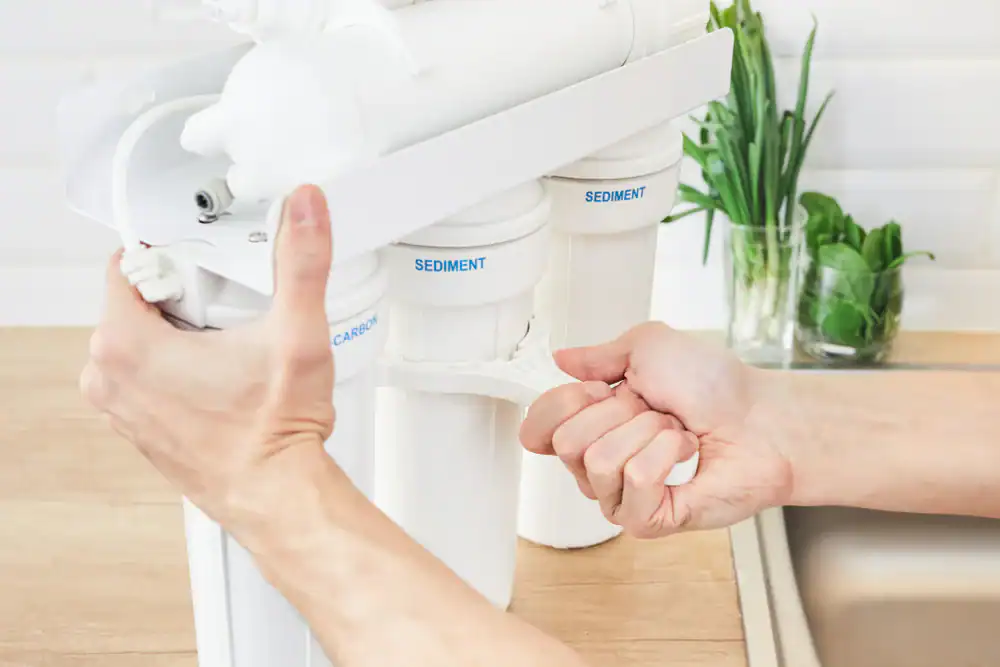
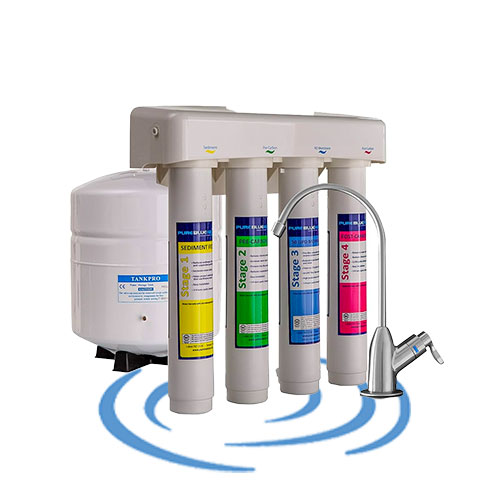
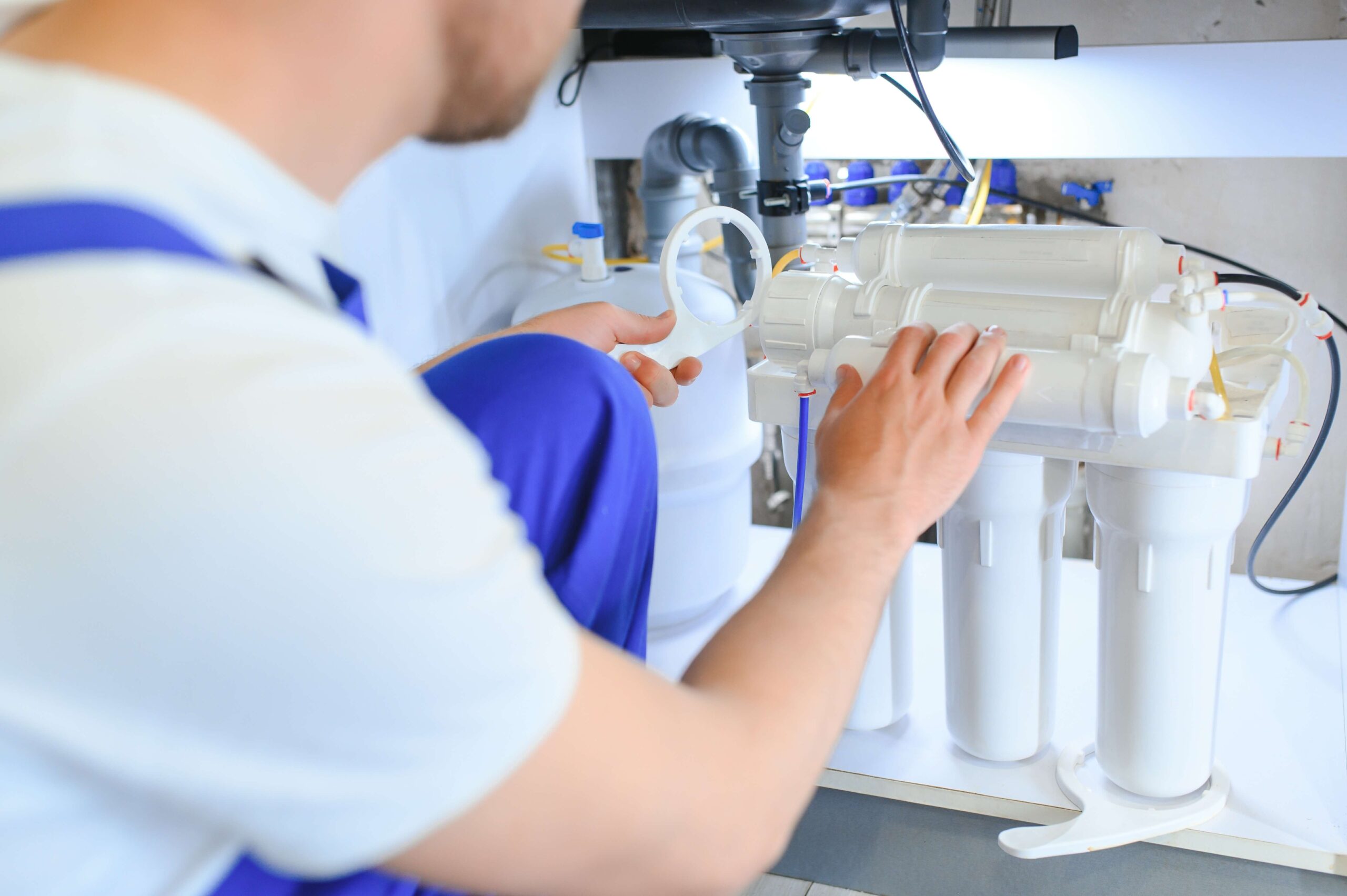
Most under-sink RO systems we install in Del Mar homes include a sediment pre-filter, a catalytic carbon stage specifically designed for chloramine removal, the RO membrane itself, and a post-filter that polishes the water before it reaches your glass. The catalytic carbon stage is the detail that separates a system built for Jacksonville-area water from a generic off-the-shelf unit.
Standard activated carbon doesn’t break the chloramine bond. Catalytic carbon does.
For homeowners dealing with the full picture hard water scale throughout the house, not just drinking water quality we also offer whole-house water conditioning and softening that works alongside the RO system. If you’re in an older Del Mar home with aging fixtures and a water heater that’s already showing scale buildup, that combination is worth a real conversation.
Every recommendation starts with your water test, not a package price.
JEA water meets federal Safe Drinking Water Act standards, which means it’s technically legal to drink. But meeting the legal standard and being genuinely clean are two different things. JEA uses chloramine disinfection in many of its service areas a compound that keeps water disinfected through long distribution lines but doesn’t go away on its own. It doesn’t evaporate like free chlorine, and it passes right through most standard filters.
Beyond that, the Floridan Aquifer that supplies Del Mar and the surrounding region naturally carries a high dissolved mineral load calcium, magnesium, and bicarbonates that create the scale you see on your faucets and inside your appliances.
A reverse osmosis system addresses both problems simultaneously. The multi-stage filtration removes chloramines through catalytic carbon pre-treatment, then the membrane itself handles dissolved solids, PFAS, lead, nitrates, and other contaminants. If you’ve been relying on a pitcher filter or a refrigerator filter and still notice taste or odor issues in Del Mar, that’s likely why those products aren’t built for chloramine chemistry.
A proper water test will show you exactly what you’re dealing with before any decision is made.
For most Del Mar homes, a professionally installed under-sink reverse osmosis drinking water system runs in the range of $400 to $900 depending on the number of filtration stages, the membrane quality, and whether a dedicated faucet or refrigerator line connection is included. Whole-house reverse osmosis systems which treat every water outlet in the home, not just the kitchen tap are a more significant investment, typically ranging from $1,500 to $5,000 or more depending on the home’s size, existing plumbing configuration, and the level of pre-filtration needed for your specific water chemistry.
The more useful number to keep in mind is what you’re currently spending without a system. A Del Mar household buying bottled water for drinking and cooking typically spends $50 to $80 per month that’s $600 to nearly $1,000 per year. Factor in the accelerated wear on water heaters and appliances from hard water scale, and the math on a properly installed RO system shifts pretty quickly.
We’ll walk you through the actual cost comparison after your water test, so you’re making a decision based on real numbers, not estimates.
A properly staged reverse osmosis system removes a broad spectrum of dissolved contaminants not just the ones that affect taste. The RO membrane itself, with pores at 0.0001 microns, physically blocks dissolved solids that no other residential filtration technology can match. That includes lead, which is a real concern in any established neighborhood with older service lines or pre-1986 plumbing fixtures.
It includes PFAS the “forever chemicals” linked to serious health effects which have been detected in water systems throughout Northeast Florida. It handles nitrates from agricultural and lawn fertilizer runoff, fluoride, arsenic, pharmaceutical traces, and the elevated total dissolved solids that come from the Floridan Aquifer’s limestone mineral content.
The pre-filtration stages matter just as much as the membrane. For Del Mar homeowners on JEA municipal water, the catalytic carbon stage is critical it’s specifically engineered to break the chloramine bond that standard carbon can’t address. Without it, chloramines pass through the system and continue affecting taste and odor.
A complete, properly specified system handles all of this in sequence, so what reaches your glass has been through multiple layers of treatment, not just one.
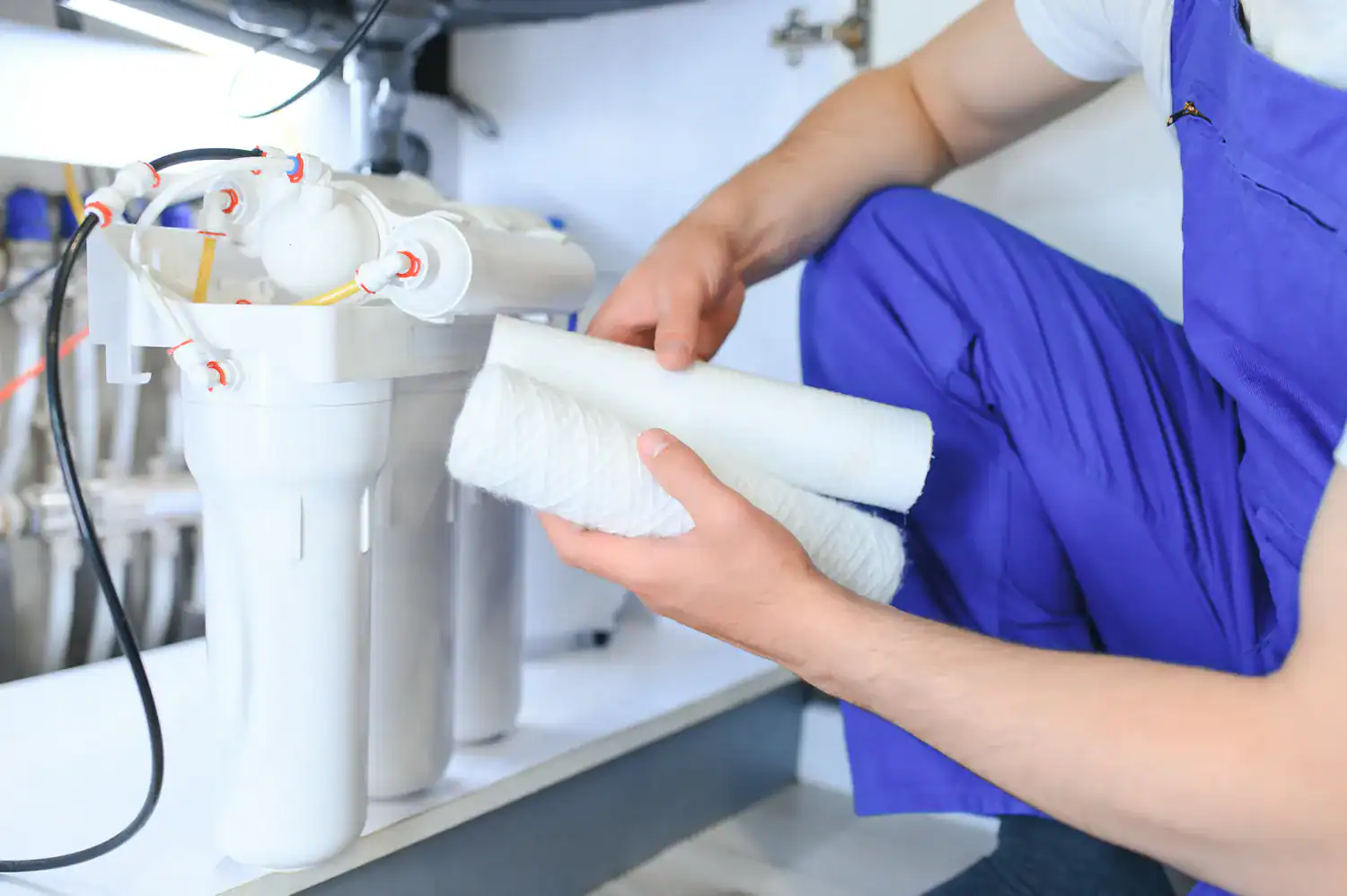
Maintenance on a residential RO system is straightforward once you know the schedule. Pre-filters the sediment and carbon stages typically need replacement every six to twelve months depending on your water’s sediment load and usage. In Del Mar homes on JEA municipal water, the catalytic carbon stage tends to work harder than it would in a low-chloramine environment, so staying on the six-month end of that range is a reasonable approach.
The RO membrane itself lasts considerably longer usually two to five years depending on water quality and daily volume. The post-filter, which polishes the water after the membrane, is typically replaced annually.
We give you a clear maintenance schedule at installation not a vague “check it occasionally” so you know exactly when each stage needs attention. More importantly, we’re still reachable when that time comes. That sounds like a low bar, but in the Jacksonville-area water treatment market, it’s not. Companies that sell systems and then become unreachable for service calls are a documented problem here.
Our zero-complaint BBB record is the most direct evidence that we don’t operate that way.
For most Del Mar homeowners, the honest answer is: it depends on your water test results and what problems you’re actually trying to solve. An under-sink RO system handles drinking and cooking water at a fraction of the cost and is the right starting point for most households. A whole-house RO system treats every water outlet showers, laundry, appliances which makes sense if your primary concern is the mineral scale damage that hard water causes throughout the home, or if there’s a health-related reason to want filtered water at every tap.
What often makes more sense for Del Mar homes dealing with the full range of issues hard water scale throughout the house plus contaminant concerns at the kitchen tap is pairing an under-sink RO system with a whole-house water conditioning or softening system. The softener handles the mineral hardness that damages appliances and plumbing. The RO system handles the drinking water quality at a much finer level.
That combination addresses both problems without the cost of running full RO filtration through every fixture in the house. We’ll give you a straight answer on which approach fits your home after we’ve seen your water test results.
Please provide your email address so that we can stay in touch and answer any questions you have! We will be reaching back out shortly.
"*" indicates required fields