Reach Out Today
Please provide your email address so that we can stay in touch and answer any questions you have! We will be reaching back out shortly.

Hear from Our Customers
Most homeowners in Colonialtown North don’t realize the problem starts inside their walls. OUC treats the water before it leaves the plant but once it travels through pipes installed before 1986, lead can enter the picture. A reverse osmosis system installed at your kitchen sink intercepts that risk right at the point where your family drinks and cooks. That’s not a precaution. For a home with young kids, it’s the responsible call.
The taste issue is just as real. OUC’s own 2023 Water Quality Report documented an exceedance of the secondary standard for odor and if you noticed something off about your water that year, you weren’t imagining it. Even in a normal year, the chlorine disinfection process that keeps Orlando’s water safe also creates byproducts that affect how your water tastes and smells. Our reverse osmosis systems remove those compounds at the molecular level, and the difference is noticeable from the first glass.
Beyond safety and taste, there’s the practical math. If you’re spending $50 to $100 a month on bottled water because you don’t trust what’s coming out of the tap, that’s $600 to $1,200 a year and a lot of plastic. Our whole-house or under-sink RO systems produce cleaner water than most bottled brands at a fraction of the cost per gallon, and they run on demand, every day, for 15 to 20 years with basic maintenance.
Quality Safe Water of Florida LLC does one thing water treatment. We don’t install plumbing, HVAC, or water heaters as an upsell. We specialize exclusively in filtration, purification, and softening, and our technicians know the Lower Floridan Aquifer and OUC’s water chemistry the way a specialist should. That singular focus is what keeps our work sharp and our results consistent.
We hold a BBB A-rating with a 5-star score and zero complaints on file a record you can verify right now at bbb.org. In an industry where national brands are known for selling systems and then disappearing when something needs service, that record means something. We’re also a member of the National Water Quality Association, which means our technicians walking into your Colonialtown North home have training specific to Florida water conditions, not a generic certification applied everywhere.
We also offer a $500 discount for military personnel and first responders, and we support the Tunnels to Towers Foundation a commitment that goes beyond the job itself.
We start with a real water test not the kind designed to scare you into buying something, but an actual analysis of what’s in your OUC-supplied water. In Colonialtown North, where housing age varies block by block, two homes on the same street can have meaningfully different water quality at the tap depending on the condition of their internal plumbing. We test for lead, disinfection byproducts, arsenic, PFAS indicators, hardness, and pH. That data drives the system recommendation, not the other way around.
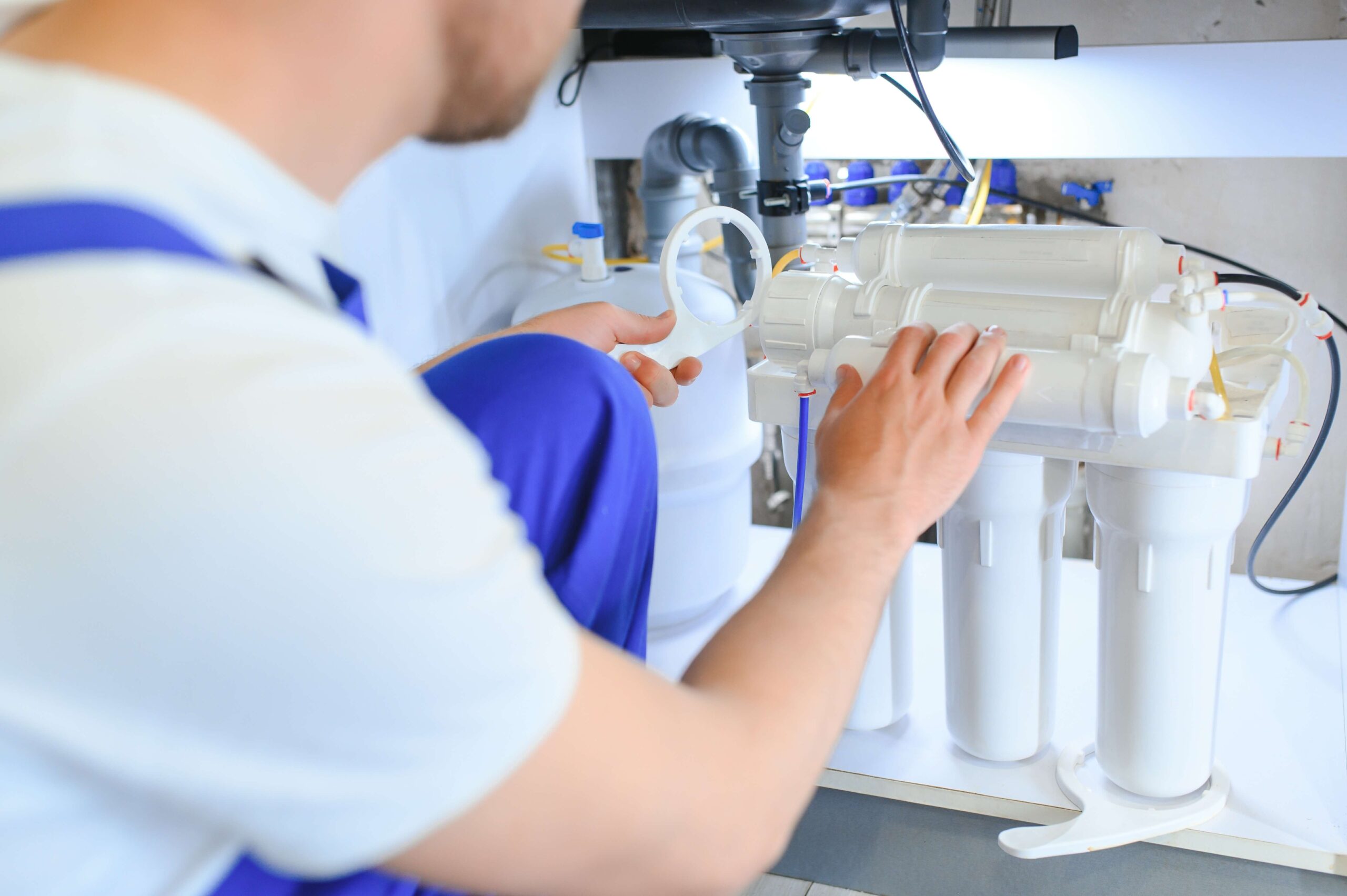
Once we identify the right system whether that’s an under-sink RO unit for your kitchen or a whole-house system that covers every tap in your home our installation is handled by trained technicians who understand what they’re working with. Under-sink RO systems in Colonialtown North typically don’t require a permit and can be installed in a few hours. Whole-house systems may require a plumbing permit depending on scope, and we walk you through that process if it applies to your home.
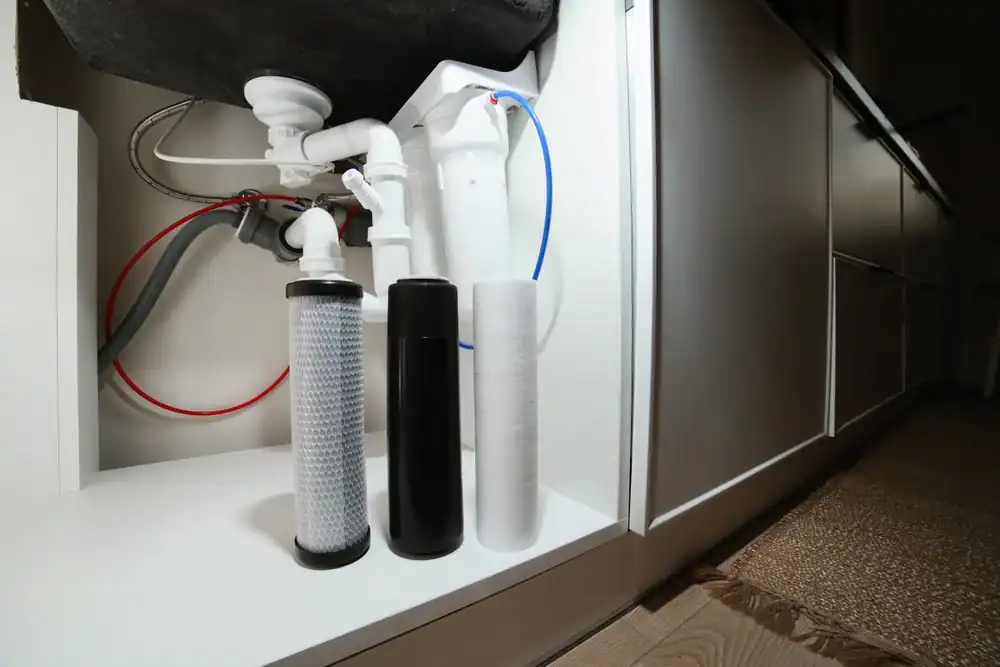
After installation, you’re not on your own. We service what we install. Filter replacements run roughly $100 to $200 per year, and the membrane typically lasts two to five years. The system itself, properly maintained, will run 15 to 20 years. That’s not a sales pitch it’s the baseline for how we operate.
Ready to get started?
The water coming into a renovated 1950s bungalow in Colonialtown North is not the same situation as a new-construction home elsewhere. OUC’s water hardness averages 129 parts per million moderately hard, enough to leave scale on your renovated kitchen fixtures and affect the performance of appliances over time. On top of that, the chlorine residual used for final disinfection produces trihalomethanes and haloacetic acids that are within federal limits but sit in the upper range of what large municipal systems report.
Add the lead risk from pre-1986 plumbing throughout Colonialtown North’s housing stock and the emerging PFAS concern now regulated under the EPA’s 2024 rules, and the full picture becomes clear: this isn’t a one-contaminant problem.
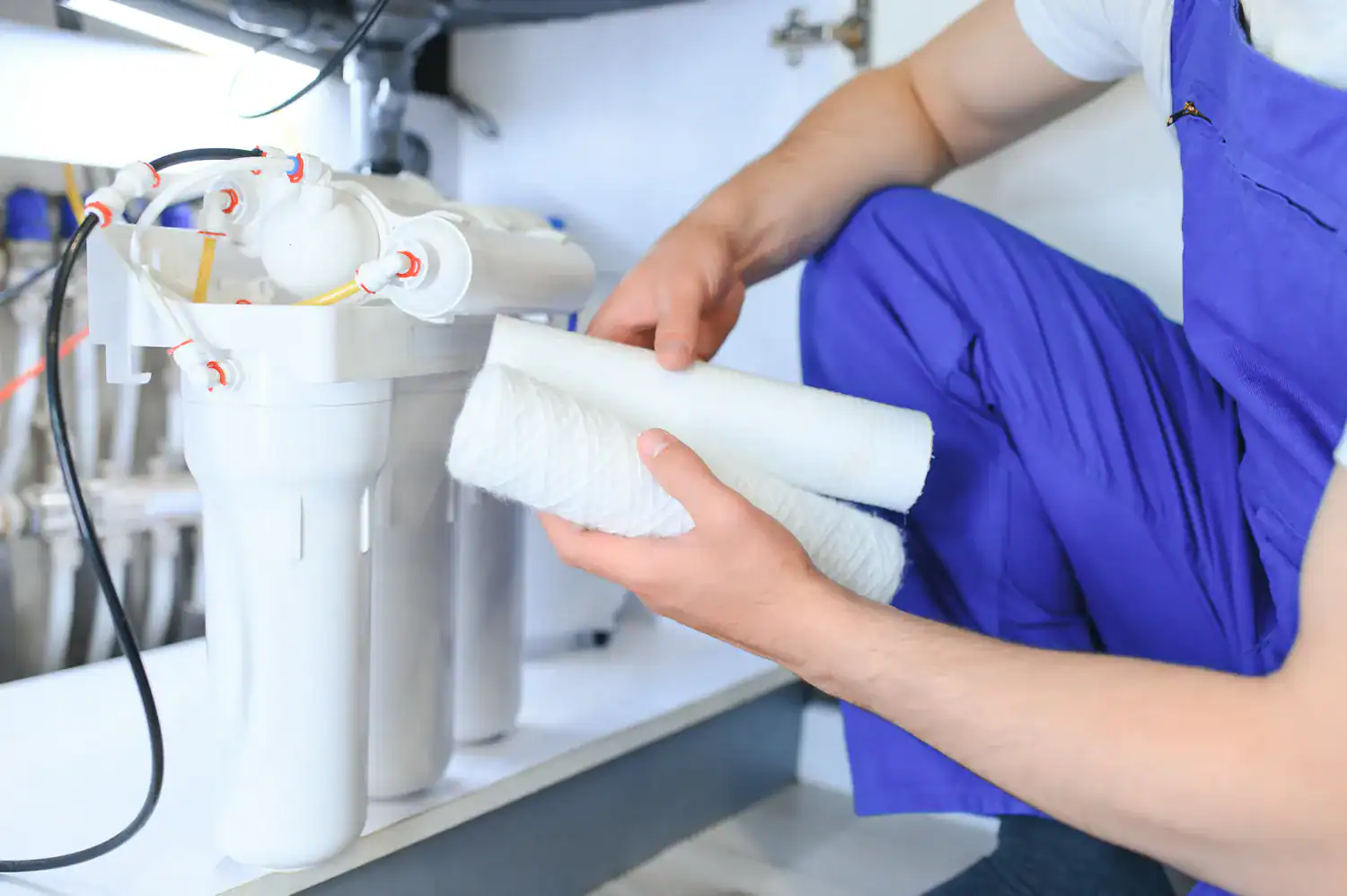
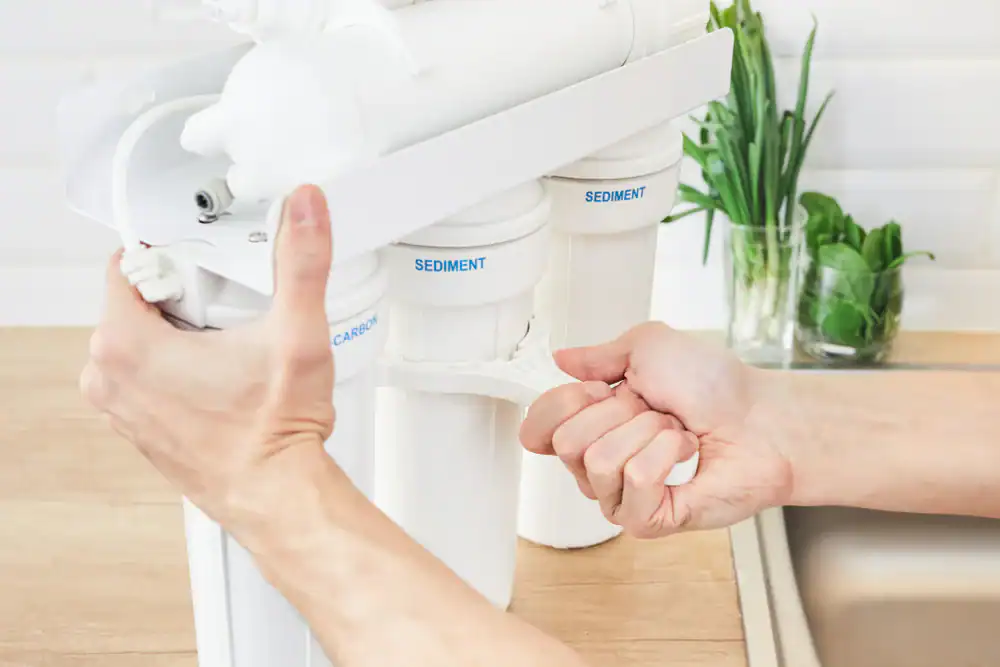
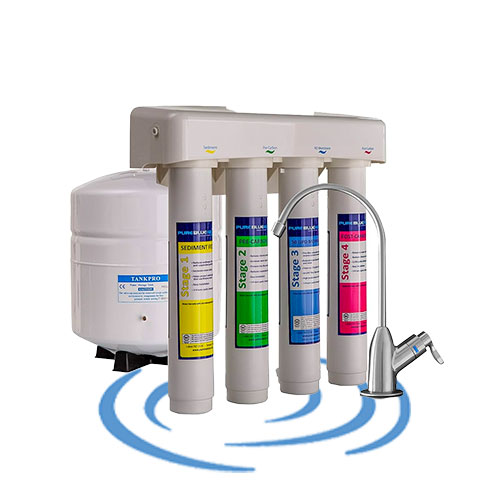
Our reverse osmosis installations address the full profile. Under-sink systems use NSF/ANSI 58-certified membranes that remove lead, arsenic, PFAS, disinfection byproducts, and dissolved solids the specific contaminants documented in Orange County’s water supply. Whole-house systems extend that protection to every tap in your home, including bathrooms and laundry, which matters if your home has older pipes throughout. Both options are sized and configured based on your actual water test results, not a one-size-fits-all package.
For homeowners currently in the middle of a kitchen renovation a common scenario in Colonialtown North’s ongoing bungalow revival adding an under-sink RO system during the remodel is the cleanest and most cost-effective time to do it. The dedicated faucet integrates naturally into a new kitchen design, and the system is already in place before the first glass of water is poured.
It depends on your home’s specific plumbing, and that’s not a dodge it’s the honest answer. The majority of Colonialtown North’s housing stock was built between 1940 and 1969, well before the federal government banned lead pipes and solder in 1986. OUC implements corrosion-control treatment to minimize leaching, and their 2020 lead analysis showed a 90th percentile concentration of 3 parts per billion across the system. That’s below the federal action level, but the EPA and CDC have both stated there is no safe level of lead exposure for children.
What matters for your home specifically is the condition of your internal plumbing the pipes, solder joints, and fixtures inside your walls and under your sinks. OUC’s treatment addresses what happens at the plant, not what happens once water travels through a 70-year-old pipe to your tap. A water test that measures lead at your specific faucet is the only way to know what you’re actually drinking. That’s where the conversation starts.
A properly certified reverse osmosis system removes a broad range of contaminants that show up in Orange County’s OUC water supply. Lead is the most locally urgent concern given the age of Colonialtown North’s housing stock. Beyond lead, our RO membranes certified to NSF/ANSI 58 are effective against arsenic, PFAS compounds, nitrates, dissolved solids, and the disinfection byproducts specifically trihalomethanes and haloacetic acids that form when chlorine reacts with organic matter during OUC’s treatment process.
PFAS removal is increasingly relevant following the EPA’s 2024 national rulemaking, which established enforceable limits for PFOA and PFOS for the first time. OUC is actively monitoring and planning mitigation, but that process takes time. In the meantime, a reverse osmosis system with NSF/ANSI 58 certification is the most effective residential tool available for PFAS reduction. It also addresses OUC’s water hardness averaging 129 ppm which affects taste, appliance lifespan, and scale buildup on fixtures.
An under-sink reverse osmosis system treats water at a single point of use typically your kitchen sink, where you drink and cook. It produces highly purified water on demand through a dedicated faucet, and it’s the right choice if your primary concern is drinking and cooking water quality. Installation is straightforward, typically doesn’t require a permit in Orange County, and can be completed in a few hours without disrupting the rest of your home.
A whole-house reverse osmosis system treats every tap in your home kitchen, bathrooms, laundry, everything. It’s the more comprehensive solution, and it makes sense if your home has older plumbing throughout, if you have concerns about bathing water quality, or if you want consistent protection at every point of use. For a Colonialtown North homeowner with a pre-1986 bungalow and aging pipes running through the whole house, whole-house treatment addresses the problem at a different scale. The right answer depends on what your water test shows and what your household’s actual usage looks like.
Under-sink reverse osmosis systems installed by us in the Orange County area typically run between $500 and $1,500, depending on the system’s filtration stages, the brand, and any modifications needed for your specific sink setup. That range covers the equipment and labor for a standard installation in a Colonialtown North kitchen. Annual maintenance filter replacements runs approximately $100 to $200 per year, and the membrane itself lasts two to five years before it needs replacing.
Whole-house reverse osmosis systems are a larger investment, generally starting around $3,000 and going up depending on the size of your home and the complexity of the installation. For a homeowner who has already invested $400,000 to $700,000 in a renovated bungalow and is spending $1,200 a year on bottled water, the math on a whole-house system is straightforward. The system pays for itself over time, lasts 15 to 20 years with proper care, and protects the plumbing and appliances throughout your home from the effects of hard water and dissolved solids.
This is one of the most common questions, and it deserves a straight answer. Yes, reverse osmosis removes most dissolved minerals including calcium and magnesium, which contribute to OUC’s 129 ppm water hardness. The minerals that remain in tap water are generally present in amounts too small to be a meaningful dietary source. Most of the calcium and magnesium your body needs comes from food, not water.
If mineral content is a concern, remineralization filters can be added to an RO system to reintroduce trace minerals after purification. Some homeowners prefer this for taste reasons purified water without any mineral content can taste flat to people accustomed to harder water. A remineralization stage addresses that without compromising the filtration performance. It’s a straightforward add-on that we can include based on your preferences and your test results.
Please provide your email address so that we can stay in touch and answer any questions you have! We will be reaching back out shortly.
"*" indicates required fields