Reach Out Today
Please provide your email address so that we can stay in touch and answer any questions you have! We will be reaching back out shortly.

Hear from Our Customers
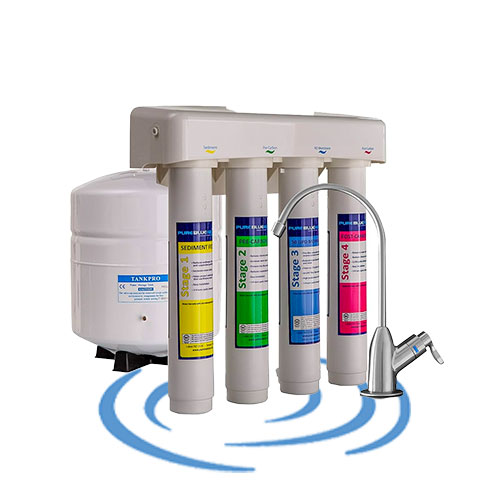
If your morning coffee tastes like a swimming pool, or you’ve noticed white scale building up on your fixtures and espresso machine, that’s not a minor annoyance that’s your water telling you something. Orlando’s average water hardness sits at 9.7 grains per gallon, which puts it firmly in the hard water category. That mineral load doesn’t disappear when it hits your tap. It coats your appliances from the inside out, shortens their lifespan, and leaves residue on everything it touches.
For residents living in downtown Orlando’s high-rise condos and luxury apartments near the Central Business District, that matters more than most people realize. You’ve invested in your unit the finishes, the fixtures, the appliances. Hard water works against all of it quietly, and the damage compounds over time.
Then there’s the health side. OUC’s 2023 Water Quality Report documented a single-site trihalomethane reading of 82.94 ppb above the federal limit of 80 ppb. Lead, chromium-6, arsenic, and PFAS have all been detected in Orlando’s water supply at levels that independent health organizations flag as concerns, even when they technically fall within regulatory limits. A properly installed under-sink reverse osmosis system removes 95 to 99 percent of those dissolved contaminants through a membrane with pores smaller than most viruses. What comes out the other side is water that’s genuinely clean not just legally compliant.
We do one thing: water treatment. No plumbing, no water heaters, no side services. Just water purification, softening, and filtration which means every technician, every recommendation, and every system we install reflects a company whose entire reputation rests on getting water right.
We hold an A-rating with the Better Business Bureau, a 5-star customer score, and zero complaints on file. That’s not a claim it’s a public record you can pull up at bbb.org in under two minutes. In a market where national brands like Leaf routinely sell systems and then become unreachable for service, that record is genuinely rare. We’re also members of the National Water Quality Association, which means our process is grounded in actual water science, not a canned pitch.
We serve the greater Central Florida area, including the downtown Orlando corridor and the Central Business District. We start every job with real lab-grade water testing because your building’s plumbing, your floor in the tower, and your specific OUC service connection all affect what’s actually coming out of your tap.
It starts with a water test not a quick dip strip, but actual lab-grade analysis of what’s in your water. For residents near the Central Business District on OUC service, that means testing for the contaminants most relevant to the Floridan Aquifer supply: trihalomethanes, lead, chromium-6, PFAS, arsenic, and total dissolved solids. The results tell us exactly what your water contains and what level of treatment will actually address it.
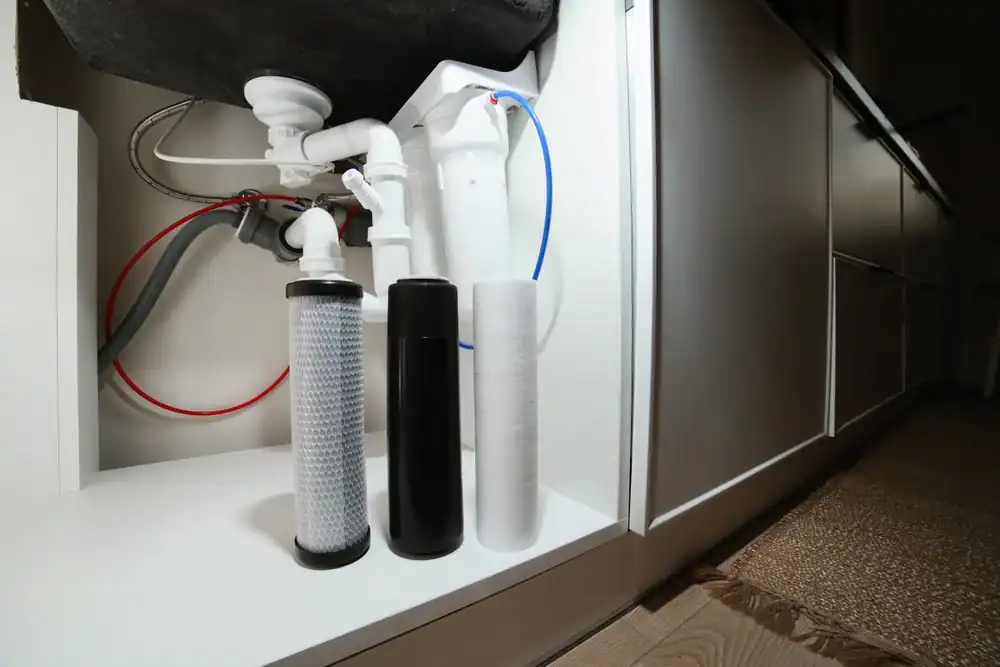
From there, a system is sized and selected based on your results not based on what’s easiest to sell. For most downtown Orlando condo and apartment residents, that means an under-sink reverse osmosis system installed at your kitchen sink. It connects to your existing cold water supply line and drain, requires no major plumbing modifications, and sits completely out of sight beneath the cabinet.
If your building requires HOA or management approval before any plumbing connection is made, that’s a standard step we’re familiar with and can help you navigate. Installation is typically completed in a few hours. You get a dedicated RO faucet at your sink, a storage tank that keeps filtered water ready on demand, and a walkthrough of your filter replacement schedule so you know exactly what maintenance looks like going forward. Our systems are built to last 15 to 20 years. Filter replacements are straightforward, and we service what we sell which in this market is not something you should take for granted.
Ready to get started?
Most water treatment companies build their entire service model around suburban single-family homes with dedicated utility rooms and easy access to main supply lines. The Central Business District is a different environment high-rise towers, under-sink installations, building management coordination, and residents who need a system that works in 900 square feet as effectively as it would in a 3,000-square-foot house. Our under-sink reverse osmosis systems are designed exactly for that context.
The multi-stage filtration process typically includes a sediment pre-filter, one or more carbon block stages to reduce chlorine and disinfection byproducts, the RO membrane itself, and a post-carbon polishing filter. Some configurations include a remineralization stage that adds back beneficial minerals for taste. The result is water that’s measurably cleaner than what comes out of your OUC-supplied tap and better than most bottled water brands by filtration standard.
If you’re an active military member, veteran, or first responder working out of the Orange County Courthouse, City Hall, or any of the federal or municipal facilities anchored in downtown Orlando, we offer a $500 discount on your system the largest military and first responder discount offered by any water treatment company currently serving this market. Our systems use components manufactured in the United States and are backed by a company that has maintained a zero-complaint BBB record. We also support the Tunnels to Towers Foundation, which builds mortgage-free homes for Gold Star families and fallen first responder families.
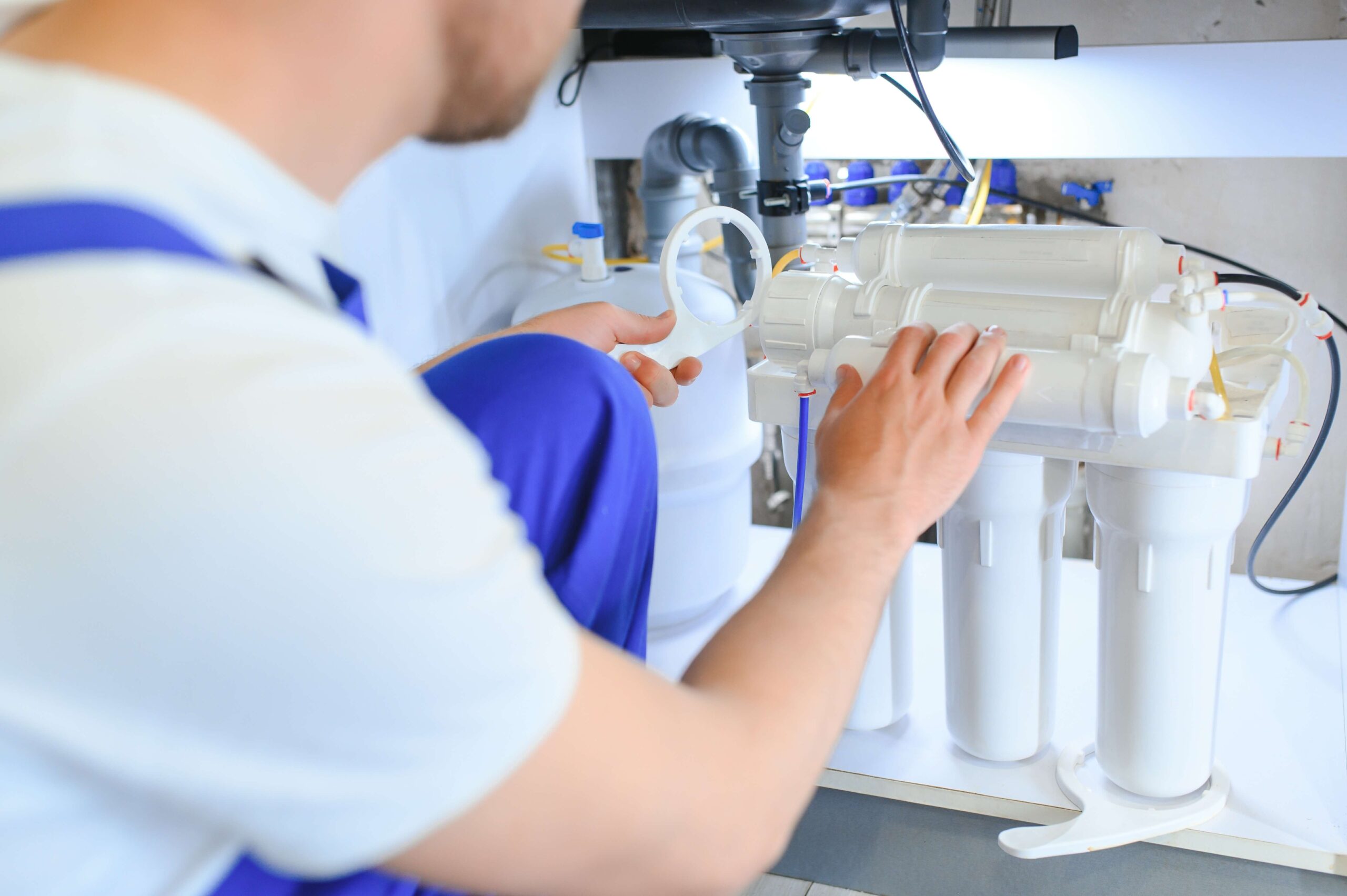
Yes and it’s more straightforward than most condo residents expect. An under-sink reverse osmosis system connects to the cold water supply line already running beneath your kitchen sink, and it drains through the existing drain line. There’s no need to access your building’s main supply, no major plumbing work, and no structural modifications. The entire system sits inside the cabinet under your sink, completely out of sight.
The one step that’s specific to condo living in the Central Business District is building or HOA approval. Most high-rise buildings in downtown Orlando including towers around Lake Eola and along the downtown corridor require written approval before any plumbing connection is made inside a unit. We’re familiar with this process and can walk you through what’s typically required. In most cases, approval is routine for a system of this type because it doesn’t affect shared building infrastructure. Once approved, installation is typically completed in a few hours.
OUC draws from the Lower Floridan Aquifer and treats it to meet federal standards but meeting those standards doesn’t mean the water is free of contaminants. OUC’s own 2023 Water Quality Report documented a single-site trihalomethane reading of 82.94 ppb, which exceeded the federal maximum contaminant level of 80 ppb. Independent testing has also found lead, chromium-6, arsenic, and PFAS in Orlando’s water supply at levels that health organizations flag as concerns, even when they fall within regulatory limits on paper.
A reverse osmosis system addresses all of those. The RO membrane filters down to 0.0001 microns smaller than most dissolved contaminants, bacteria, and viruses. Combined with carbon pre-filters that reduce chlorine and its byproducts, a properly configured under-sink RO system removes 95 to 99 percent of the dissolved solids and chemical contaminants present in OUC-supplied water. If you’ve noticed a chlorine taste or odor in your downtown apartment’s tap water especially during summer months when TTHM formation peaks in warm distribution pipes that’s one of the first things that disappears after installation.
Most urban professionals living in the Central Business District who are health-conscious about their water are spending somewhere between $50 and $100 per month on bottled water or a water delivery service. That’s $600 to $1,200 per year and it adds up fast in a neighborhood where the average rent already runs high.
A professionally installed under-sink reverse osmosis system is a one-time investment with low annual maintenance costs. Filter replacements run roughly $50 to $150 per year depending on your system configuration and usage. The RO membrane itself typically lasts two to three years before replacement. Over a five-year period, the math is straightforward: the system pays for itself and then keeps producing clean water for another decade or more. Our systems are built to last 15 to 20 years. When you factor in what you’re currently spending on bottled water and the fact that most bottled water brands don’t filter to a higher standard than a properly maintained RO system the long-term value is not close.
Orlando’s average water hardness is 9.7 grains per gallon, which puts it in the very hard category. That’s not a borderline reading it’s a level where calcium and magnesium buildup inside appliances is a real and ongoing problem. Dishwashers, espresso machines, refrigerator water dispensers, and ice makers are all affected. The buildup happens inside the components you can’t see, reducing efficiency and shortening the lifespan of equipment that costs hundreds to thousands of dollars to replace.
In a downtown Orlando high-rise near the Central Business District, where units are typically smaller and appliances are doing more work per square foot, the impact is proportionally significant. The white deposits you see on your shower glass and around your faucets are the visible version of what’s happening inside your pipes and appliances. An under-sink RO system eliminates scale-forming minerals from your drinking and cooking water. If you want whole-unit protection for your shower, dishwasher, and water-using appliances, we can assess whether a water softener or salt-free conditioning system makes sense alongside your RO unit based on your actual water test results, not a default recommendation.
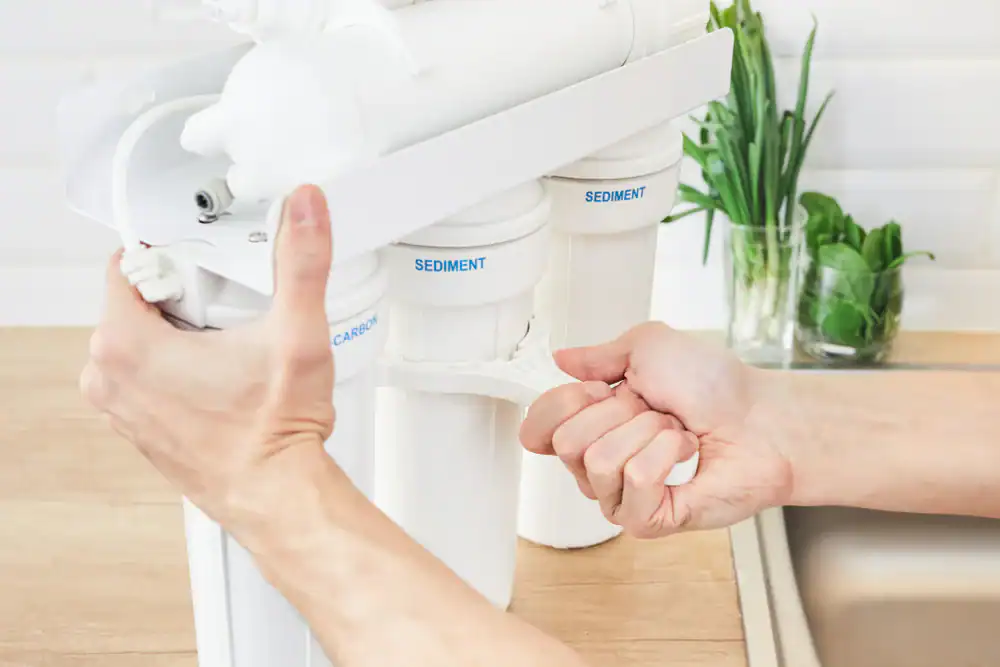
For a typical under-sink RO system in a downtown Orlando condo, the pre-filters and post-filters are replaced every six to twelve months depending on your water usage and the contaminant load in your OUC supply. The RO membrane itself lasts longer usually two to three years under normal residential use. Your system will typically include a monitoring indicator or a recommended schedule based on your household’s daily water consumption.
In Central Florida specifically, summer months are worth noting. Heat accelerates trihalomethane formation in the distribution system, which means your carbon pre-filters are working harder during June through September than they are in winter. If you notice any change in taste or flow rate before your scheduled replacement, that’s a signal to check your filters sooner. We walk every customer through their specific replacement schedule at installation, and because water treatment is all we do, we’re available for service calls and filter replacements not an afterthought to a plumbing or HVAC business.
Please provide your email address so that we can stay in touch and answer any questions you have! We will be reaching back out shortly.
"*" indicates required fields