Reach Out Today
Please provide your email address so that we can stay in touch and answer any questions you have! We will be reaching back out shortly.

Hear from Our Customers

If you’ve been living with orange stains around the toilet bowl, a sulfur smell when the hot water runs, or water that nobody in the house actually wants to drink straight from the tap that’s not just a nuisance. That’s the Floridan Aquifer doing what it does.
The groundwater beneath Camp Ocala travels through limestone and dolomite for miles before it reaches your well, picking up calcium, magnesium, iron, and dissolved minerals the whole way. By the time it gets to your faucet, you’re looking at hardness levels around 180 ppm. That’s well into “very hard” territory, and it shows.
A properly installed reverse osmosis system changes the daily experience of living in your home. The water coming out of your kitchen tap tastes clean. The scale stops building up inside your appliances. You stop buying cases of bottled water every week which, for a family of four, adds up to somewhere between $900 and $1,200 a year. That money stays in your pocket instead.
Out here near Camp Ocala, you’re also not on city water with a treatment plant running backup. What comes out of your well is entirely on you to manage. That’s just the reality of rural Marion County living. The good news is a reverse osmosis drinking water system handles the heavy lifting, and once it’s in, you barely think about it.
We don’t install water heaters, fix leaky pipes, or service air conditioners. Water treatment is our entire business which means when a technician shows up at your property near Camp Ocala, they’ve seen every variation of Marion County well water chemistry there is. Iron, sulfur, tannins, hardness from the Floridan Aquifer none of it is a surprise to them.
We hold an A-rating with the Better Business Bureau, a 5-star rating, and zero complaints on record. That’s publicly verifiable at bbb.org not a claim, a fact. We’re also members of the Water Quality Association, which means the recommendations you receive are grounded in actual water treatment science, not a sales quota.
If you’re active military, a veteran, or a first responder, there’s a $500 discount on installation no hoops to jump through. Given the long history of military activity at the Pinecastle Bombing Range just a couple miles from Camp Ocala, that offer means something in this community. We also support the Tunnels to Towers Foundation, which builds mortgage-free homes for Gold Star families and fallen first responder families.
It starts with a free water analysis not a quick hardness strip, but real lab-grade testing of what’s actually coming out of your well. In an area like Camp Ocala, where groundwater can carry iron, sulfur, tannins from organic forest soils, and dissolved minerals from the limestone geology beneath the Ocala National Forest, knowing exactly what you’re dealing with before recommending any equipment is the only honest way to do this.
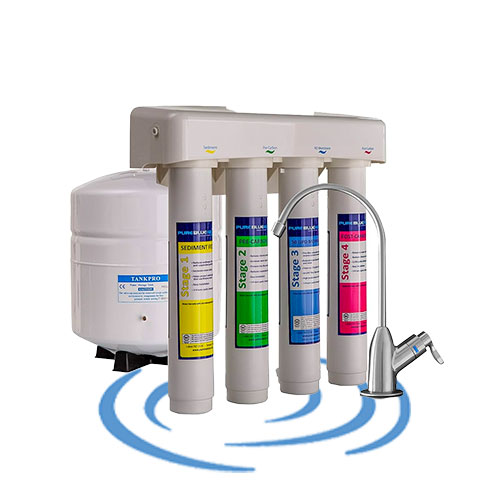
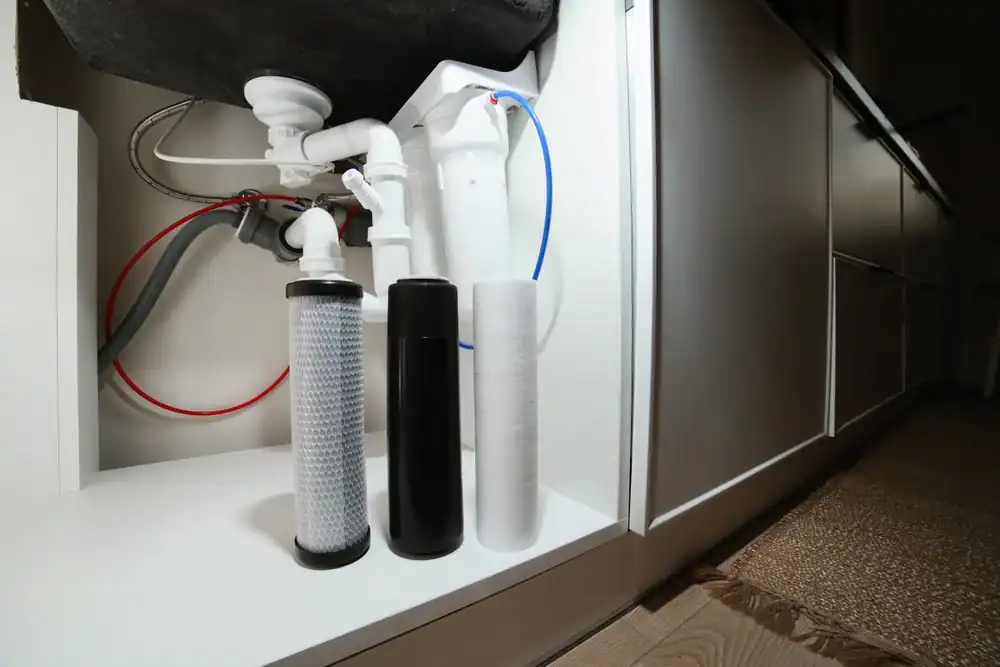
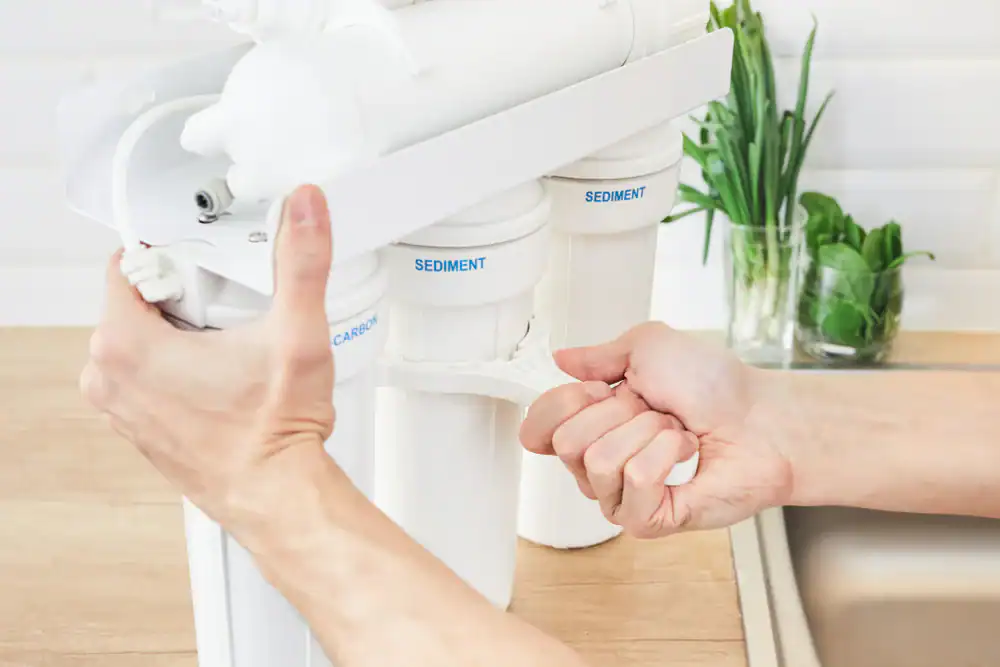
The test results drive the recommendation, not the other way around. Once the analysis is complete, the system gets sized and configured for your specific water chemistry and household usage. For most Camp Ocala well owners, that means a multi-stage setup: a sediment pre-filter to catch sand and particulates common in forest-area wells, a carbon stage to handle organics and tannins, the RO membrane itself to strip out dissolved minerals and contaminants, and in many cases a UV post-treatment stage to address bacteria which becomes especially relevant after a heavy storm season floods well casings in rural Marion County.
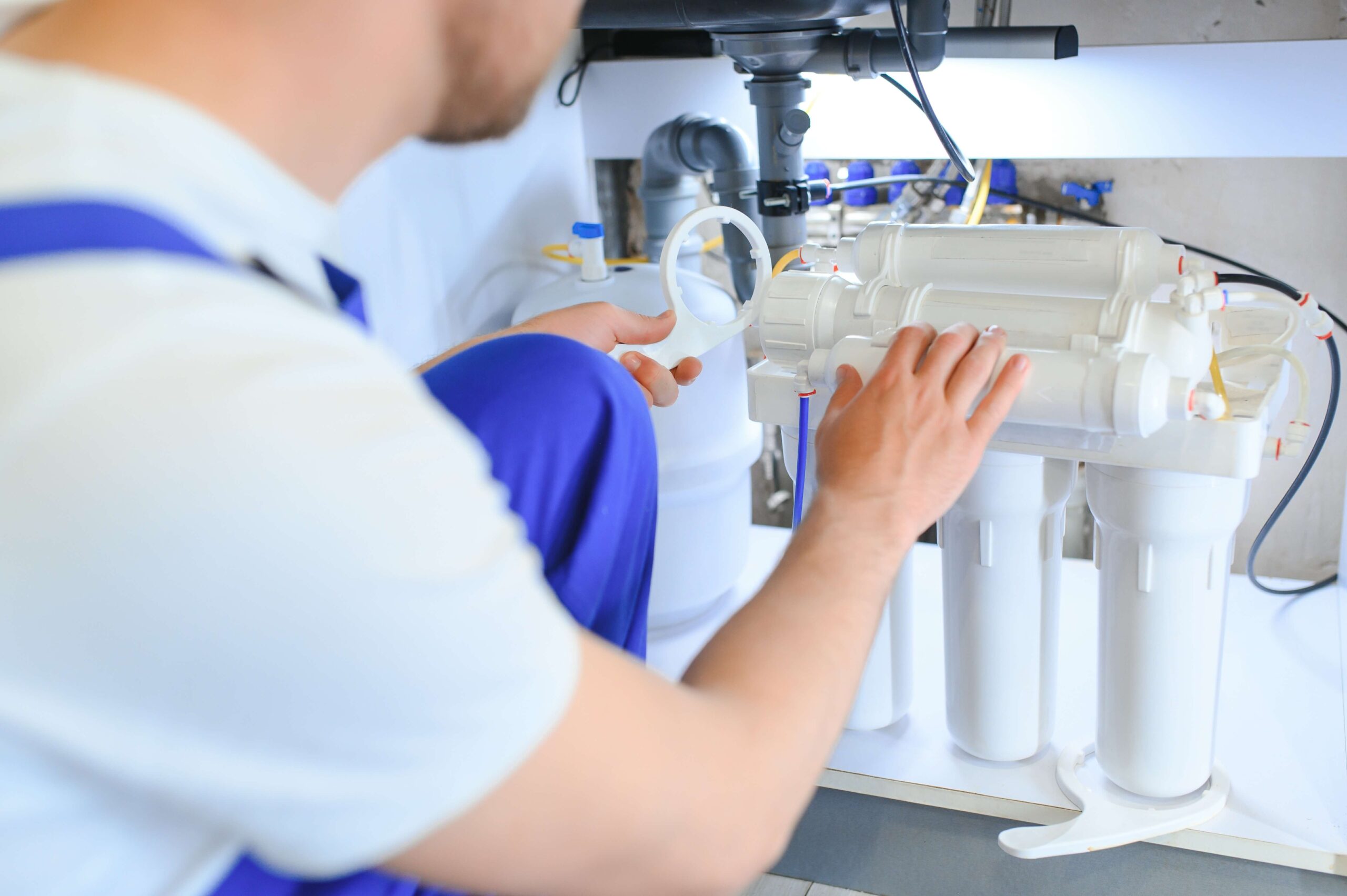
Because Camp Ocala falls within unincorporated Marion County, any installation that ties into your home’s plumbing requires a permit, and we handle that process. After installation, the system gets commissioned and tested on-site. Filter replacement schedules are set based on your actual water load, not a generic manufacturer timeline. And because we service what we install, you’re not left figuring out maintenance on your own six months later.
Ready to get started?
Most reverse osmosis systems are designed with municipal water in mind pre-treated, chlorinated, relatively consistent in mineral load. Camp Ocala well water is a different animal. You’re dealing with hardness around 180 ppm, potential iron content that stains fixtures and laundry, hydrogen sulfide that makes the water smell before you even pour a glass, and tannins from the organic-rich soils of the Ocala National Forest that give water a yellowish tint and earthy taste.
A system that isn’t configured for those conditions won’t perform the way you need it to. The under-sink reverse osmosis systems we install are built with USA-manufactured components and sized for your household’s actual demand. For Camp Ocala properties, the pre-filtration stages matter as much as the RO membrane itself getting the iron and sediment load down before the water hits the membrane protects the system and extends its service life significantly.
A well-maintained installation is realistically a 15 to 20-year investment. If your water analysis shows elevated concern for PFAS a legitimate question given the decades of military activity at the nearby Pinecastle Bombing Range reverse osmosis is one of the only residential technologies confirmed to remove those compounds from drinking water.
Whole-house treatment options are also available for addressing iron, sulfur, and hardness at the source, before water reaches any appliance or fixture in your home. The right configuration depends entirely on what your water test shows.
Technically, most private well water in the Camp Ocala area isn’t acutely dangerous in the way contaminated municipal water would be but “not immediately harmful” and “safe to drink long-term” are two different things. The Floridan Aquifer in this part of Marion County carries naturally high levels of dissolved minerals, and depending on your specific well depth and location, you may also be dealing with elevated iron, hydrogen sulfide, or tannins from the forest’s organic soils.
None of those are pleasant, and some carry real health implications at sustained exposure levels. The bigger concern is what you can’t taste or smell. PFAS compounds, for example, have no odor and no flavor but they’ve been documented in Marion County groundwater, and the decades of military activity at the Pinecastle Bombing Range, located just a couple miles from Camp Ocala, make that a reasonable thing to test for.
Without a proper water analysis, you’re essentially guessing about what’s in your water. A lab-grade test tells you exactly what you’re working with, and from there you can make an informed decision about treatment.
Reverse osmosis works by pushing water through a semi-permeable membrane under pressure. The membrane’s pores are small enough to block dissolved minerals, heavy metals, bacteria, and chemical compounds including PFAS while allowing clean water molecules through. What gets left behind is flushed out as wastewater. What comes out the other side is significantly cleaner than what went in.
For Camp Ocala well water specifically, the membrane is typically the last stage in a multi-step process. Water from a mineral-heavy Floridan Aquifer well usually needs pre-filtration first sediment removal, carbon filtration for organics and tannins before it hits the RO membrane. Skipping those stages and running raw well water directly through an RO membrane shortens its service life considerably and compromises performance.
A properly configured system for this area accounts for the full mineral and contaminant load of your specific well, not just a generic Florida water profile.
Reverse osmosis does reduce hydrogen sulfide, which is the compound responsible for that rotten-egg smell common in Marion County well water. But if your sulfur levels are high, an RO system alone may not eliminate the odor completely. For well water with significant sulfur content, the better approach is to address it upstream with a dedicated sulfur oxidation or aeration treatment before the water reaches the RO system.
This is exactly why the water analysis matters before any equipment gets recommended. If your test shows elevated hydrogen sulfide, the right solution might be a combination of whole-house sulfur treatment followed by an under-sink RO for drinking water quality. That’s a more complete answer than just selling you an RO unit and hoping for the best. We test first, then recommend so the system you get is actually built around your water, not a generic configuration.
On municipal water, most RO pre-filters last 6 to 12 months and the membrane lasts 2 to 5 years. On Marion County well water especially in rural areas like Camp Ocala where hardness runs around 180 ppm and iron content can be elevated those timelines can shorten depending on your actual water load. A well that’s pulling particularly mineral-heavy water or has higher-than-average iron content will load filters faster than a well with cleaner baseline chemistry.
The only way to know your actual replacement schedule is to track your system’s performance over time, which is something we monitor as part of ongoing service. Trying to stretch filters past their useful life on well water is a false economy a degraded pre-filter lets more sediment and iron reach the RO membrane, which shortens the membrane’s life and costs more to fix than a timely filter swap would have.
The maintenance schedule you get at installation is based on your test results, not a one-size-fits-all manufacturer recommendation.
It can, and it’s worth understanding why before installation. RO systems operate by storing treated water in a small pressurized tank under the sink, which then feeds the dedicated RO faucet. The flow rate from that faucet is slower than your standard tap typically around 0.5 to 1 gallon per minute because you’re drawing from a storage tank, not directly from the line.
For drinking and cooking purposes, that flow rate is completely adequate for most households. Where pressure issues sometimes arise is when a well’s incoming pressure is already on the lower end, which isn’t uncommon in rural Marion County properties with older pressure tanks or wells that are working harder in dry seasons.
If your incoming pressure is below about 40 psi, a booster pump can be added to the system to maintain performance. This is something that gets identified during the pre-installation water analysis and site assessment not something you’d discover after the fact.
Please provide your email address so that we can stay in touch and answer any questions you have! We will be reaching back out shortly.
"*" indicates required fields