Reach Out Today
Please provide your email address so that we can stay in touch and answer any questions you have! We will be reaching back out shortly.

Hear from Our Customers
If you’ve been buying cases of bottled water because you don’t fully trust what comes out of your tap, you’re not alone. Most homes in Boardman sit on private wells drawing from the Upper Floridan Aquifer a porous limestone formation that produces naturally hard, mineral-heavy water and has no real barrier between your well and whatever is happening on the surface above it.
Horse farms, fertilizer application, and aging septic systems don’t stay where they start in karst country. They migrate through sinkholes and permeable soil zones with very little natural filtration in between.
A reverse osmosis system works at the molecular level. It pushes your water through a semi-permeable membrane with pores so small 0.0001 microns that dissolved nitrates, heavy metals, iron, sulfur compounds, PFAS, and other contaminants simply can’t pass through. What comes out the other side is genuinely clean drinking water not filtered in the basic sense, but purified in a way that most other treatment methods don’t come close to matching.
The difference shows up fast. The sulfur smell that you’ve probably stopped noticing disappears. The orange staining on your sink slows down. Your water heater and appliances stop fighting mineral scale. And the $80 to $100 a month you’ve been spending on bottled water stays in your pocket.
For a home in rural Marion County, this isn’t a luxury upgrade it’s the baseline your water should have been at all along.
Quality Safe Water of Florida LLC is not a plumbing company that installs filters on the side. Water treatment is the only thing we do, which means when we show up to a property near Boardman whether it’s a horse farm or a homestead closer to Orange Lake we already know what the Floridan Aquifer tends to throw at well owners in this corridor.
We’ve tested this water. We know what’s in it.
We hold an A-rating with the Better Business Bureau, a 5-star customer rating, and zero complaints on file a record you can verify yourself at bbb.org before you ever pick up the phone. We’re also members of the National Water Quality Association, which means our training is specific to Florida’s water challenges, not a generic certification that applies anywhere.
We service what we sell. That sounds like it should be standard, but in this industry it genuinely isn’t. When your filters are due or something needs attention, we answer and we show up. That’s the whole model.
The first thing we do is test your water. Not a quick visual check actual lab-grade analysis of what’s in your specific well.
This matters more in the Boardman area than people realize, because well water quality here can vary significantly from one property to the next depending on well depth, proximity to agricultural land, local karst features, and how old your well casing is. A system sized for one property may be completely wrong for the one next door.
Once we have your results, we walk you through exactly what we found and what it means. If you need a reverse osmosis system, we’ll show you why. If you need something else addressed first iron filtration, a softener, a combination approach we’ll tell you that too. No upsell, no pressure, just a straight answer based on what your water actually contains.
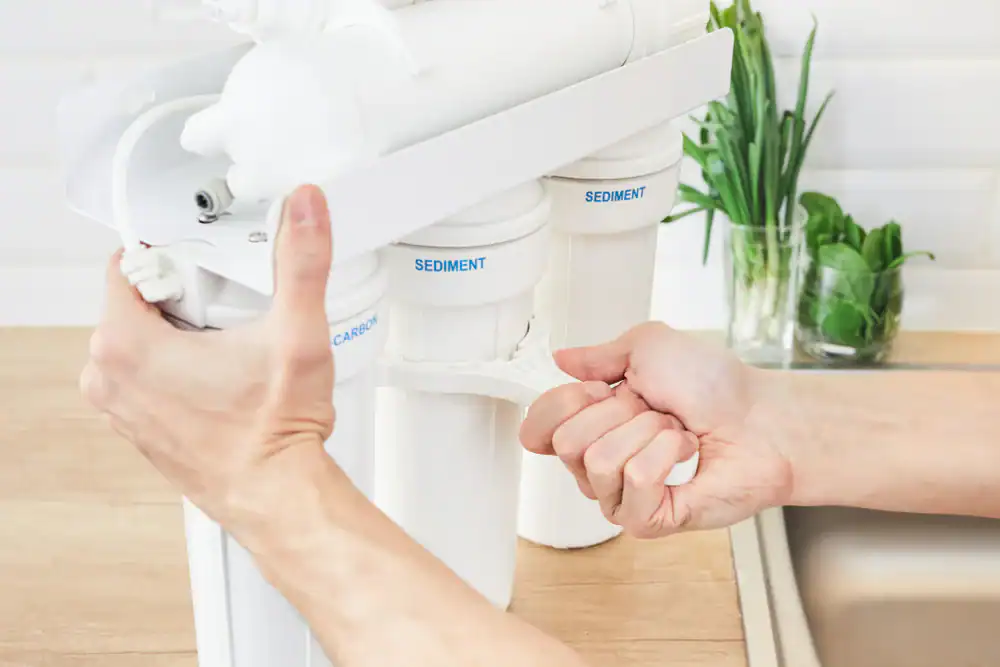
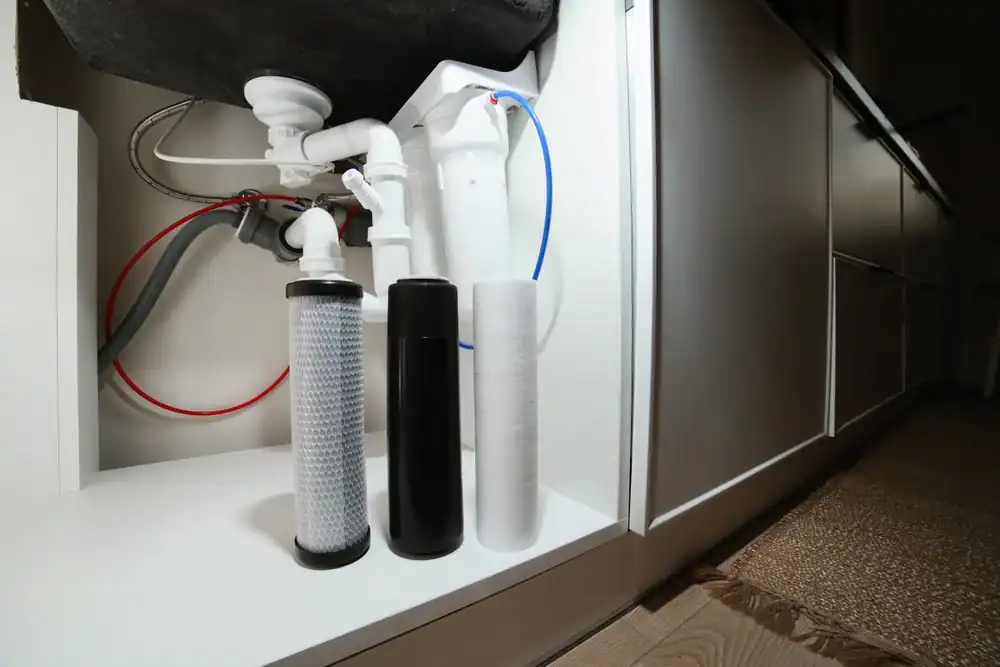
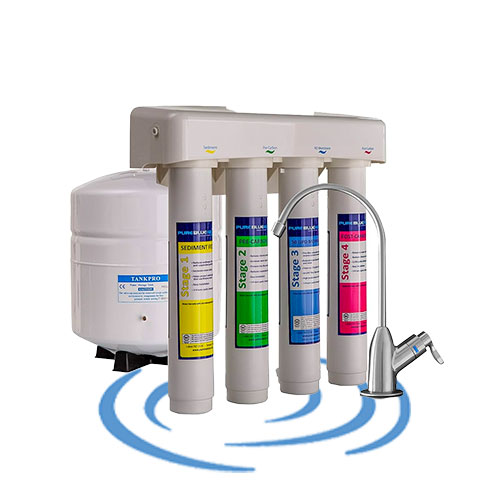
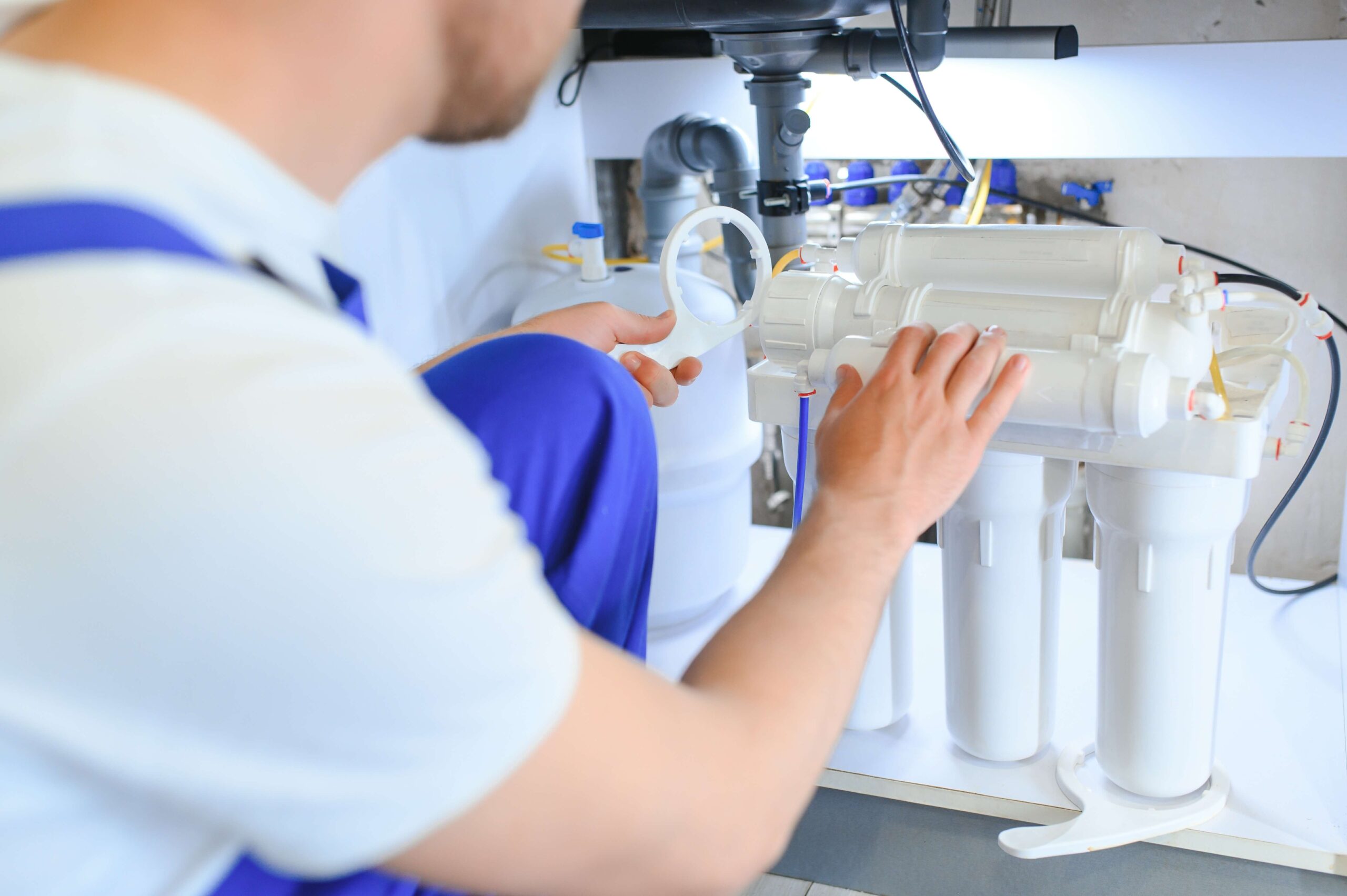
Installation is handled by WQA-trained technicians who work specifically in North and Central Florida. Under-sink RO systems are typically installed at your kitchen sink with a dedicated faucet, and the process is clean and straightforward usually completed in a few hours. After installation, we walk you through the filter maintenance schedule so you know exactly what to expect and when.
Annual upkeep runs around $100 to $200 in filter replacements, and the system itself is built to last 15 to 20 years with routine care.
Ready to get started?
Most reverse osmosis systems on the market are designed with city water in mind moderate mineral content, already chlorinated, relatively predictable. Well water in the Boardman area is a different situation.
The Upper Floridan Aquifer delivers water that’s naturally hard, often high in iron and hydrogen sulfide, and in an agricultural corridor like this one, potentially carrying nitrates from fertilizer runoff that standard filters simply don’t address. The system we recommend and install is matched to what your specific water test shows not a one-size answer pulled off a shelf.
For most Boardman homeowners, the right starting point is an under-sink reverse osmosis system at the kitchen a dedicated drinking water solution that handles the full spectrum of dissolved contaminants at the point of use. For properties with more complex well water profiles or whole-house concerns, we can discuss a broader treatment approach that layers softening and filtration with RO at the drinking water stage. Every recommendation starts with your test results, not a package upsell.
Installation falls under Marion County’s standard building and plumbing guidelines since Boardman is unincorporated with no city-level permit requirements. We handle the process correctly from the start.
If you’re active military, a veteran, or a first responder, there’s a straightforward $500 discount available no hoops, no fine print.
The honest answer is: it depends on what’s in your specific well, and you won’t know that without testing it. The Upper Floridan Aquifer that supplies most of the private wells in the Boardman area is a productive water source, but its karst limestone geology makes it genuinely vulnerable to surface contamination.
Agricultural activity in the surrounding Marion County corridor horse farms, fertilizer application, aging septic systems can introduce nitrates and other contaminants into the aquifer through sinkholes and permeable soil zones with very little natural filtration in between.
The Florida Department of Health in Marion County places full responsibility for private well testing on the homeowner. There’s no automatic quarterly report, no utility monitoring your water quality on your behalf. If you haven’t had your well tested recently, you’re making assumptions about water that feeds your family every day.
A lab-grade water test is the only way to know what you’re actually working with and it’s the first thing we do before recommending any system.
Reverse osmosis removes contaminants at the dissolved-particle level things that other filter types leave behind entirely. The membrane at the core of an RO system has pores of approximately 0.0001 microns, which is small enough to block nitrates, arsenic, lead, dissolved iron, fluoride, PFAS compounds, pharmaceutical traces, and most dissolved salts.
For well water in the Boardman and Marion County area, that list is directly relevant not theoretical.
What RO does not address on its own is high iron concentration or hydrogen sulfide at levels common in some Floridan Aquifer wells. Those conditions are typically handled upstream with a dedicated iron filter or sulfur treatment before the water reaches the RO membrane. That’s exactly why we test first so the system we install is actually matched to what your water contains, not a generic setup that handles half the problem.
For a standard under-sink reverse osmosis system installed at your kitchen, you’re generally looking at a range that reflects both the equipment quality and the installation itself. Entry-level systems exist, but for well water in a rural Marion County corridor like Boardman where mineral content, iron, and potential agricultural contamination are real factors a properly specified system with a pre-filter stage and quality membrane is worth the investment.
Cheap systems installed on challenging well water tend to fail faster and leave more in the water than they remove.
Ongoing maintenance is where the long-term cost picture gets clear. Filter replacements typically run $100 to $200 per year, and the RO membrane itself is usually replaced every two to five years depending on your water quality and usage. A well-installed system built for your specific water profile will last 15 to 20 years.
When you factor in what most Boardman households spend on bottled water annually often $600 to $1,200 or more the system pays for itself within a few years and keeps producing clean water long after that.
The sulfur smell the rotten egg odor that’s common in Floridan Aquifer well water throughout North Central Florida comes from hydrogen sulfide gas naturally present in the groundwater. Reverse osmosis does reduce hydrogen sulfide, but at higher concentrations, the most effective approach is treating it upstream before the water reaches the RO membrane.
That typically means a carbon pre-filter or a dedicated sulfur treatment stage depending on the level found in your test results.
This is one of the clearest reasons why testing your water before choosing a system matters. If your well has moderate hydrogen sulfide alongside the dissolved contaminants that RO addresses, a properly staged system handles both. If the sulfur concentration is high, we’d know that from the test and configure the treatment accordingly. The goal isn’t to sell you an RO system it’s to give you water that actually smells and tastes the way it should, whatever combination of treatment that requires.
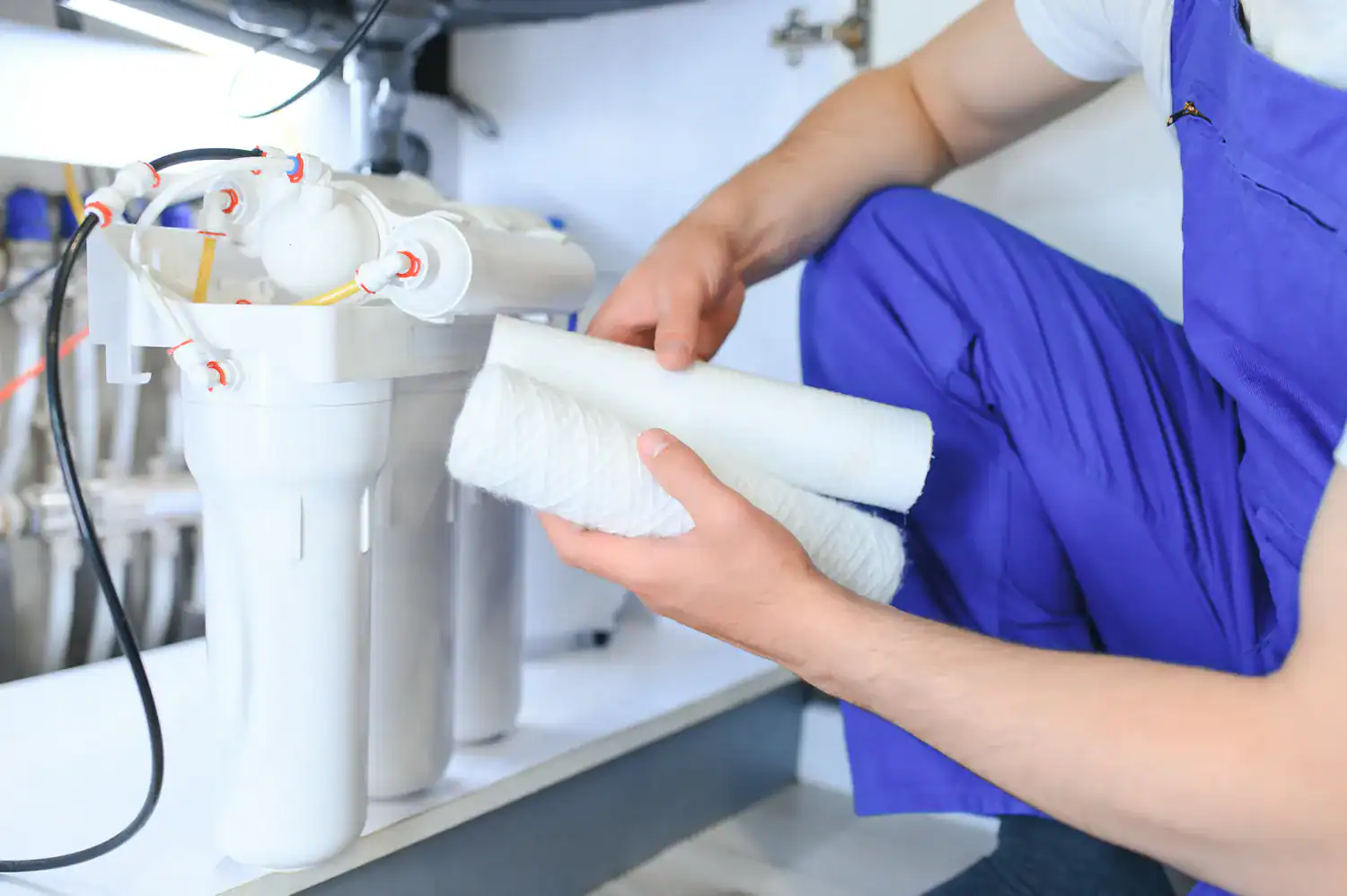
On a standard under-sink RO system, the pre-filters typically sediment and carbon stages are replaced every six to twelve months depending on your water quality and household usage. For well water in the Boardman area, where iron content and total dissolved solids tend to run higher than municipal water, pre-filters can clog faster than the manufacturer’s general guidelines suggest.
That’s not a flaw in the system it means the filters are doing their job but it does mean your specific replacement schedule should be based on your actual water, not a generic chart.
The RO membrane itself typically lasts two to five years. A post-filter carbon stage, if included, is usually replaced annually. We walk every customer through their specific maintenance schedule at installation and stay available when questions come up.
The total annual cost of filter maintenance for most households runs between $100 and $200 a fraction of what most Boardman families spend on bottled water each year.
Please provide your email address so that we can stay in touch and answer any questions you have! We will be reaching back out shortly.
"*" indicates required fields