Reach Out Today
Please provide your email address so that we can stay in touch and answer any questions you have! We will be reaching back out shortly.

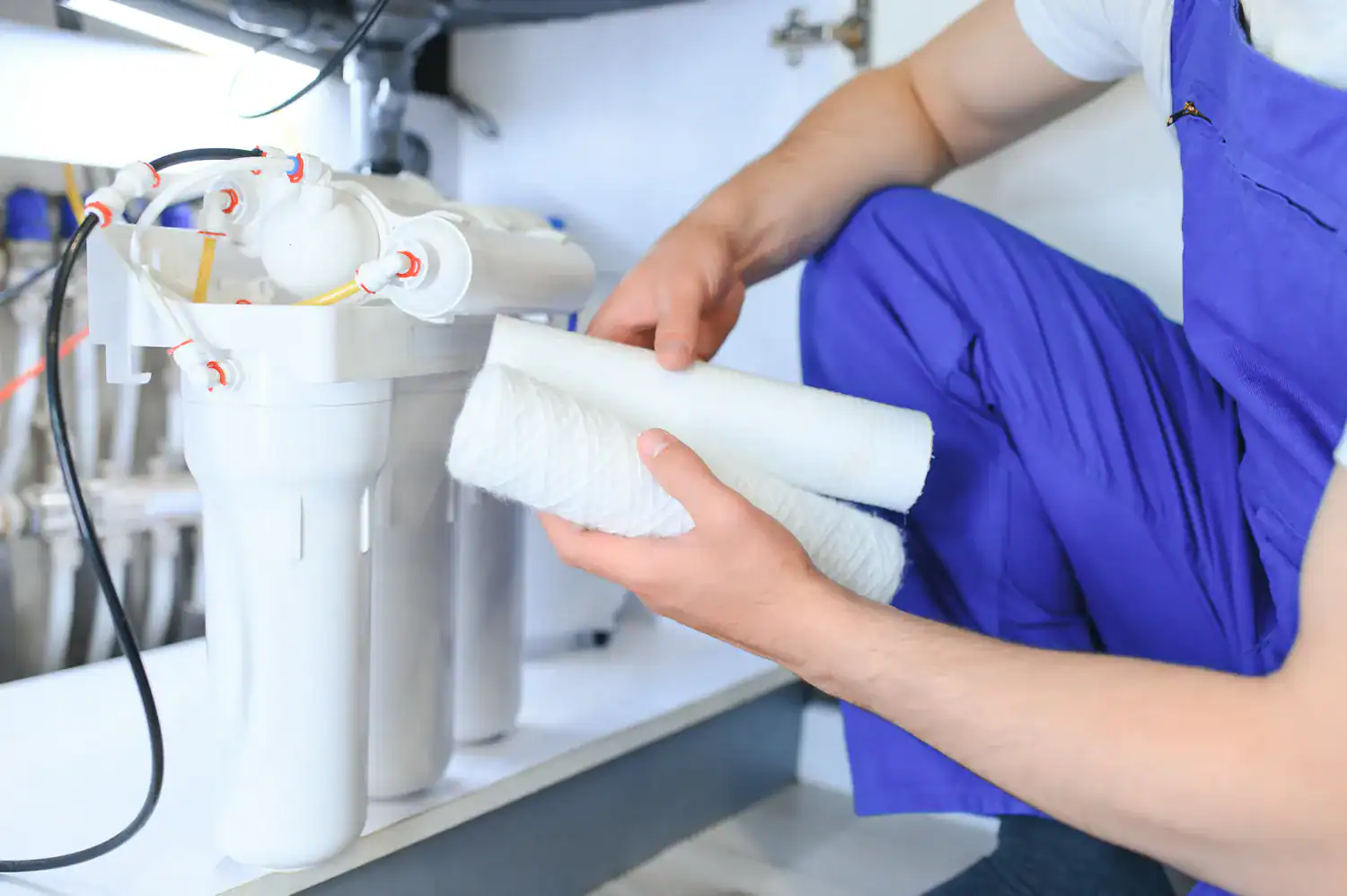
Hear from Our Customers
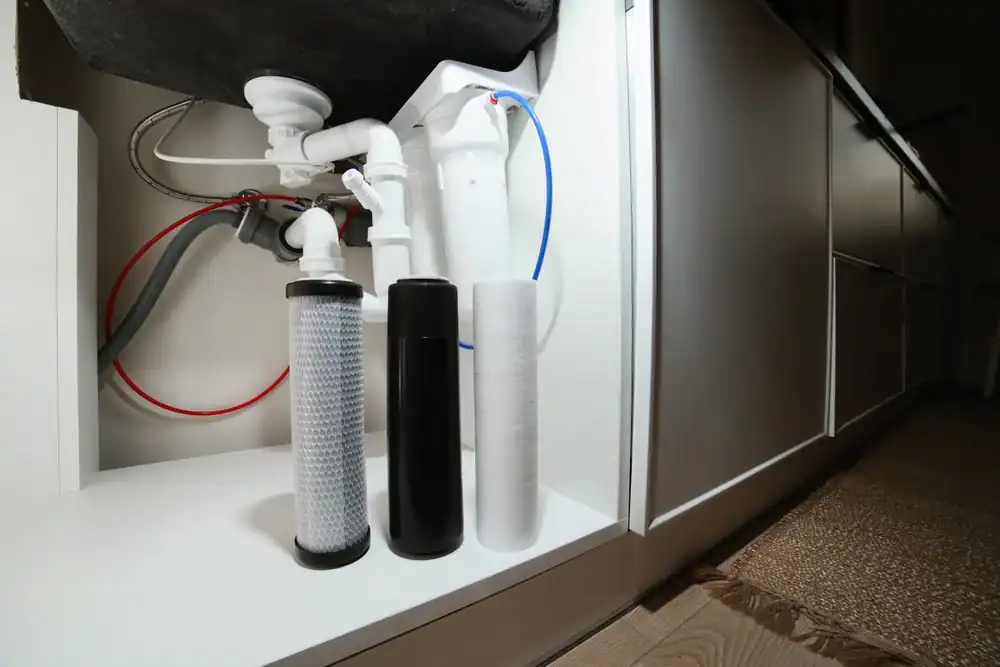
When your water is right, you stop thinking about it. No more chlorine smell coming out of the tap. No more white crust forming around your faucets or on your glass shower doors. No more cases of bottled water stacked in the garage because you don’t trust what’s coming out of the sink.
A properly installed reverse osmosis system removes what municipal treatment leaves behind: the arsenic detected in JEA’s main grid, the trihalomethanes and haloacetic acids produced by chlorination, the hardness minerals that are costing you in appliance wear every single day.
The water tastes different. The scale stops. And the math on what you were spending on bottled water starts looking pretty embarrassing. Most Avenues families are spending $50 to $100 a month on bottled water that’s $600 to $1,200 a year. A quality under-sink reverse osmosis system typically pays for itself within two to four years and keeps producing clean water for 15 to 20 years after that.
Quality Safe Water of Florida does one thing: water treatment. Not plumbing. Not HVAC. Not water heaters on the side. Just water purification, softening, and filtration, for homes across North and Central Florida, including the Southside corridor where Avenues is located.
That focus matters more than it sounds. Several companies ranking for water treatment in the Jacksonville area are primarily plumbing or HVAC businesses. When you need a membrane replaced two years after installation, you’ll find out fast how much priority they give a $150 service call versus a $5,000 AC job.
We hold an A-rating with the Better Business Bureau, a 5-star customer rating, and zero complaints on record a public number you can verify at bbb.org right now. We’re also members of the National Water Quality Association, which means our technicians are trained specifically in water chemistry and treatment science, not just pipe connections.
If you’re active military, a veteran, or a first responder, there’s a $500 discount waiting for you. In a community this close to NAS Jacksonville and Naval Station Mayport, that’s not a token gesture it’s a real reduction on a real investment. We also support the Tunnels to Towers Foundation, which builds mortgage-free homes for Gold Star and fallen first responder families.
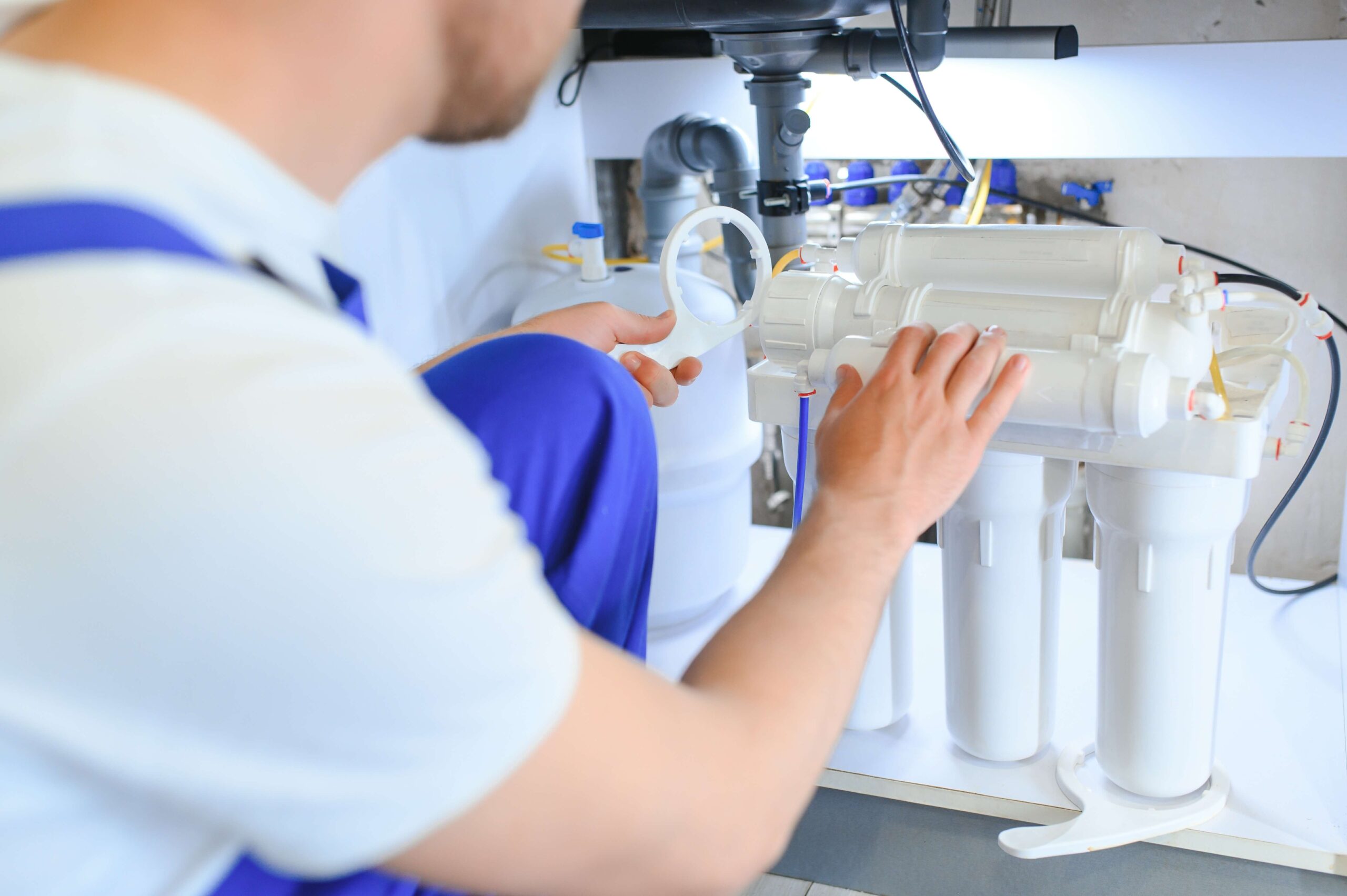
It starts with a free water analysis not a sales call dressed up as a test. We test your specific tap water for the contaminants that are actually documented in JEA’s main grid: hardness levels, disinfection byproducts, arsenic, sulfur, and anything else that’s affecting what comes out of your faucet. The results drive the recommendation. If you don’t need a whole-house system, we’ll tell you that too.
Once the right system is identified, installation is handled by our certified water treatment technicians not general plumbers learning on the job. For most Avenues homeowners on JEA municipal water, an under-sink reverse osmosis system is installed at the kitchen sink with a dedicated drinking water faucet, connected to your existing plumbing without the need for a separate permit.
Whole-house or point-of-entry systems that involve more extensive plumbing connections may require a permit under Duval County’s building code framework we handle that process so you don’t have to figure it out yourself. If you’re in a gated community with HOA guidelines around exterior equipment, that’s factored into the installation plan from the start.
After installation, you get a walkthrough of the system, a maintenance schedule, and a company that actually picks up the phone when you call for a filter replacement. That last part is less standard in this industry than it should be.
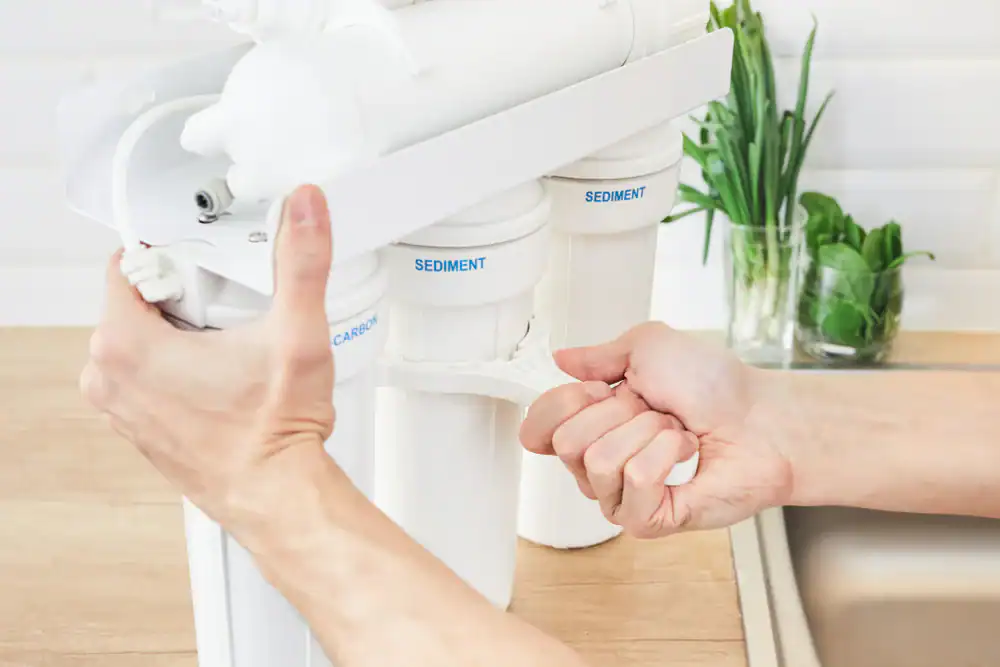
Ready to get started?
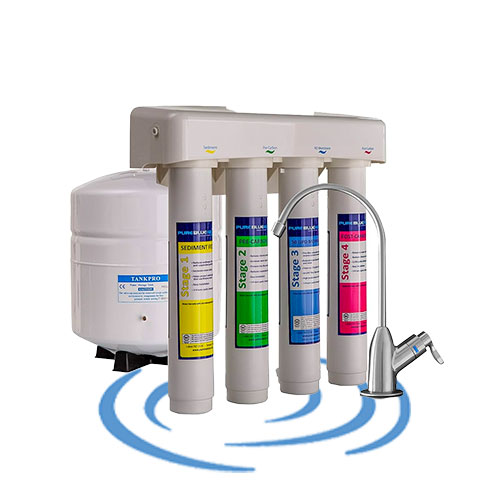
A reverse osmosis system works by pushing your water through a semipermeable membrane under pressure, filtering out dissolved solids, heavy metals, chemical byproducts, and biological contaminants at the molecular level. What comes out the other side is water that’s measurably cleaner than what went in and dramatically cleaner than what JEA’s treatment process alone delivers to your tap.
For homes in the Avenues area on JEA’s main grid, we configure the system to address what’s actually in your water: the arsenic detected at 1.03 ppb in main grid testing, the chlorate and bromate flagged by the EWG above health guidelines, the trihalomethanes produced when chlorine reacts with organic matter in the aquifer, and the hard water minerals averaging 260 ppm across most of Duval County.
Some Avenues addresses test above 300 ppm classified as extremely hard which accelerates scale buildup and appliance wear beyond what most homeowners realize until something breaks early. Reverse osmosis handles the drinking water side; a paired water softener addresses the whole-house hardness issue. We’ll tell you exactly which combination your home actually needs based on your test results, not a default package.
Every system we install uses NSF/ANSI-certified components, sized correctly for your household’s usage and water chemistry. Maintenance is straightforward filter replacements on a clear schedule, with a company that stays available to handle them.
JEA draws from the Floridan Aquifer, which is naturally cleaner than Florida’s surface water sources. But the treatment process introduces its own issues. When chlorine reacts with naturally occurring organic matter in the groundwater, it produces disinfection byproducts specifically trihalomethanes and haloacetic acids that are documented in JEA’s main grid testing. Chlorate, which can impair thyroid function, is also flagged by the EWG at levels above their health guidelines, even though it remains within EPA legal limits.
Arsenic was detected at 1.03 ppb in main grid testing below the EPA’s maximum contaminant level of 10 ppb, but the EPA acknowledges no level of arsenic in drinking water is completely risk-free. Jacksonville water averages around 260 ppm of dissolved minerals calcium and magnesium from the limestone aquifer which qualifies as hard to very hard water. Some addresses in the Avenues area test above 300 ppm.
None of these are violations. But “meets EPA standards” and “clean” are not the same thing, and a reverse osmosis system closes that gap effectively.
That’s a fair question, and the honest answer is: it depends on what your water test shows. Municipal water from JEA is treated and monitored, which is a real baseline. But treatment doesn’t mean removal it means reduction to legal limits. The disinfection byproducts, arsenic, and hard water minerals in JEA’s main grid are present in your tap water right now, within legal limits, every day.
If you’re buying bottled water regularly because you don’t love the taste or you’re not sure what’s in your tap, you’re already paying for a solution just an expensive and wasteful one. Most Avenues families we work with are spending $50 to $100 a month on bottled water. That’s $600 to $1,200 a year. A quality under-sink reverse osmosis system typically pays for itself within two to four years and keeps producing clean water for 15 to 20 years after that.
A standard pitcher filter or countertop carbon filter can improve taste and reduce some chlorine. What it can’t do is remove dissolved heavy metals, arsenic, nitrates, or the disinfection byproducts documented in JEA’s water at the molecular level. Those contaminants are too small for basic carbon filtration to catch consistently.
Reverse osmosis uses pressure to push water through a semipermeable membrane with pores small enough to block dissolved solids, chemicals, and biological contaminants that pass right through conventional filters. It’s a fundamentally different process not an upgrade on a pitcher filter, but a different category of treatment. For Avenues homeowners concerned about arsenic, trihalomethanes, or PFAS migration, reverse osmosis is one of the few residential technologies with documented effectiveness against all of those.
Hard water damage is real and it’s cumulative. At 260 ppm which is the average for most of Duval County calcium and magnesium deposits build up inside your water heater, scale the spray arms in your dishwasher, clog showerheads, and leave white film on glass and fixtures. Some Avenues addresses test above 300 ppm, which accelerates all of that. Water heaters in hard water areas lose efficiency as scale builds on the heating element and may need replacement years earlier than they should.
Reverse osmosis addresses the hardness at the point of use meaning the drinking water coming out of your kitchen tap. For whole-house hard water protection, including your water heater, dishwasher, and showers, a water softener is the right tool. Many Avenues homeowners end up with both: an RO system for drinking and cooking water, and a softener for the rest of the house. We’ll test your water first and tell you exactly what combination makes sense for your home not just sell you the most expensive option on the menu.
PFAS often called “forever chemicals” have been detected in groundwater near NAS Jacksonville and Cecil Field Naval Air Station, with documented levels at Cecil Field specifically. JEA reports no PFAS detected in its main municipal grid testing through the EPA’s current monitoring period, so the immediate risk from your tap is not confirmed. But the proximity of those contamination sites to Jacksonville’s water infrastructure, and the national pattern of PFAS migration over time, is a legitimate reason for concern not panic, but awareness.
Reverse osmosis is one of the most effective residential technologies for removing PFAS from drinking water. If you’re in the Avenues area and you want a documented layer of protection beyond what municipal treatment currently provides, an RO system gives you that. It’s not a response to a confirmed crisis it’s a reasonable precaution for a community that’s geographically close to known contamination sources and wants to stay ahead of it.
Please provide your email address so that we can stay in touch and answer any questions you have! We will be reaching back out shortly.
"*" indicates required fields