Reach Out Today
Please provide your email address so that we can stay in touch and answer any questions you have! We will be reaching back out shortly.

Hear from Our Customers
St. Johns County water carries a mineral load that most filtration pitchers and refrigerator filters were never designed to handle. USGS data puts hardness levels in parts of this county as high as 1,700 mg/L. That’s not a minor inconvenience that’s scale on your fixtures, a shortened lifespan on your water heater, and water that tastes noticeably different from filtered or purified water.
A reverse osmosis system removes what the Floridan Aquifer puts in. You get water that tastes clean, cooks better, and doesn’t leave white buildup on everything it touches. Your appliances last longer. You stop buying cases of bottled water. For families in Araquey who’ve been hauling jugs from the store or running a refrigerator filter that barely keeps up, the difference is immediate.
There’s also the PFAS conversation worth having. Testing of St. Johns County water systems has detected PFAS compounds the same “forever chemicals” the EPA set new enforceable limits on in 2024. Activated carbon filters don’t remove them. Reverse osmosis does. If you’re thinking about your family’s long-term health, that matters more than any aesthetic complaint about taste or smell.
Quality Safe Water of Florida LLC does one thing: water treatment. Not plumbing, not water heaters, not a dozen other services where water filtration is just a line item. This is our entire business and that focus shows in how systems get specified, installed, and supported after the sale.
We hold an A-rating with the Better Business Bureau, a 5-star customer rating, and zero complaints on record. You can verify that at bbb.org before you ever pick up the phone. In an industry where national brands frequently sell a system and disappear, that record means something real. We also hold membership in the National Water Quality Association, which matters specifically for Araquey and the surrounding St. Johns County area because the Floridan Aquifer that supplies this region requires more than a generic installation it requires someone who’s been trained for Florida’s specific water chemistry.
We service what we sell. That’s not a slogan. It’s the baseline expectation that too many companies in this space fail to meet.
The process starts with a real water test not a quick hardness strip designed to justify a sale, but lab-grade analysis of what’s actually in your water. For homes in Araquey and the broader St. Johns County area, that test typically reveals elevated TDS, high hardness from Floridan Aquifer minerals, and in some cases chlorine byproducts from the county utility’s disinfection process. That information determines what system you actually need, not what’s easiest to sell.
Once the water profile is clear, we specify a system for your home’s actual conditions and household demand. Under-sink reverse osmosis systems are the most common choice for Araquey homeowners on city water who want clean drinking water at the tap without a whole-house overhaul. For homes on private wells and there are plenty in the St. Augustine area drawing directly from the Floridan Aquifer with no municipal treatment in between a more comprehensive approach may be the right call, and the water test will tell you that clearly.
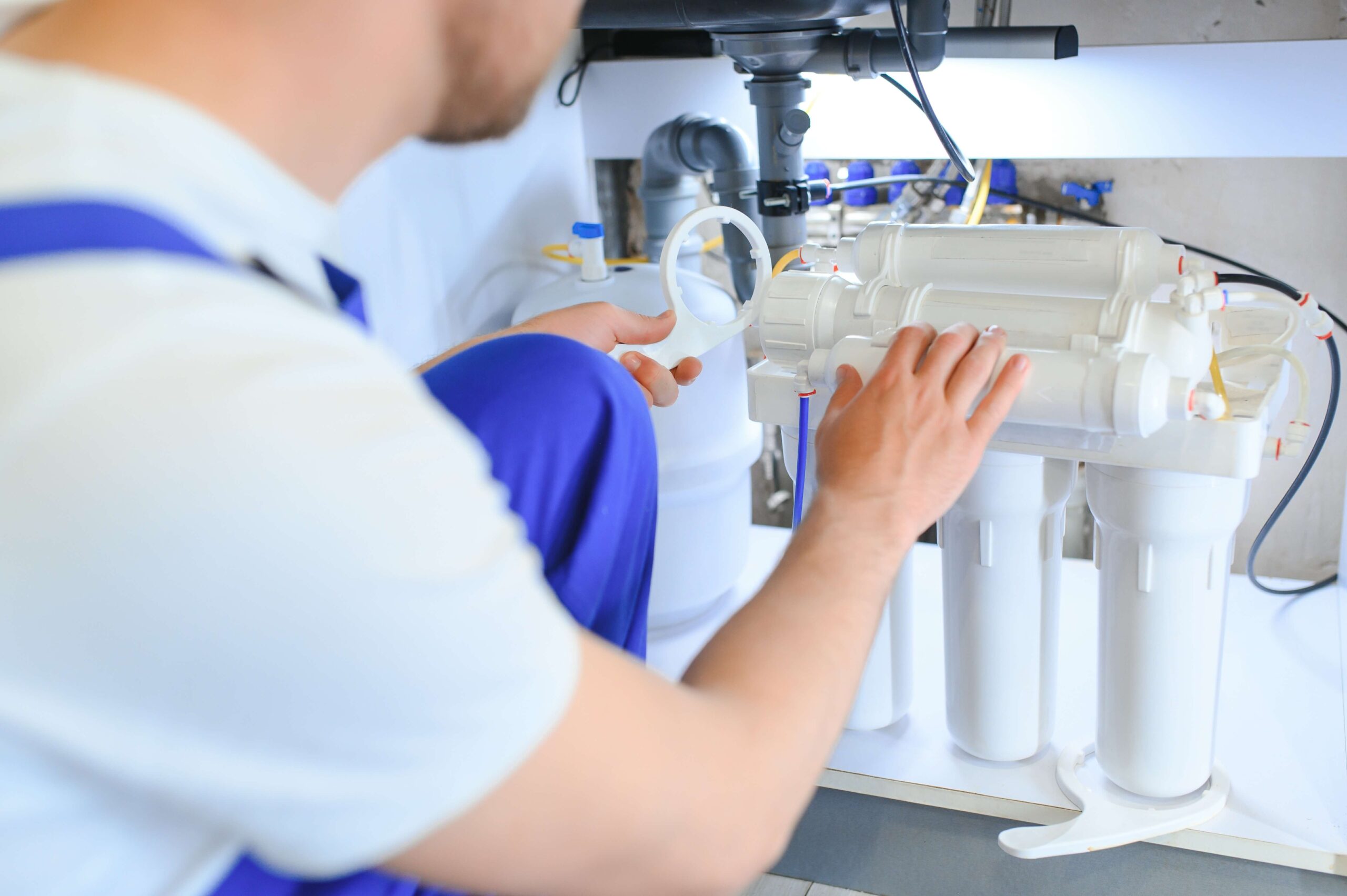
Installation is handled by our trained technicians who work in this region and know this water. After installation, you’ll know what filters need replacing and when, what the membrane service schedule looks like, and who to call when it’s time. That last part ongoing service is where a lot of companies fall short. It’s where we don’t.
Ready to get started?
A professionally installed reverse osmosis system from Quality Safe Water of Florida is built with USA-manufactured components, sized correctly for your home after a real water test, and designed to last 15 to 20 years with proper maintenance. That means annual pre-filter changes and a membrane replacement every two to four years straightforward upkeep that keeps the system performing at the level it was installed to deliver.
For Araquey homeowners on St. Johns County Utility water, the system addresses the documented TDS exceedances, Floridan Aquifer hardness, chlorine taste and odor from the county’s disinfection process, and PFAS compounds that standard filters don’t touch. For homeowners on private wells in the surrounding St. Augustine area where the USGS has documented that Floridan Aquifer water frequently doesn’t meet secondary drinking water standards the system can be configured to address iron, sulfur, bacteria risk, and heavy mineral load simultaneously. No two water profiles are identical, which is why the test-first process isn’t optional.
The math on long-term value is straightforward. A family spending $75 a month on bottled water spends $900 a year and most of that bottled water is municipal water that’s been run through reverse osmosis anyway. A properly installed RO system pays for itself, typically within two to four years, and keeps producing clean water for well over a decade after that. If you’re active military, a veteran, or a first responder a significant portion of St. Johns County’s population given its proximity to NAS Jacksonville and Naval Station Mayport we offer a $500 discount on installation.
Araquey sits directly above the Floridan Aquifer, a massive limestone and dolomite formation that spans much of the southeastern United States. As groundwater moves through that limestone, it dissolves calcium, magnesium, and other minerals and by the time it reaches your tap in Araquey, it’s carrying a mineral load that USGS data puts as high as 1,700 mg/L in parts of the county. That’s not just high for Florida. It’s among the highest recorded anywhere in the continental United States.
The result is water that leaves white scale on faucets, showerheads, and appliances, shortens the lifespan of water heaters and dishwashers, and tastes noticeably different from filtered or purified water. Reverse osmosis removes dissolved minerals at the membrane level operating at 0.0001 microns which is why it’s the same technology the City of St. Augustine uses at its own municipal water treatment plant to process up to 6.5 million gallons of Floridan Aquifer water per day. If the city uses RO to treat the local supply, a residential system isn’t an upgrade it’s the logical next step.
Yes and this is one of the most important things to understand about RO versus other filtration options. PFAS compounds, often called “forever chemicals” because they don’t break down in the body or the environment, have been detected in St. Johns County water systems, including PFBA at 8.5 parts per trillion in the Sawgrass Grid system. The EPA set new enforceable PFAS drinking water limits in April 2024, and health organizations like the Environmental Working Group apply even stricter guidelines.
Pitcher filters and refrigerator filters that use activated carbon provide limited or inconsistent PFAS removal. Reverse osmosis, by contrast, forces water through a semipermeable membrane at a pore size so small that PFAS molecules along with dissolved minerals, chlorine byproducts, nitrates, and other contaminants cannot pass through. For Araquey families who want certainty about what’s in their drinking water, not just compliance with the current legal minimum, a properly installed RO system is the most effective residential option available.
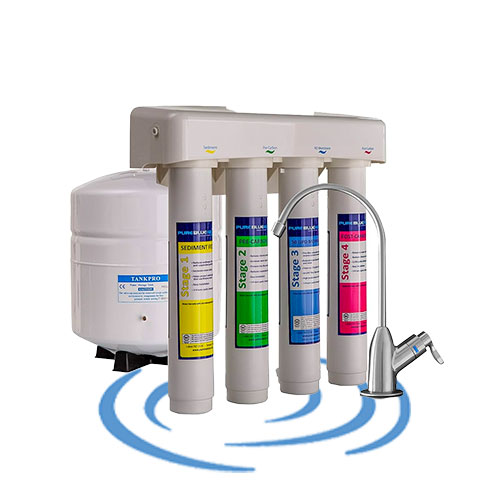
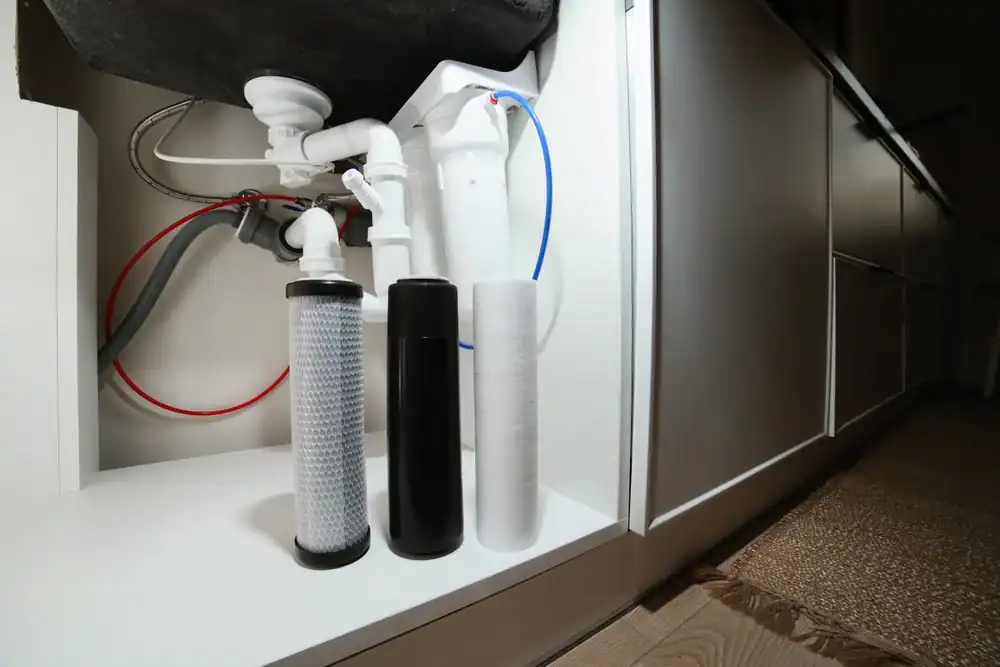
An under-sink reverse osmosis system treats water at a single point of use typically the kitchen tap and, in some configurations, a refrigerator line. It’s the most common choice for Araquey homeowners on city water who want clean, great-tasting drinking water without a full-home overhaul. These systems are compact, installed under the kitchen sink, and produce filtered water on demand through a dedicated faucet. They’re cost-effective, easy to maintain, and handle the drinking and cooking water that matters most to most households.
A whole-house RO system treats all the water entering your home before it reaches any fixture showers, laundry, dishwasher, every tap. This is a larger investment and is typically more relevant for homes on private wells in the St. Augustine area, where the Floridan Aquifer’s mineral load affects not just drinking water but appliances, plumbing, and skin and hair. The right choice depends on your water test results and what you’re actually trying to solve. That’s exactly why we test before recommending so you’re not buying more system than you need, or less than you should have.
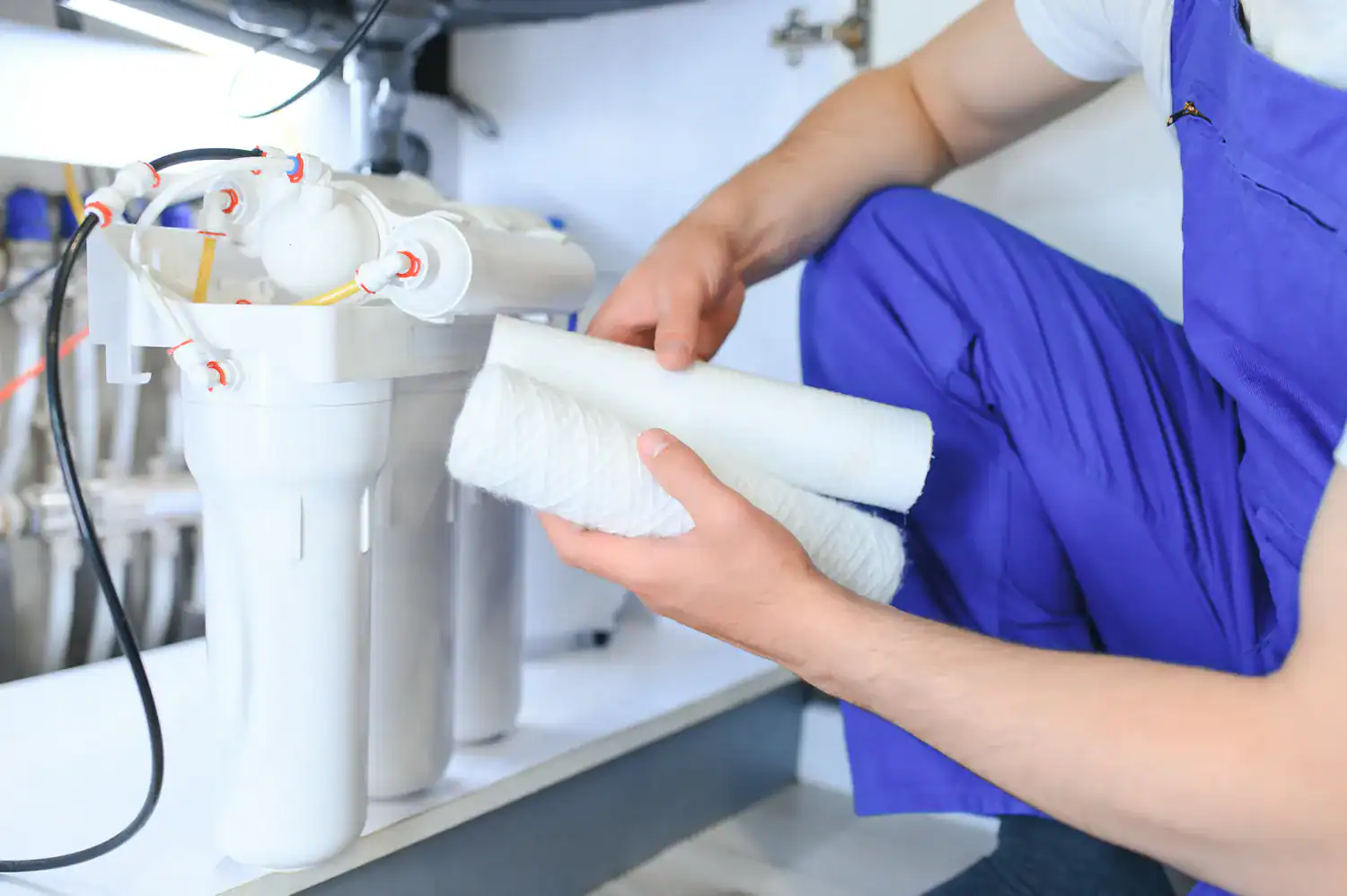
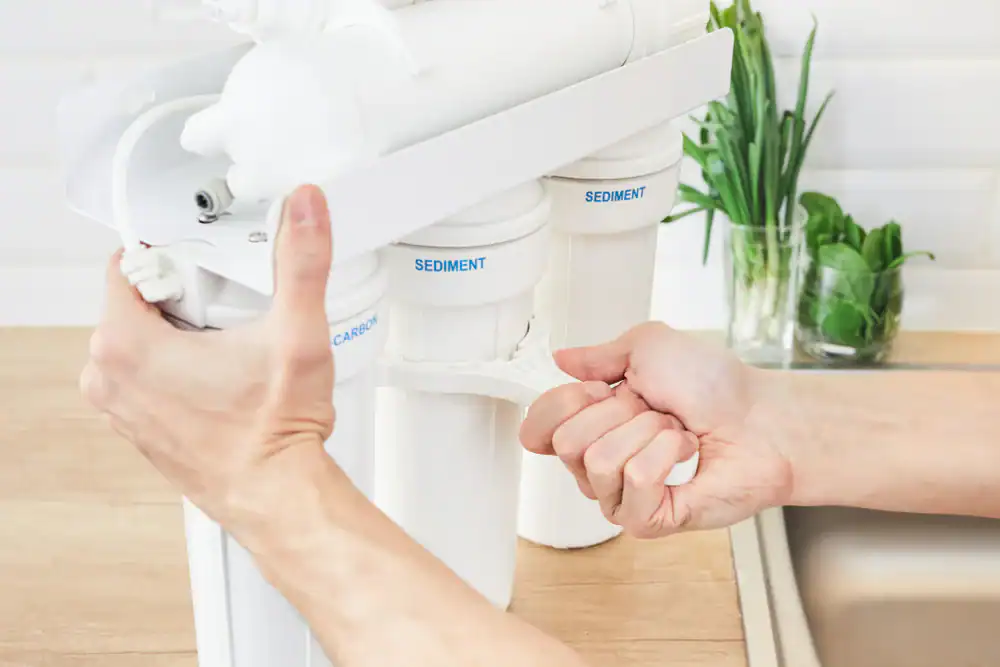
A reverse osmosis system has two main maintenance tasks: pre-filter replacements and membrane service. Pre-filters which remove sediment and chlorine before water reaches the RO membrane typically need replacing once a year. The membrane itself, which does the heavy lifting of removing dissolved solids, minerals, and contaminants, generally lasts two to four years depending on your water quality and household usage. In St. Johns County, where TDS levels and mineral content are higher than most of Florida, membranes may reach the lower end of that range, which is worth knowing upfront.
Skipping filter changes is the most common reason RO systems underperform. When pre-filters get clogged, water pressure drops and the membrane works harder than it should, shortening its lifespan. We service every system we install, which means you have a local company to call when it’s time not a national 800 number that routes you to a call center. For Araquey homeowners who’ve had the experience of buying a system and then being left without support, that ongoing relationship is part of what you’re investing in.
Municipal water in St. Johns County goes through treatment before it reaches your home but that treatment is designed to meet legal safety minimums, not to produce the cleanest, best-tasting water possible. The county utility uses free chlorine disinfection, which produces a noticeable taste and odor that many residents find unpleasant, especially in warmer months when the effect is more pronounced. The utility’s own 2024 water quality report acknowledged that Total Dissolved Solids exceeded the secondary MCL in at least one of its systems a marker of the mineral load that makes this water feel and taste different from purified water.
Municipal treatment also doesn’t fully address PFAS. It doesn’t remove the hardness minerals that come from the Floridan Aquifer. And it doesn’t prevent the scale buildup that shortens appliance life in high-mineral-load water. A residential RO system at your kitchen tap is the last line of filtration it takes what the county plant has already treated and removes what’s left. For families in Araquey who have noticed the difference between their tap water and water from elsewhere, that gap is exactly what an RO system closes.
Please provide your email address so that we can stay in touch and answer any questions you have! We will be reaching back out shortly.
"*" indicates required fields