Reach Out Today
Please provide your email address so that we can stay in touch and answer any questions you have! We will be reaching back out shortly.

Hear from Our Customers
You stop tasting chlorine in your morning coffee. The white crust stops building up on your faucets and shower glass. Your ice is clear, your dishes come out spot-free, and you’re not reaching for a bottled water every time you’re thirsty in your own home.
For Anastasia Island homeowners specifically, this matters more than it does in most places. Our water pulls from the Floridan Aquifer a deep limestone and dolomite formation beneath St. Johns County and as water moves through that geology it picks up dissolved calcium and magnesium before it ever hits your pipes. Hard water is the baseline here, not the exception.
Layer in the salt air that comes with living on a barrier island, and you’ve got a combination that’s genuinely hard on your home. Hard water scale and coastal corrosion work together to wear down plumbing fixtures, water heaters, and appliances faster than they would in an inland community. A reverse osmosis system at the point of use reduces the mineral load going through your home’s water, and that protection adds up over time especially in a home that’s already seen a few decades of coastal weather.
We’re a water treatment company that’s it. No plumbing, no HVAC, no side services. Just water treatment, done right, every time. That focus means the technician who shows up at your Davis Shores or Lighthouse Park home has seen every variation of Florida’s water problems and knows exactly how to address yours.
Our BBB A-rating and 5-star record with zero complaints on file isn’t something that happens by accident it’s what you get when a company actually services what it sells. In an industry where national competitors are known for making the sale and going silent, that public record matters. You can verify it yourself at bbb.org.
We’re also a member of the National Water Quality Association, which means ongoing professional training and adherence to industry standards that most generalist plumbers who offer RO as a side service simply don’t maintain. And for active military, veterans, and first responders a meaningful part of the Northeast Florida community we offer a $500 discount that reflects genuine appreciation, not a line in a brochure.
It starts with a real water test. Not a quick hardness check designed to justify a sale an actual lab analysis of what’s in your water. That matters on Anastasia Island because not every property here is on the same supply. Homes in Davis Shores and Lighthouse Park are typically served by St. Johns County Utilities drawing from the Floridan Aquifer. Some properties further south or on older lots may be on private wells, where iron, sulfur, and other naturally occurring contaminants require a completely different approach.
The test tells us what we’re actually dealing with before we recommend anything. Once we know what’s in your water, we size and recommend the right system for your home whether that’s an under-sink reverse osmosis unit for your kitchen, a whole-house purification system, or a combination of both.
Under-sink RO systems typically do not require a permit in Florida and are treated as appliances, so installation is usually straightforward. Whole-house systems that involve modifications to your main water line may require a plumbing permit depending on whether your property falls within the City of St. Augustine, unincorporated St. Johns County, or the City of St. Augustine Beach and we’ll walk you through that before any work begins.
After installation, we walk you through everything: how the system works, when filters need replacing, and how to reach us when service is due. That last part isn’t a throwaway line it’s the part most companies in this industry skip.
Ready to get started?
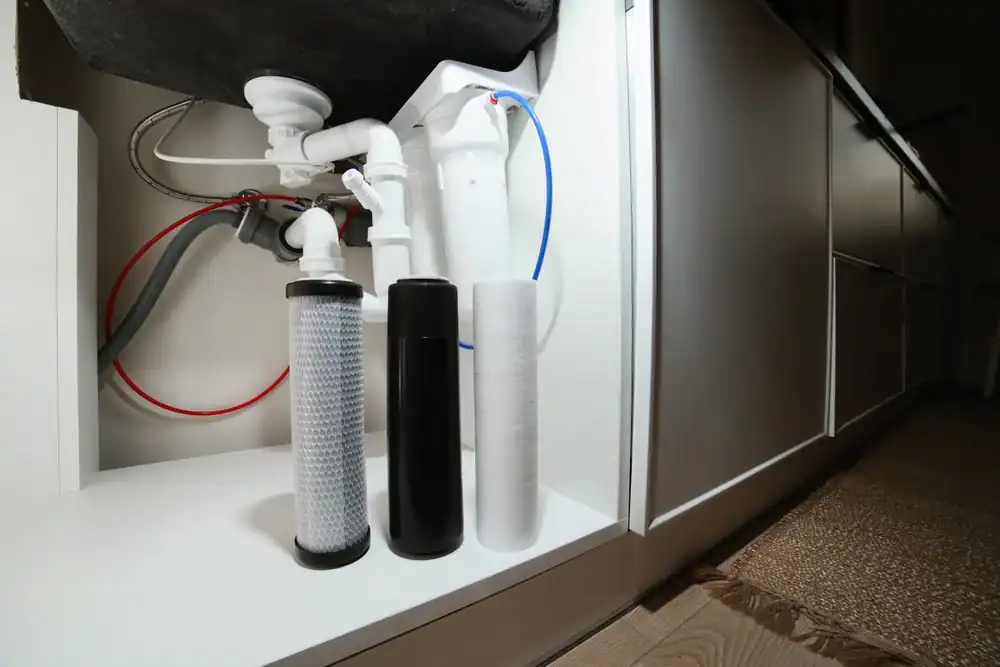
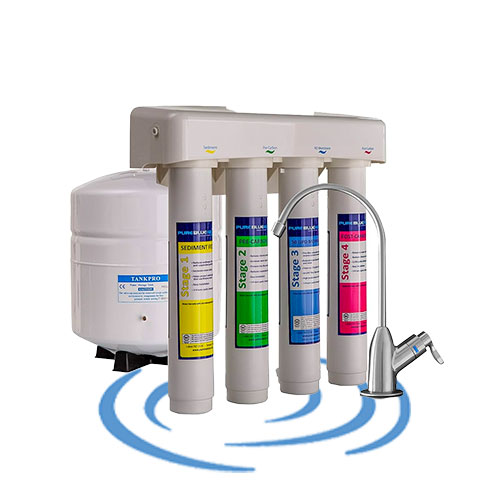
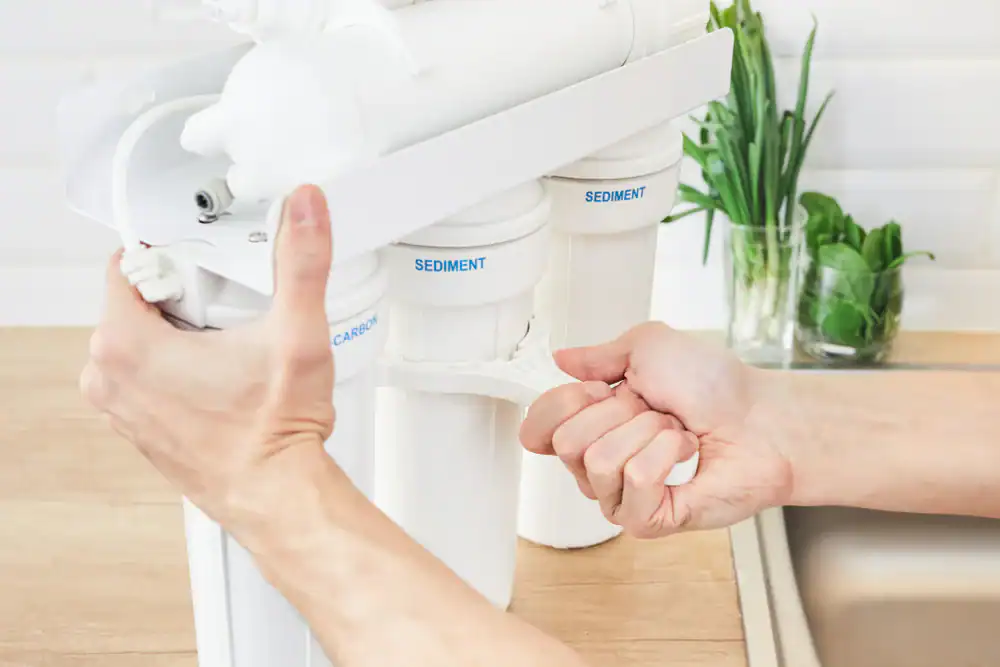
An under-sink reverse osmosis system from Quality Safe Water of Florida typically runs a multi-stage filtration process sediment pre-filtration, carbon block filtration, the RO membrane itself, and a post-filter polish stage before water reaches your glass. The membrane does the heavy lifting, removing 95–99% of dissolved contaminants including PFAS, haloacetic acids, lead, nitrates, fluoride, and the calcium and magnesium that the Floridan Aquifer sends your way.
For Anastasia Island homeowners in older homes much of the island’s housing stock dates to the 1970s that lead and copper removal stage is particularly relevant. Older pipes can contribute metals to your drinking water that have nothing to do with what the utility is sending you.
For homeowners who want whole-home coverage protecting every faucet, every appliance, every shower our whole-house purification systems address the full water supply entering your home. This is the better long-term investment for a coastal barrier island property, where hard water scale and salt air work against your plumbing from every direction. The Purelight UV option adds an additional layer of protection against waterborne bacteria and pathogens something worth considering on an island that took a direct infrastructure hit from Hurricane Milton in October 2024.
Every system we size is based on your home’s actual water profile from the lab test, not a standard package pulled off a shelf. That’s what makes the difference between a system that works and one that’s close enough.
St. Johns County Utilities meets federal and state drinking water standards so legally, yes, the water is safe. But “meets legal standards” and “as clean as it could be” aren’t the same thing. St. Johns County water systems have been found to contain haloacetic acids, which are disinfection byproducts that form when chlorine reacts with organic matter in the water. PFAS compounds have also been detected in some county water systems. Neither of those contaminants is removed by municipal treatment that’s not what the treatment process is designed to do.
For Anastasia Island homeowners specifically, there’s also the issue of aging infrastructure. Homes in ZIP code 32080 were primarily built in the 1970s, and St. Johns County Utilities’ own annual water quality report acknowledges that the utility cannot control the pipe materials inside your home. If your plumbing is original to the house, there’s a real possibility that lead or copper is entering your water after it leaves the treatment plant particularly if water has been sitting in the pipes overnight. A reverse osmosis system addresses all of this at the point of use, giving you water that goes well beyond what the utility is required to deliver.
Those white spots are mineral deposits calcium and magnesium left behind when water evaporates. Your water supply draws from the Floridan Aquifer, a deep limestone and dolomite formation beneath St. Johns County, and as water moves through that geology it picks up dissolved minerals before it ever reaches your tap. The result is hard water, and it’s the baseline across most of the island not an occasional problem.
Hard water scale builds up on shower glass, faucets, dishwashers, coffee makers, and water heater elements. Over time, it reduces the efficiency of your appliances and accelerates wear. On Anastasia Island, this is compounded by the salt air environment salt air corrodes metal components, and when you layer mineral scale on top of that corrosion, appliances and fixtures degrade faster than they would in an inland community. An under-sink reverse osmosis system removes those dissolved minerals at the point of use, so your drinking and cooking water is clean and mineral-free. A whole-house system extends that protection to every faucet and appliance in your home, which is the more comprehensive solution for a coastal property.
A water softener addresses hardness it uses an ion exchange process to swap calcium and magnesium ions for sodium ions, which eliminates scale buildup and makes water feel softer. It’s effective for protecting plumbing and appliances, but it doesn’t remove other contaminants. Your softened water still contains chlorine, chlorine byproducts, PFAS, nitrates, and whatever else was in the supply to begin with. It also adds a small amount of sodium to your water, which some people prefer not to drink.
A reverse osmosis system works differently. It pushes water through a semi-permeable membrane under pressure, and that membrane physically blocks dissolved contaminants from passing through including the minerals a softener removes, plus PFAS, lead, haloacetic acids, fluoride, nitrates, and more. The result is water that’s genuinely clean at the molecular level, not just softened. For Anastasia Island homeowners, many properties benefit from both: a whole-house softener to protect plumbing and appliances from the Floridan Aquifer’s mineral load, and an under-sink RO system at the kitchen tap for drinking and cooking water. We test your water first and give you an honest recommendation based on what’s actually there.
Under-sink reverse osmosis systems typically range from a few hundred dollars on the low end to around $500–$1,000 installed for a quality residential unit. Whole-house reverse osmosis and purification systems are a more significant investment generally starting around $1,500 and ranging upward depending on your home’s size, water profile, and what the lab test shows needs to be addressed. Every home on Anastasia Island is a little different, which is why we test before we quote.
The more useful way to think about cost is what you’re currently spending and what you’re protecting. If your household is buying bottled water regularly, you’re likely spending $50–$100 per month that’s $600–$1,200 per year on something a good RO system replaces at a fraction of the per-gallon cost. Beyond drinking water, consider what hard water scale and coastal corrosion are doing to your water heater, dishwasher, and plumbing fixtures over time. Replacing a water heater that failed early due to scale buildup costs more than a whole-house system. For a home valued near the island’s median, protecting the plumbing and appliances is a rational investment, not a luxury add-on. Military veterans and first responders also qualify for $500 off, which makes the decision a little easier.
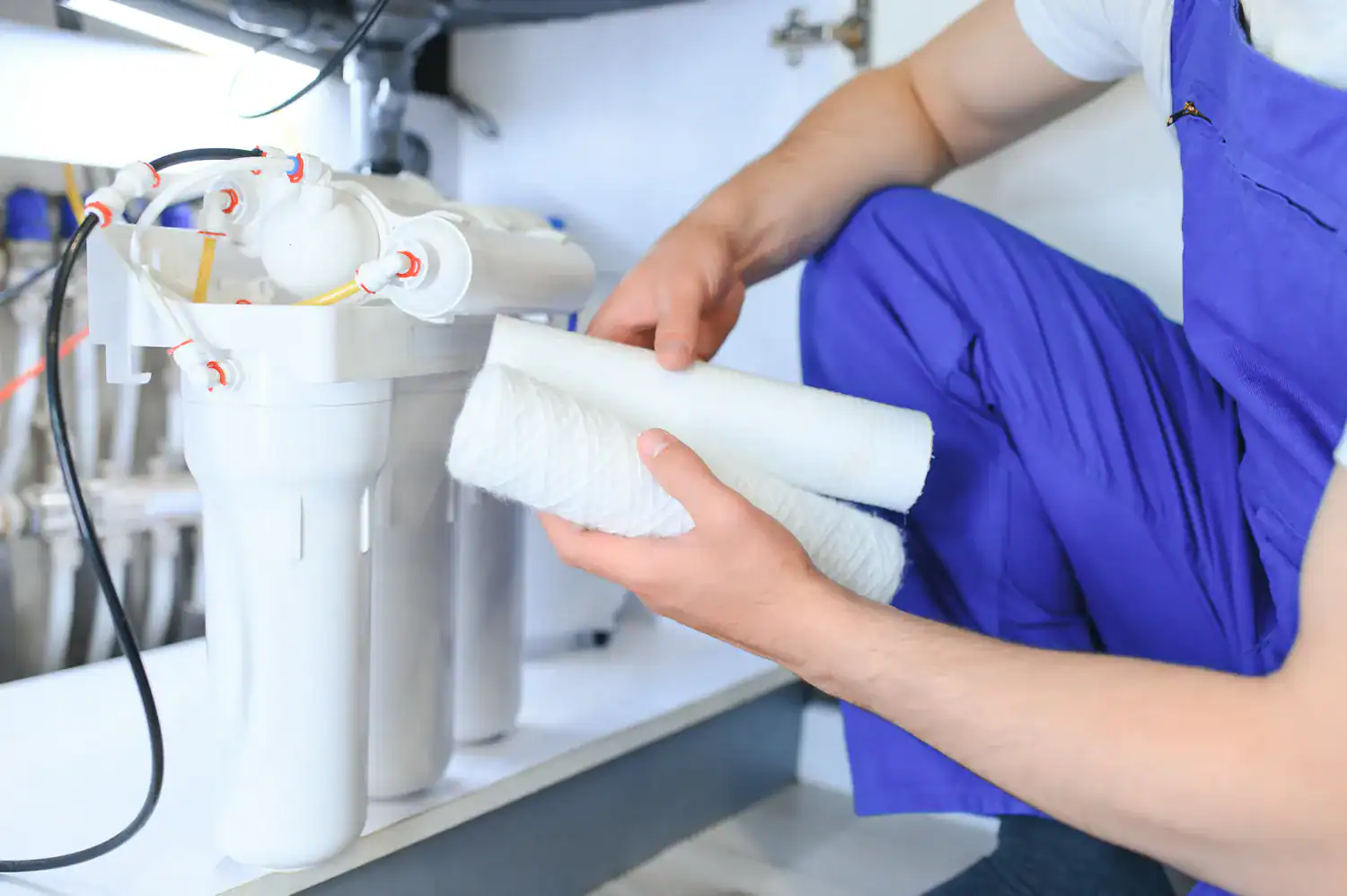
Most under-sink reverse osmosis systems have pre-filters and post-filters that need to be replaced every 6–12 months, and the RO membrane itself typically lasts 2–3 years depending on your water quality and usage. If your water is particularly hard which is the norm on Anastasia Island given the Floridan Aquifer source pre-filters may need attention on the shorter end of that range because they’re working harder to catch sediment and minerals before they reach the membrane.
The maintenance schedule isn’t complicated, but it does require follow-through. This is exactly where a lot of homeowners run into problems with national water treatment companies the system gets installed, and then nobody answers the phone when it’s time for service or a filter replacement. We service what we sell. When your membrane is due or your pre-filter needs swapping, you call the same company that installed the system, and we show up. That’s not a given in this industry it’s something worth asking about before you buy from anyone. A system that isn’t maintained stops performing, and you’re back to the same water you started with.
Please provide your email address so that we can stay in touch and answer any questions you have! We will be reaching back out shortly.
"*" indicates required fields